在政策驱动的工作流中信任智能体
Trusting Agents in Policy-Driven Workflows
原文由官网提供,中文由 GPT-6 Luna 翻译。相邻片段合并排版,正文与时间点保持对应。
已插入 18 张经核对的幻灯片或演示截图;点击图片可放大。图注链接为当前视频时间,左侧正文时间保留原转录版本,二者可能不同。
共 32 个阅读段落
大家好。我叫 Evan Kormos。我从事软件交付、设计和构建已有 20 年,其中最近 15 年在企业金融服务领域。我在 Coinbase 担任一线管理者。今天我们来谈谈如何在政策驱动的工作流中信任智能体。
Hi, everyone. My name is Evan Kormos. I've been delivering, designing, building software for 20 years, the last 15 enterprise financial services. I am a player coach at Coinbase. and we're here today to talk about trusting agents and policy-driven workflows.
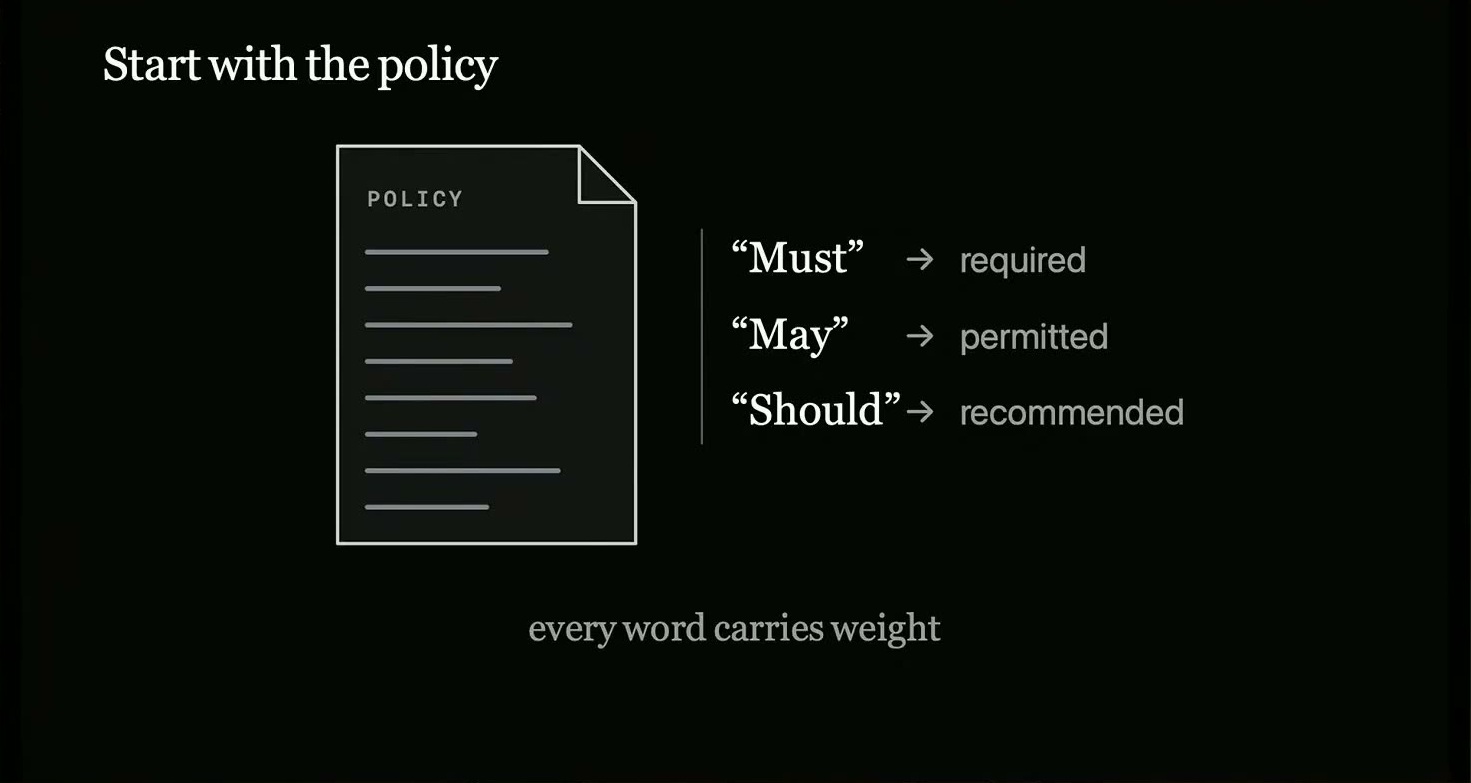
先从政策开始吧,这部分相当枯燥。我过去看一下我的笔记。我们的出发点围绕政策,它规定组织内如何开展工作。尤其包括风险与合规。可以把政策看作机构最初的意图,或者最初的系统提示。理想情况下,我们会把它写下来。内容有点枯燥,请耐心听我讲。用语会包括“必须”“可以”和“应该”。
So let's start with the policy, and it's pretty boring. I'm going to go over here for my notes. So our starting point centers around the policy, and this sets the rules for how work gets done within the organization. and including especially risk and compliance. Think of policy as the original institutional intent or the original system prompt. ideally we have this written down. It's a little bit boring, so stick with me. Using language like must, may, and should.
这些措辞有助于界定规则和决策,说明系统在组织内如何运作。
And again, these help define the rules and decisions about how the system operates in the organization.
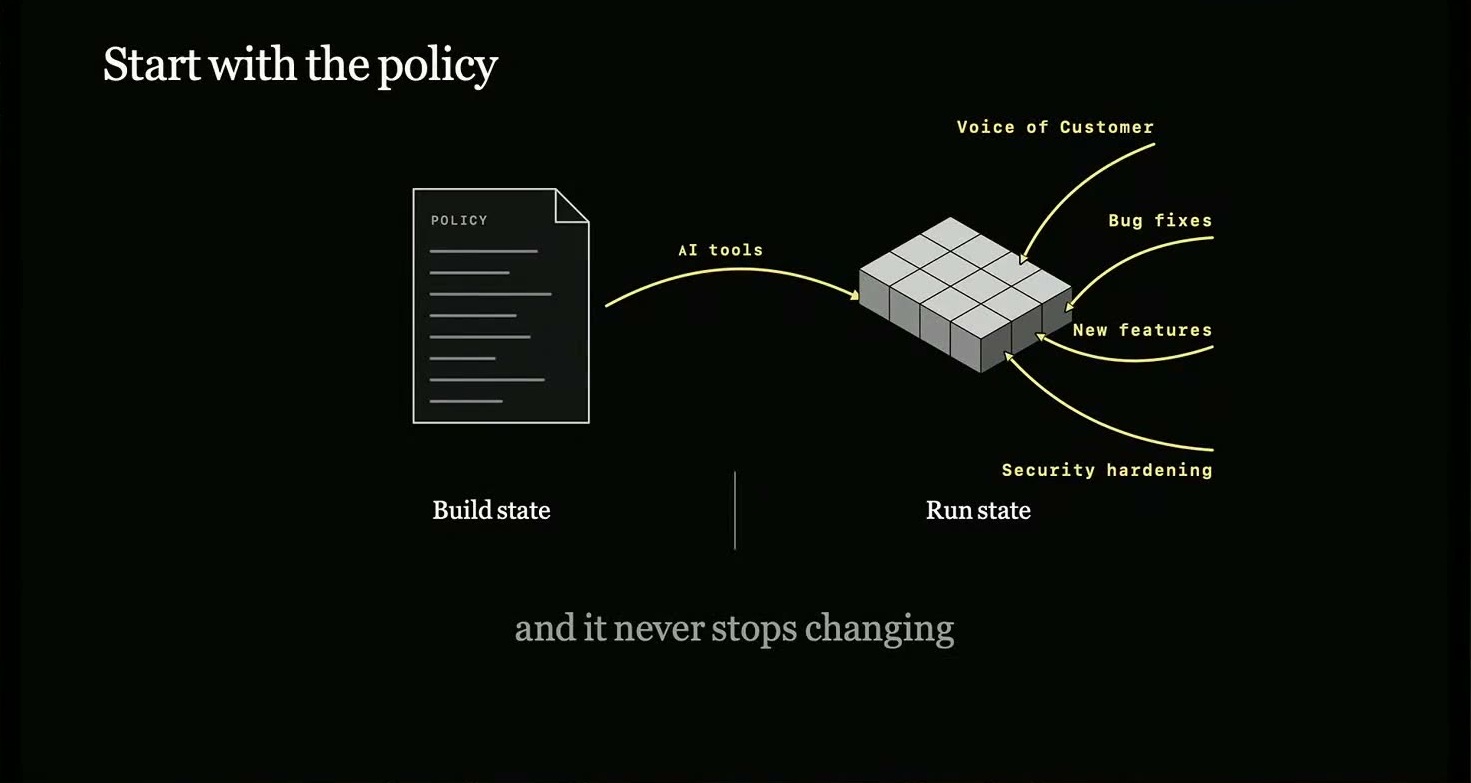
与政策分开的是实际运行的系统。首先要做的是把这两者分开,并区分两个不同时间点的构建状态和运行状态。通常我们是在制定或修改政策,但系统一直在运行,也持续变化。所以我们可以设想一次编译事件——噢,抱歉,我讲快了。它一直在变化。
Separate from policy, we have the actual running system. So the first thing we're going to do is separate these two, both the build state and the run state, at two different moments in time. So typically we're either defining or changing our policy, but the system is constantly running and it's constantly moving and changing. So we could then sort of imagine a compilation event that, oops, sorry, I'm skipping ahead. It's constantly changing.
随着产品驱动的变更,它会迅速演进。我们仍然期望所有事情大致受政策约束,但最终我们会把运行状态和构建状态区分开。
So it's evolving quickly with these product-driven changes. Everything is expected to still be roughly bound by the policy, but ultimately we separate this from the run state and the build state.
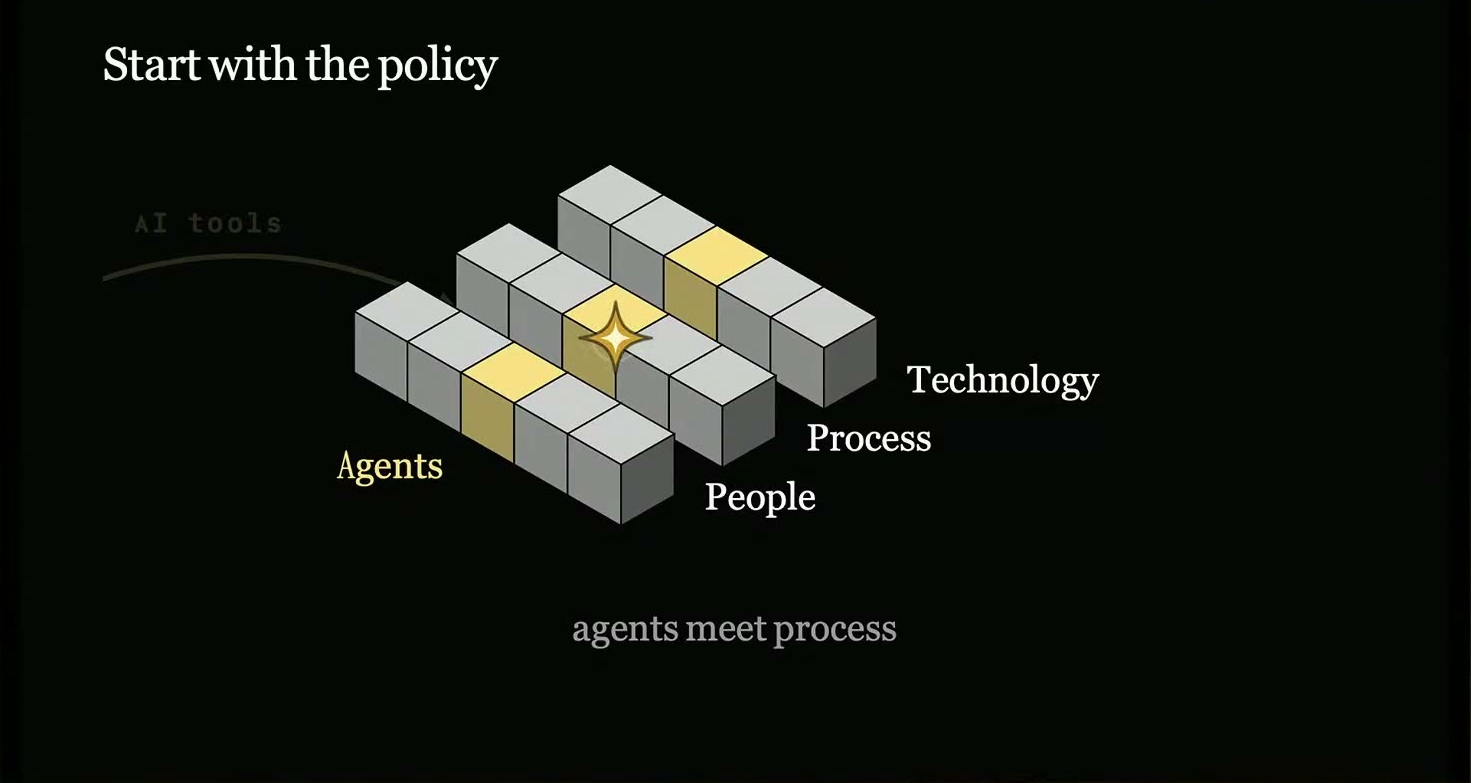
那么系统内部是什么样的?我们熟悉一个模型,如果现场有企业领域的朋友,那就是人员、流程和技术。但智能体究竟如何融入这个框架?我认为它们是一种运营模式,横跨这三个方面。它们与人协作,执行流程中的部分环节,它们本身也使用技术、由技术构成。今天我们的重点是智能体与流程相遇的地方:交给它们什么工作、设定什么边界,以及如何信任它们的输出。
So inside the system, what does it look like? We have a familiar model, if we have any enterprise folks in the room here. People, process, and technology. But where really do agents fit into this mold? So I see them as an operational model cutting across all three. They work with people, execute parts of the process, themselves, and they use and are made up of technology. So for our talk today, we're going to be focusing here where agents meet process, what work we give them, what boundaries we set, and how we build trust in their outputs.
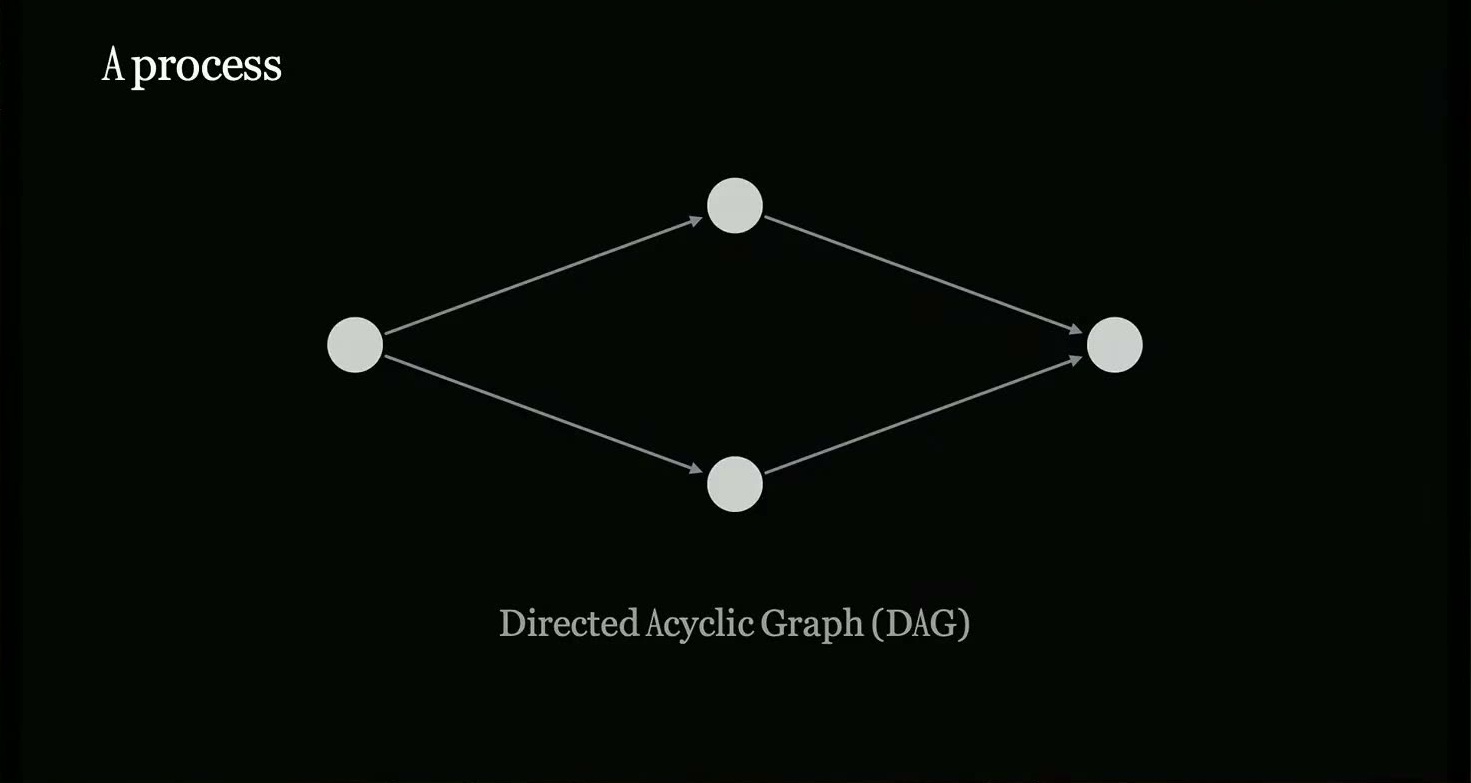
我们来深入看看你的工作流。这听起来很宏观、也很基础,但如果你还没有梳理过,确实有充分理由这样做。比如,变更上线前必须经过审批,或者客户开户前必须通过验证。我们希望工作按照特定的、设有门槛的方向流动。所以我认为,智能体让我们有必要重新审视哪些工作可以并行开展。以前有些工作成本太高,或者协调起来过于复杂,无法这样做。
So let's dive into your workflow. And it's high level and seems basic, but if you haven't, there are good reasons to map this out. So maybe a change has to be approved before it goes live, or a customer has to go through verification before their account is opened. We expect work to flow in a specific and gated direction. So I believe it makes, agents make it worth revisiting what we can do in parallel. Previously, some work used to cost too much or be too complex to coordinate in this way.
但现在我们可以同时开展彼此独立的审查,再汇总结果,同时保留必要的检查环节。这就是有向无环图,简称 DAG。它是一种表示工作流或流程的方式,包括其中的步骤和依赖关系,描述一个持续向前推进、不回环的流程。如果你熟悉 Apache Airflow,它就是一款开源软件,用来表示工作流,并在 Python 代码中把依赖关系表示为 DAG。
But now we can run independent reviews alongside each other, bring the results together, but keep the required checks in place. So this is a directed acyclic graph, or a DAG. It is a way to represent this workflow or process, the steps, the dependencies, for a flow that moves forward without looping back on itself. Apache Airflow, if you're familiar, is an example of open-source software that represents workflows, dependencies as DAGs in Python code.
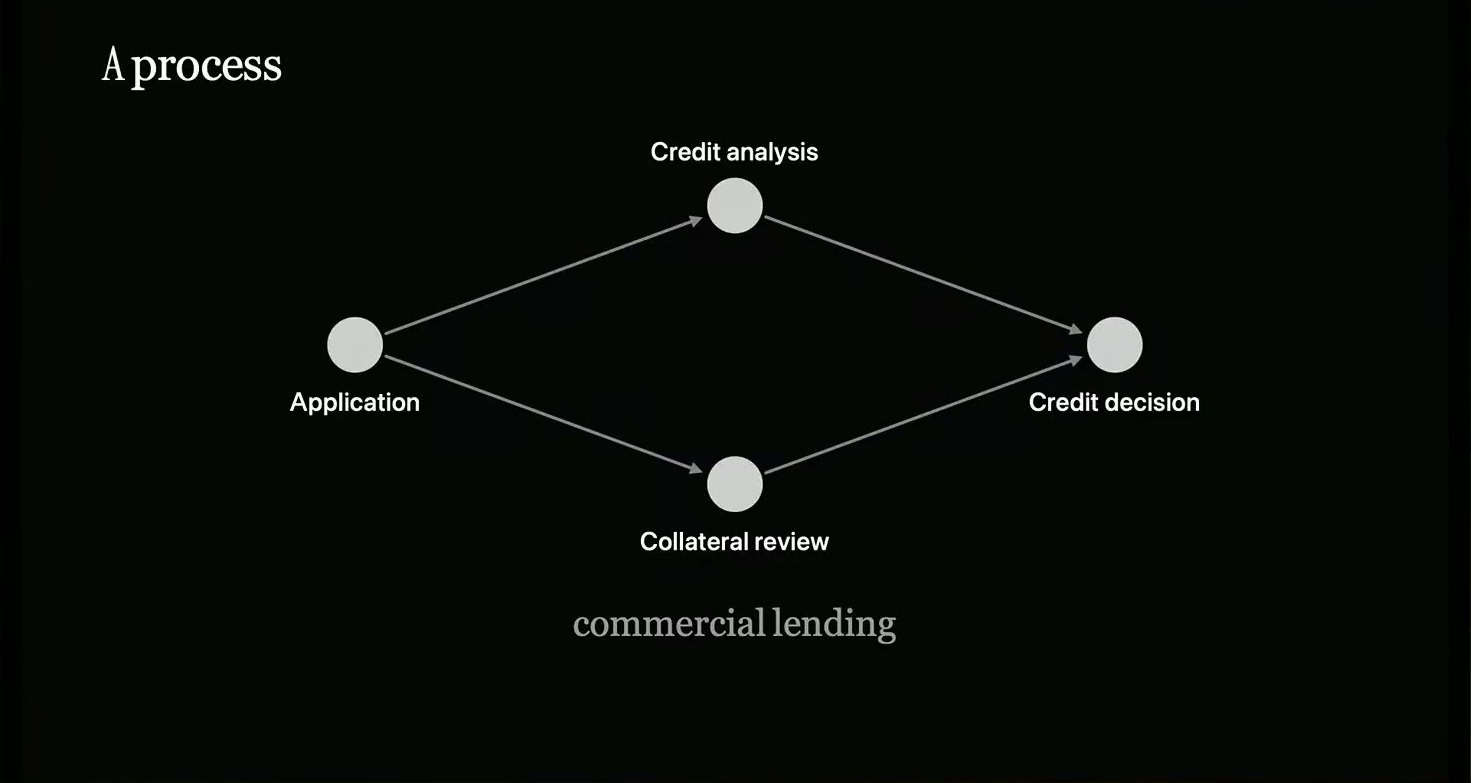
这些 Python 代码和 DAG 可以用来定义和管理许多政策驱动的流程,例如商业贷款。我们也可以用 DAG 表示在特定地区把某个代币上架到交易所的流程,如果你关注这类事情的话。我们也
So, this Python code, these DAGs can be used to define and manage a number of policy-driven processes like, for example, commercial lending. We could also use a DAG to represent the workflow flow to list a token on the exchange in a specific region, if you're into that. Or we
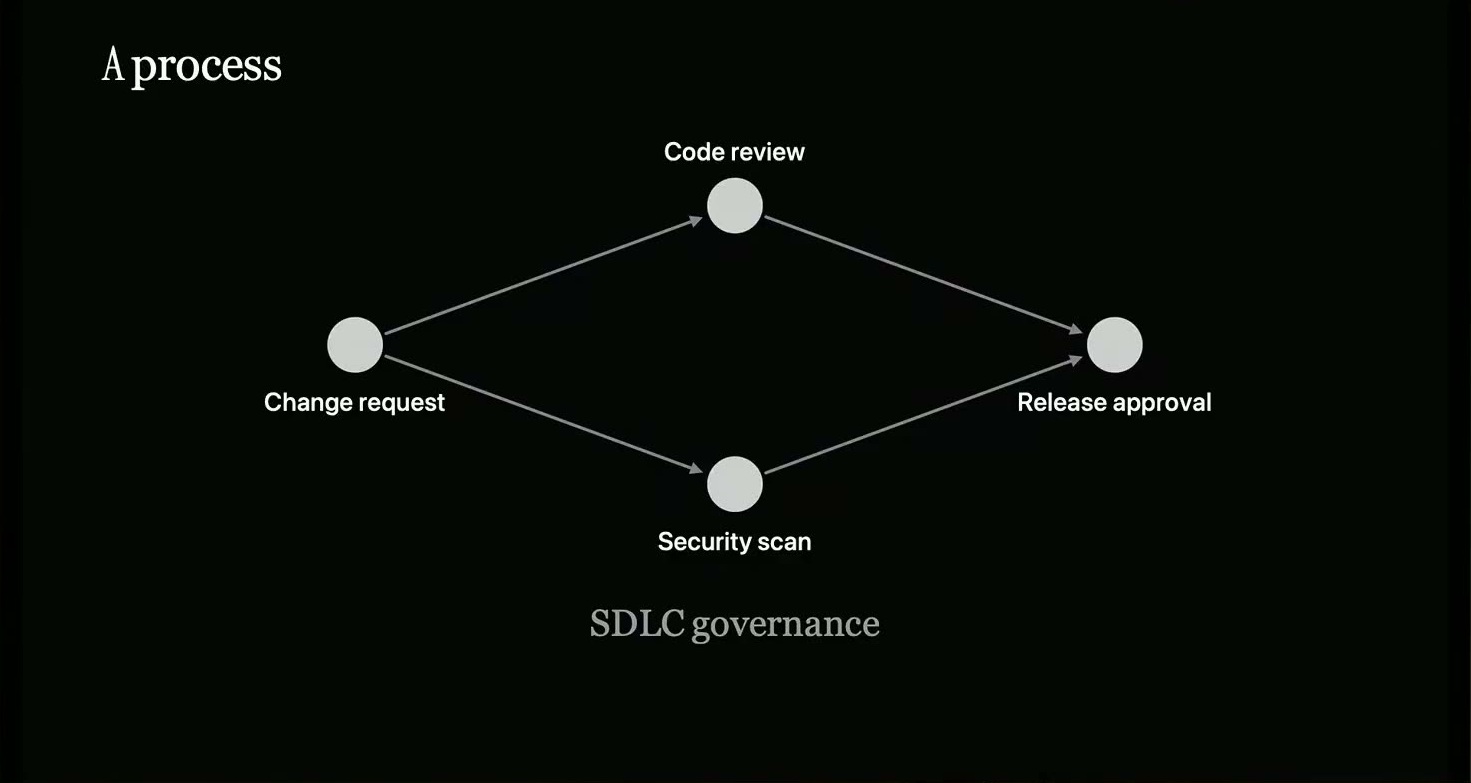
可以用 DAG 表示受监管的软件交付流程,这是个热门话题。我觉得,最近我们看到很多智能体在软件交付中的应用;我们最终希望把同样的效率和规模扩展到业务的其他领域,缩小采用差距。我们再以软件交付为例,稍微展开讲讲。
could use a DAG to represent a regulated flow of delivering software, which is a hot topic. One we'll spend a little bit of time on, I think that we've seen a lot of adoption within agents, within software delivery, and ultimately we're looking to leverage that same efficiency and scale in other areas of the business and close the adoption gap. So let's stick with the software delivery example for a little bit.
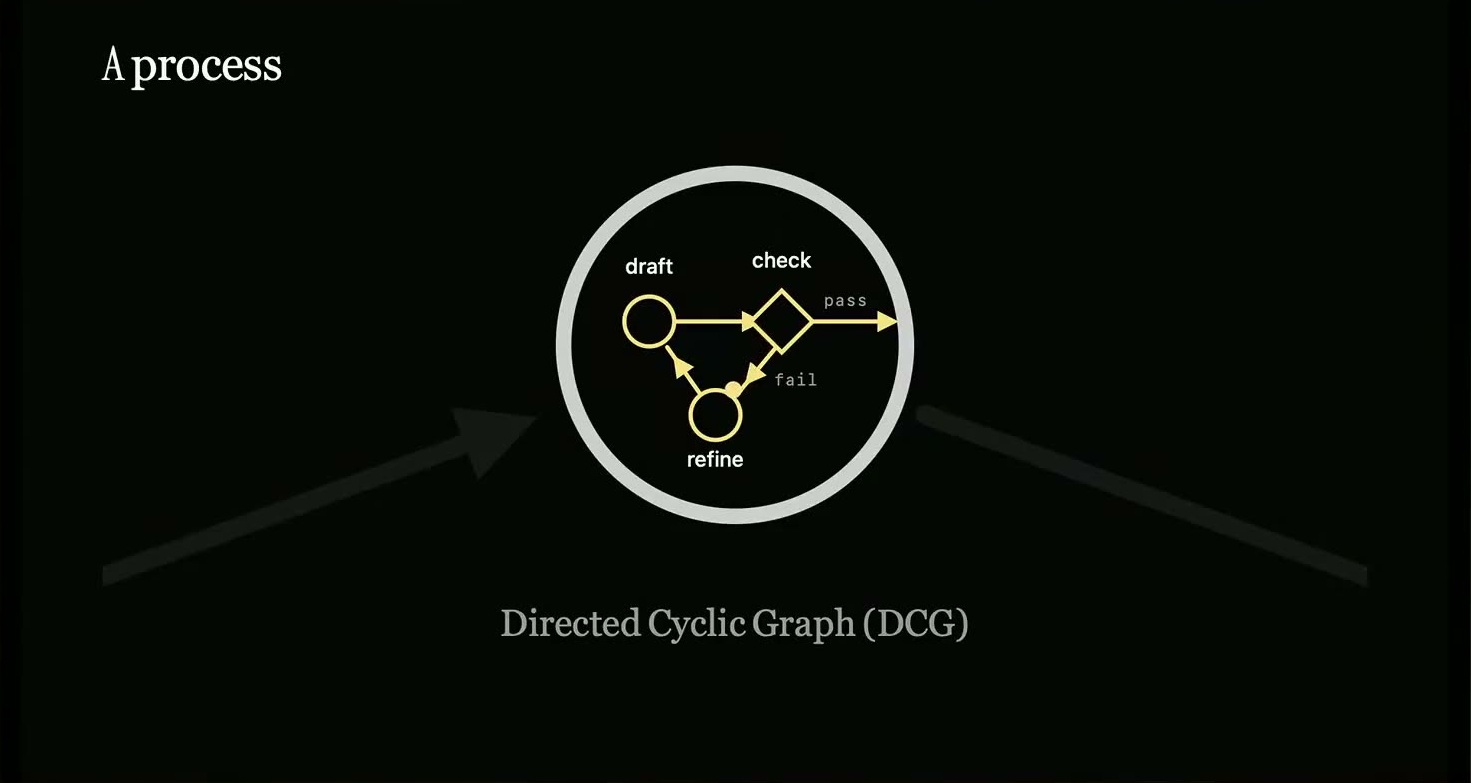
在流程的某个节点内部会发生什么?我给你一个提示:这是一个循环。这是过度简化后的说法,但我们可以粗略看看在……内部发生了什么,比如说这是代码审查流程,对吧?本质上我们会执行一系列步骤,等我们完成工作后,确认工作已经达到足够好的标准,就允许它进入下一步。这基本上就是代码审查节点的功能。
What happens inside one of these nodes of the process? And I'll give you a hint. It's a loop. oversimplified, but we have a basic version of what's happening within the, let's say this is the code review process, right? So we're going to essentially do a number of steps, and essentially once we realize the work, we recognize that the work is good enough, we're going to allow it to pass on to the next step. And that's essentially the function of the code review node.
工作不一定总是没问题。所以有时候我们要根据代码审查的反馈反复迭代,直到工作足够好、可以通过。这表示的是有向循环图,简称 DCG。在开源软件方面,我认为 LangChain、LangGraph 这类工具有助于管理 DCG 的状态。这只是过度简化的图示。
The work doesn't always end up okay. So sometimes we have to take the feedback from the code review and iterate on it until the work is good enough to pass. So this is a representation of a directed cyclic graph, or DCG. So, as far as open source software, something like LangChain, LangGraph would be what I would say is helpful to manage the state of DCGs. And this is an oversimplification.
这些图可能非常复杂。再拉远来看节点内部流程:人员和智能体协同工作;
These graphs can be very complex. So zooming back out, the inner flow of the node, we have people and agents working together.
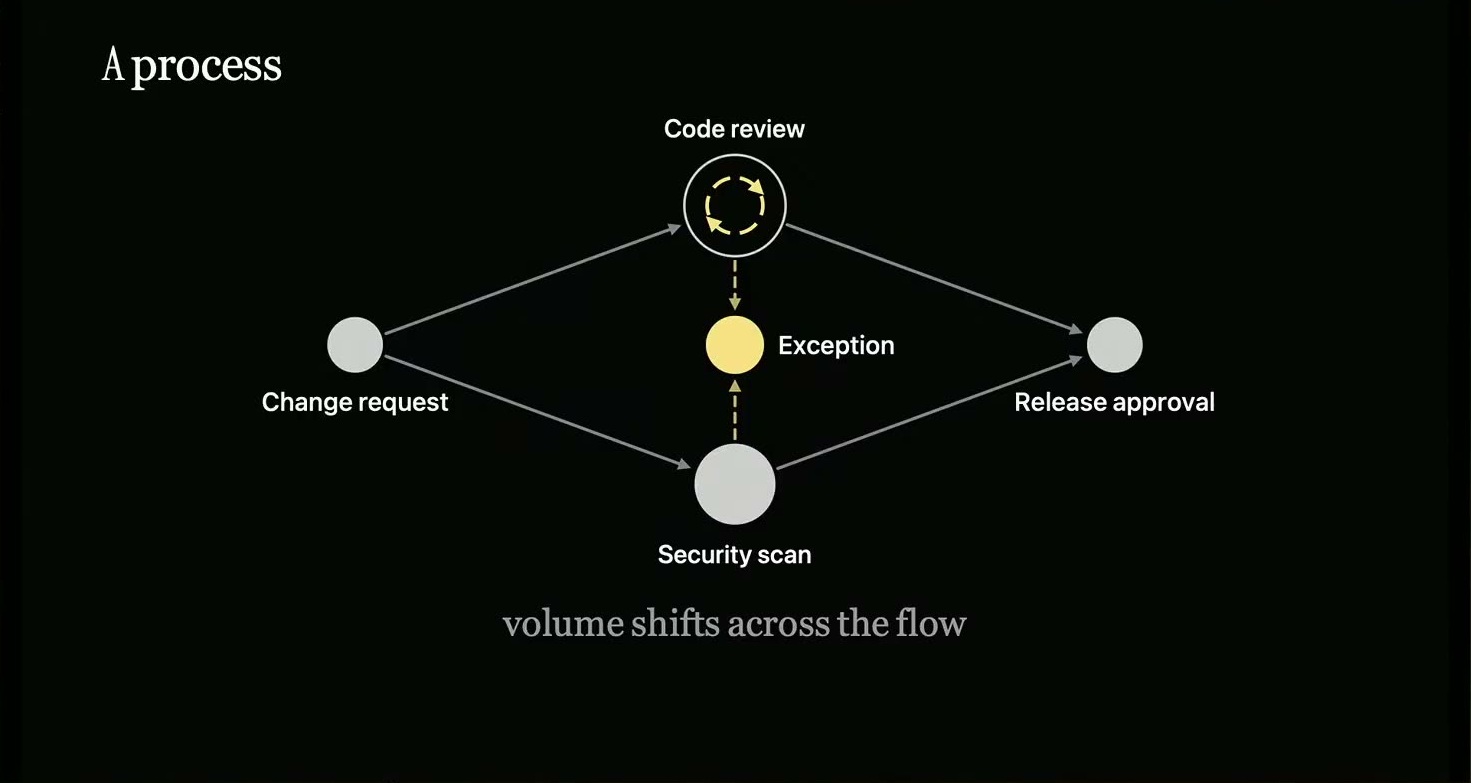
在外部流程上,则有政策边界。但事情不总会按计划进行。因此我们必须处理异常流程。我们不希望工作卡住,也不想为每一种边缘情况都设计处理方案。异常流程会监控情况,看看在发布代码时发生什么,比如发布被取消,或者代码不符合安全标准。这些都是你应该想要了解的情况。一旦把智能体纳入其中,整个流程各环节的工作量就会发生变化。我们在软件交付中已经看到这种情况,随着我们把智能体引入其他流程,也会在那些流程中看到同样的变化;比如现在代码审查突然变快了,你就需要更快地设计,或者更快地完成安全扫描。
together, on the outer flow, we have a policy boundary. But not everything goes to plan. So we have to handle exception flows. We don't want the work to get stuck and we don't want to design for every edge case either. The exception flows will monitor and see kind of what happens if you're shipping code that gets cancelled or doesn't meet security standards. that's something you should want to know about. Volume shifts across the flow once we start to add agents into the mix. And we've seen this with software delivery, and we'll see it in other processes as we bring agents into those processes as well, where now all of a sudden if you're reviewing code faster, you need to design it quicker, or you need to do the security scan faster.
因此,工作量会在流程各环节之间转移。
So we see the volume shift across the flow.
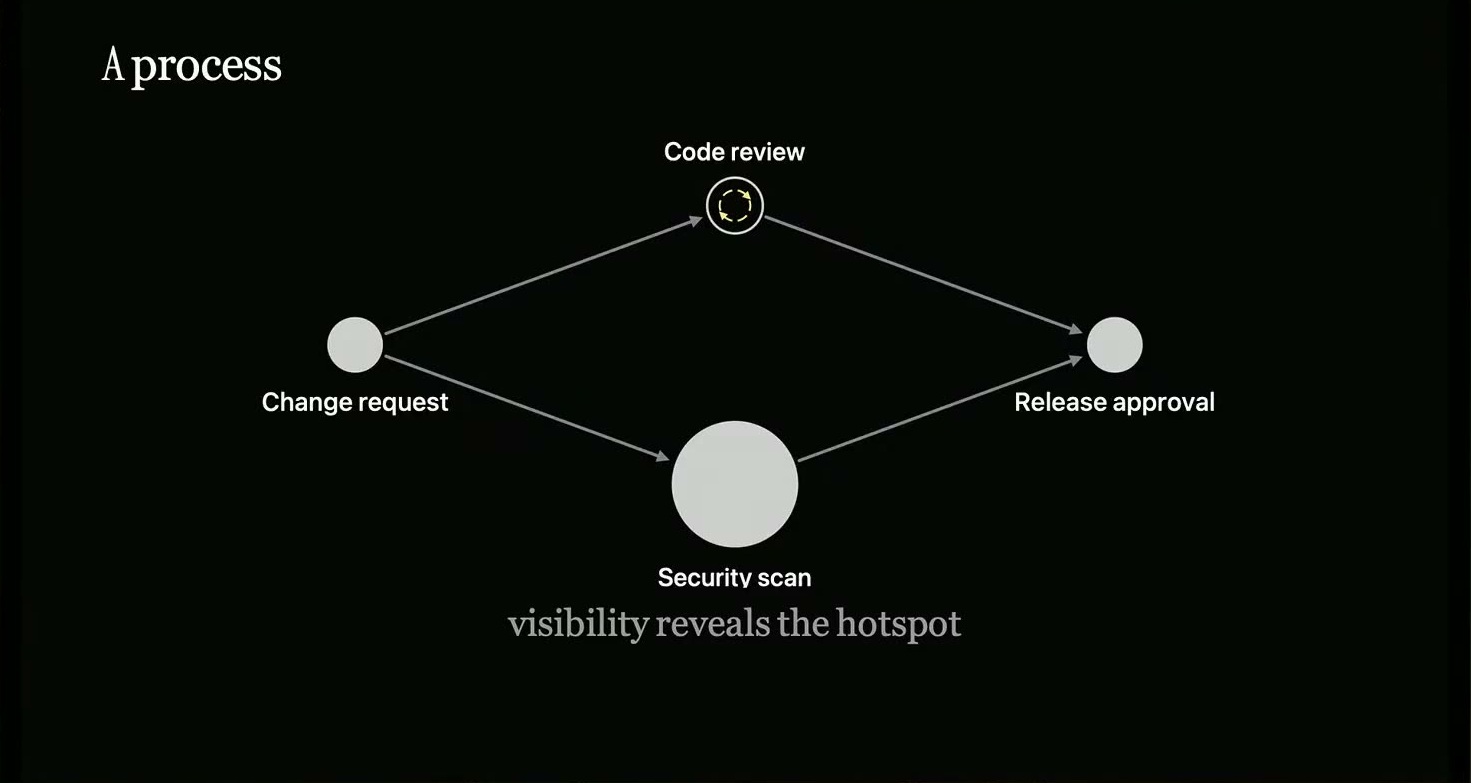
这就是为什么从指标角度看,我们必须能够全面了解整个流程。因为当我们开始增强流程能力、并行开展工作并提高效率时,新的瓶颈也会不断出现。所以,流程的运营可视性极其重要。这比编写和构建工作流工具重要得多。
And this is where it's really important that we have visibility into the process overall from a metric standpoint. Because as we start to supercharge and parallelize and add more efficiency to the process, we start to develop more and more bottlenecks. And so the operational visibility of the process is extremely important. Much more important than the authoring and the building of your workflow tool.
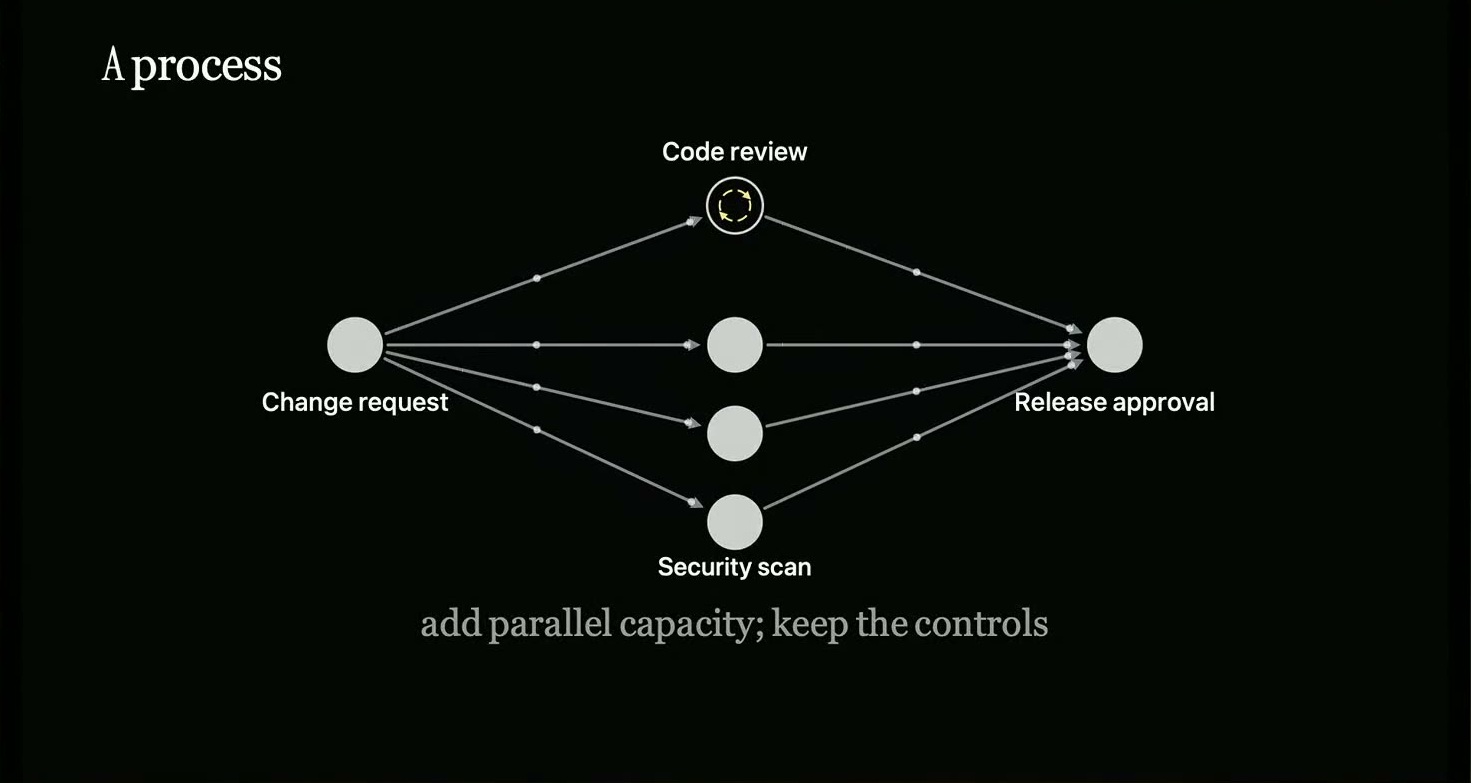
因此我们要把流程可视化,增加并行处理能力,同时仍然保留控制措施。这样我们就能增加额外的处理能力。好,接下来我们做一些工作,对它进行检查,再利用反馈进行改进,直到工作足够好,可以继续推进。但为什么这很难?这看起来不是挺容易的吗?不过如我之前所说,这些图实际上会变得相当复杂,我们再多谈谈它为什么困难。
so we want to visualize the process so we want to add parallel capacity by still keeping the controls and so this is where we'll add more additional capacity okay so we're doing some work we're checking it we're using the feedback again to refine it until the work is good enough to move on but why is that hard? That seems like a pretty easy thing to do. But as I mentioned before, these graphs get actually pretty complex, and we'll dive a little bit more into why this is difficult.
如果你熟悉 AI 工程,一个挑战是输入和输出具有可变性。
And if you're familiar, one challenge with AI engineering is the variability of inputs and outputs.
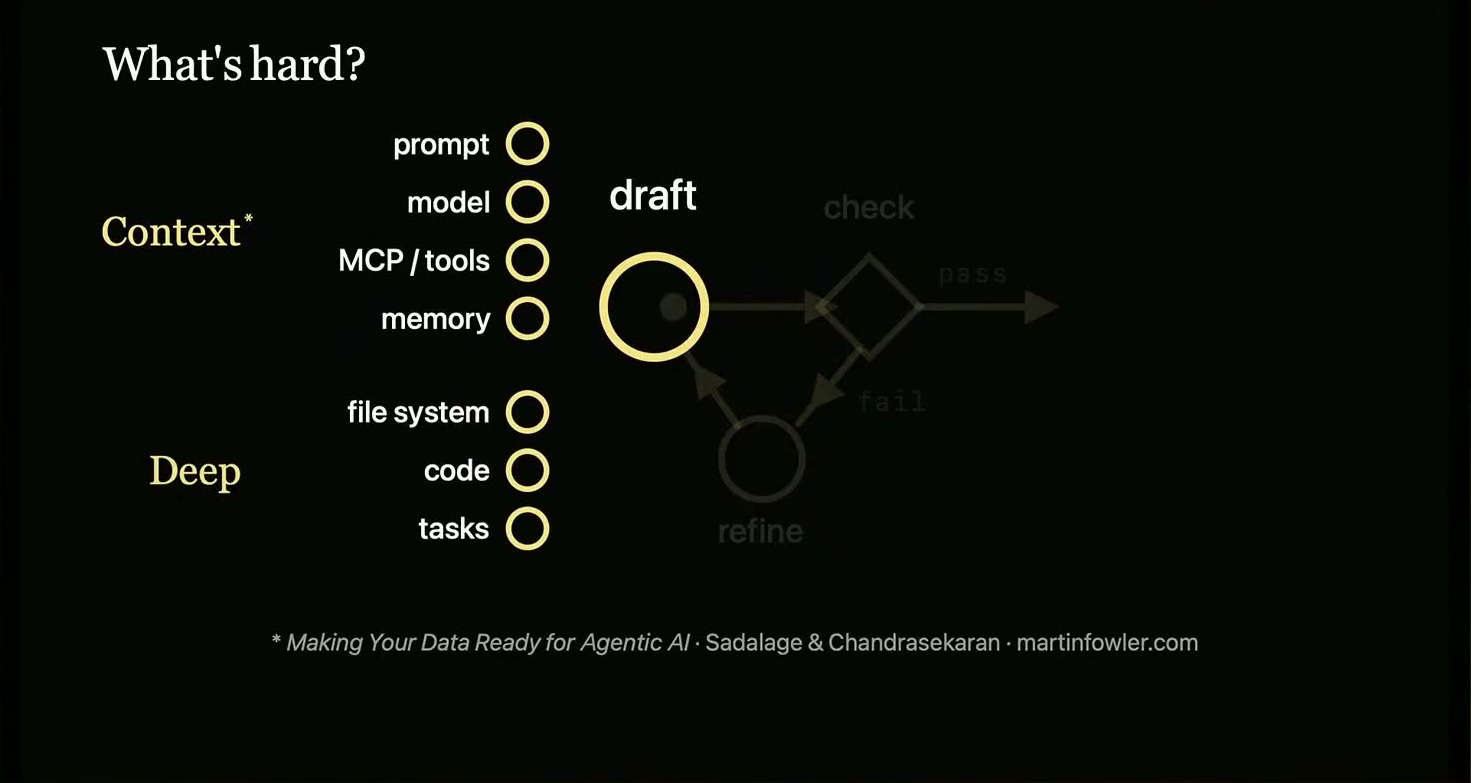
我相信质量更高的输入会带来更好的输出,同时降低计算成本。但什么才算高质量输入?一般来说,我们可以把它称为上下文,也许吧。当然,这个说法可以挑剔。但这不是我们今天关注的重点。我们会更多关注输出。但如果不谈输入质量,我们就无法真正讨论输出质量。
And I believe that higher quality inputs will result in better outputs at a lower compute cost. but what are quality inputs? So we'll generally speak to it as context model, maybe. We can nitpick that. But this isn't our area of focus today. We're going to focus more on outputs. But we can't really talk about quality of outputs without talking about the quality of inputs.
理想情况下,我们已经为智能体建立了可信的上下文,这方面也有一些参考资料。不过,在这个模型中,我们可以把 DAG 的状态注入智能体,让它知道自己在整体中的位置。好,现在我们还加入了长期目标,这更凸显了优化这个循环的成本和效率的必要性。检查这一步决定工作是否足够好、可以继续推进。
So ideally, we've established a trusted context for our agent, and there's some references on that. But one thing we can do in this model is inject the DAG state into our agent and let it know kind of where it fits into the bigger picture. Okay, so now we've added even long time horizon goals, and that emphasizes the need to optimize the cost and efficiency of this loop. So the check is where we decide whether the work is good enough to move forward.
我们需要定义什么才算好。这是最难的部分。而且我们需要一种可靠的评估方式。否则,增加迭代次数不一定会带来更好的结果。这个循环的可信度,实际上取决于检查环节的可信度。所以,如果要谈质量,我们就来谈检查环节,也来谈质量。我认为,用 AI 构建产品是一个全面提升产品质量的机会。我很喜欢大家关于耐用软件的一些讨论。
We need to define what good looks like. That's the hard part. And we need to have a reliable way to evaluate it. Otherwise, more passes don't necessarily mean better results. the loop is really only as trustworthy as the check. So if we want to talk about quality, let's talk about the check and let's talk about quality. Okay, I think building with AI is an opportunity to improve product quality overall. I like some of the conversation about durable software.
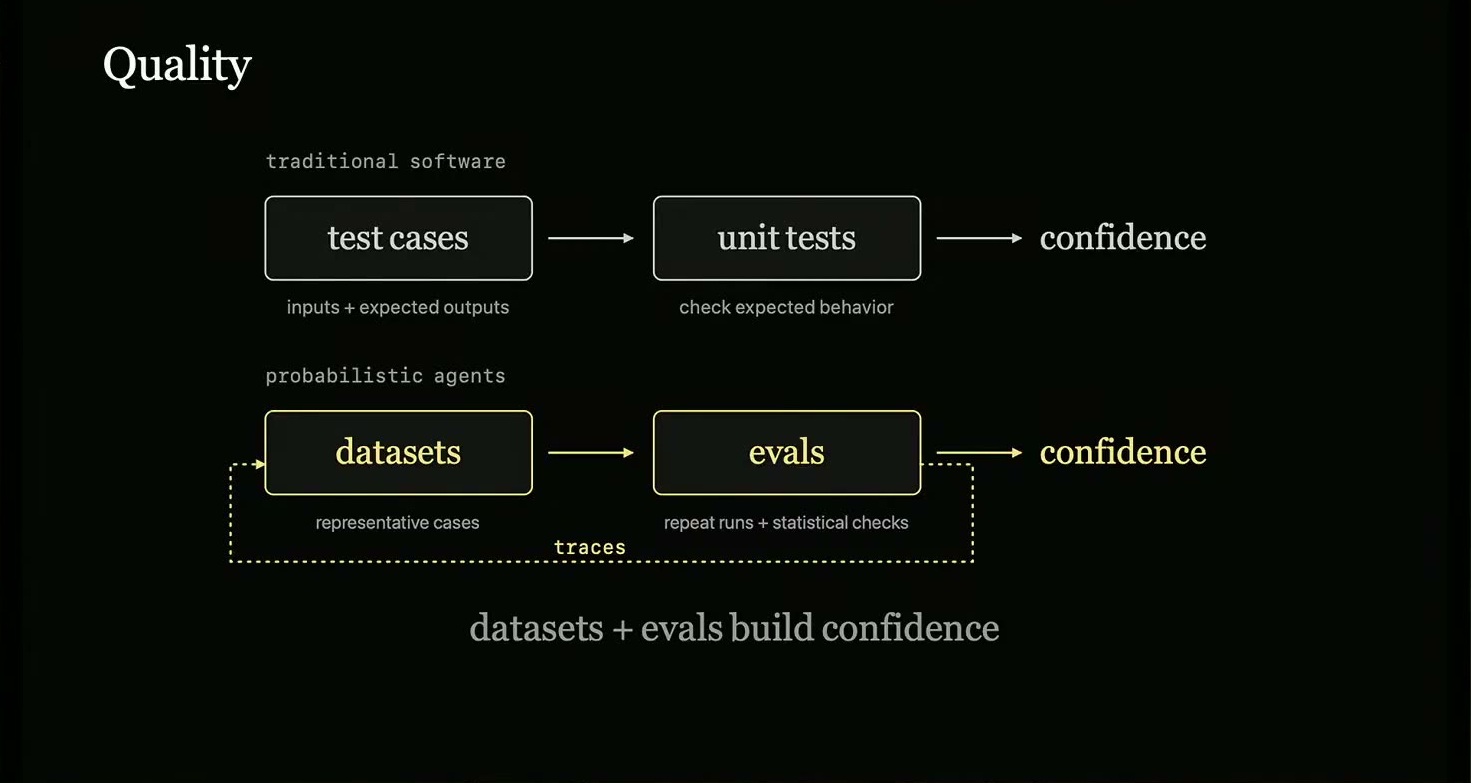
我相信质量的重要性。在传统软件领域,我们建立了提升信心的机制,让我们确信软件具有高质量。这通过各种机制实现,但主要是系统性地依靠测试用例和单元测试,并把这些检查纳入交付流程,确保我们修改代码时,不会犯错,导致其他部分被破坏。这是我们为传统软件建立的信心机制。智能体具有概率性,因此同一个请求可能会产生不同的答案。
So I'm a believer in quality. And in traditional software, we've built confidence mechanisms in place to give us confidence that the software is of high quality. And that's done with a variety of mechanisms, but primarily systematically with test cases, unit tests, checking these as a part of our delivery flow to ensure that when we make code changes, mistakes aren't made that break other things. So this is a confidence mechanism that we've put in place with traditional software. The agents are probabilistic, and so the same request can produce different answers.
不止一个答案可能都可以接受。我们仍然需要证据,但仅仅精确比较输出确实不够。我们需要构建有代表性的数据集,对其进行评估,并定义质量标准是什么样。需要重复进行多轮评测,这是一种统计分析,对吧?我们要实际、大规模地查看输出,而不只是直接进行逐项比较。我们把评测与运行时日志结合起来,记录发生了什么;或者说,应该称为追踪,也就是记录实际发生情况的运行时日志,我们建立了这种信心机制,用来补充传统软件。
than one answer may be acceptable. And we still need evidence, but exact output comparisons alone really aren't good enough. need to build representative data sets and evaluate them and define what good looks like. we need to run these evaluations in repeated series, and this is a statistical analysis, right, where we actually look at the outputs in volume and not just as a direct comparison. So combining with evals as sort of your runtime logs of what happened, or sorry, traces, which are sort of your runtime logs of what happens, we've built this confidence mechanism to complement traditional software.
最终,我们接下来会更详细地讨论如何增强对输出的信心,不仅要建立这种机制,还要讨论如何开始启用它。那么智能体应该放在哪里?回到贷款的例子。
And ultimately, this is what we're going to be talking about a little bit more in terms of driving confidence in the output, not only putting this mechanism in place, but how do we begin to turn it on. So where does the agent belong? Back to the lending example.
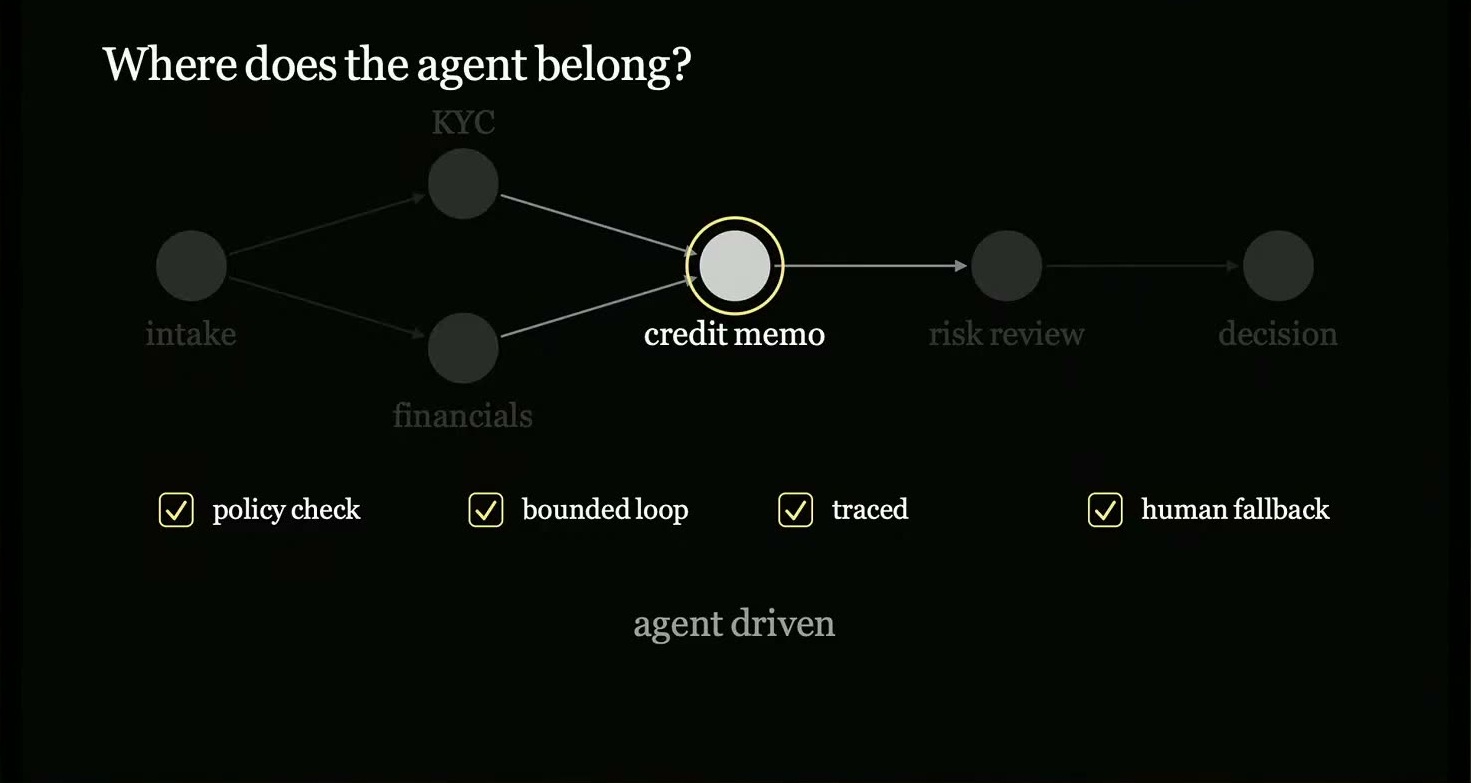
我们可以并行开展 KYC,也可以按顺序处理财务资料,比如信用备忘录、风险审查,文件、决策等所有事项,都可以放进我们的 DAG。查看每个节点时,我们都要问:一些问题,例如:让智能体来驱动这个节点,是否会有价值,而不是让人来驱动这个节点?我们可以看看其中一些基本问题,例如:能否轻松根据政策进行检查?它能否在有界循环中运行?我们能追踪它吗?我们能否在必要时回退给人工?如果这些问题的答案都是肯定的,我们就能初步判断,这个特定节点可能更适合自动化。
we can do KYC financials in parallel and sequence like credit memo, risk review documentation, decision, all these things in our DAG looking at each node we want to ask some certain questions like how valuable would it be to have an agent drive this node versus a human drive this node and we can sort of look at some of these basic questions like can we check it against the policy easily can it run in a bounded loop Can we trace it? Can we fall back to a human? If we can answer yes to these type of questions, we can kind of have a good idea going in that this particular node may be better suited for automation.
但在整个 DAG 中,我们都应该寻求让智能体提供辅助。所以我们真正讨论的不是 AI 是否参与,而是我们是否预期 AI 会在某个时候接管。
But throughout the DAG, we should look to drive agent assistance. So what we're really talking about is not whether or not AI is involved, but whether or not AI we expect to take over at some point.
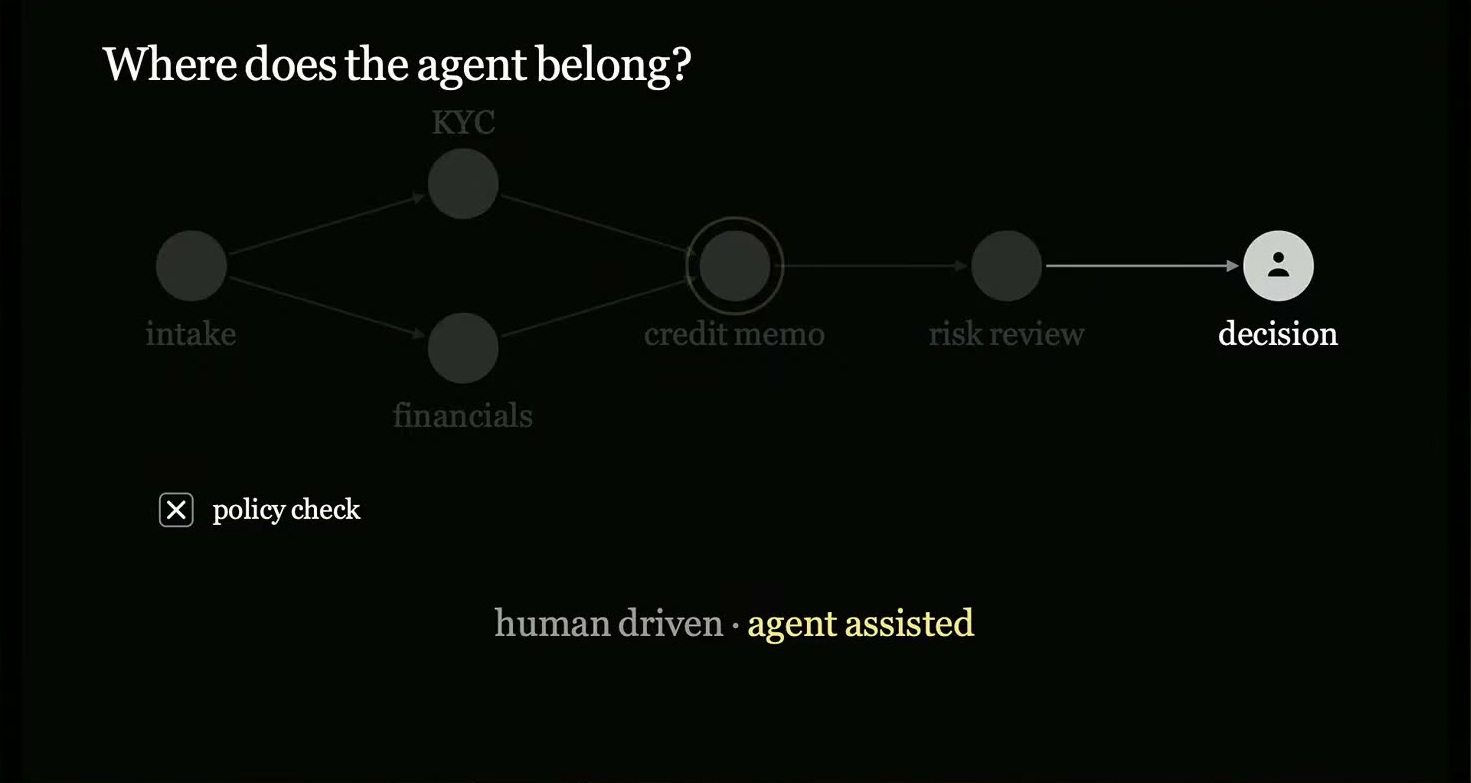
对于决策,你大概也会同意,这个环节可能需要由人来驱动;这本质上是根据政策进行检查。嗯,这会让我觉得爬山优化变得更困难一些;但我们说的爬山优化是什么意思?好,如何启用它?
on the decision you would probably agree that we probably need that to be human driven this is essentially the check against the policy um so this is going to be a little bit more difficult i think to hill climb but what do we mean by hill climb all right how do we turn this on
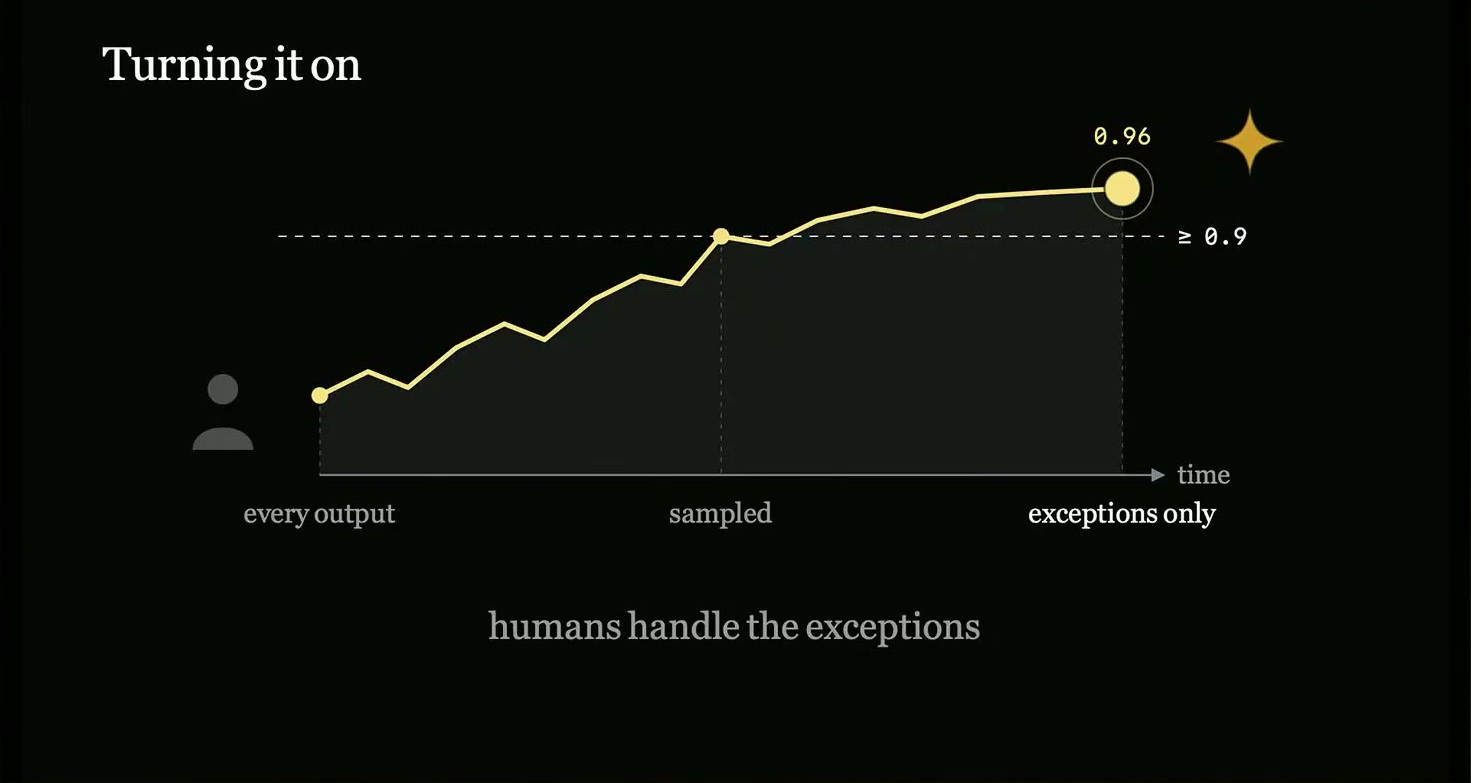
第一天,我们从监督模式开始。当智能体和人作为流程的一部分协同工作时,我们可以人工核实输出,确保质量足够高。这时我们会完善数据集,并确保建立了恰当的信心机制。我们已经与领域专家一起定义了什么才算好,他们也开始进行核验。当测得的置信度达到政策门槛时,我们就可以转向抽样审核。这意味着人们只检查一部分输出,不一定检查全部。
So day one, we start supervised. And as we have agents and humans working together as a part of the process, we can manually verify the output to ensure that it is of high quality. This is where we refine our data sets and ensure that we have the right confidence mechanisms in place. We've defined what good looks like with the domain subject matter experts. and that they're beginning to verify it. When measured confidence reaches a policy threshold, we can move towards sampling. And what that means is humans are looking at a slice of the output and not necessarily all of it.
我们开始通过追踪进行更系统的评估,以确保人工没有看到的那些输出仍然达到质量标准。最后,一旦达到置信度门槛,人们会更多地处理流程中的异常情况,但仍会参与完善数据集并确保输出质量。好,下面是几点总结。DAG 和 DCG。
We begin more systematic evaluation through traces in order to ensure that what the humans aren't seeing is still meeting the quality bar. And then finally, once we clear the confidence threshold, humans handle more of the exceptions of the process, but still act as participants in refining the data sets and ensuring the quality outputs. Okay, so a few takeaways from this. DAG and DCG.
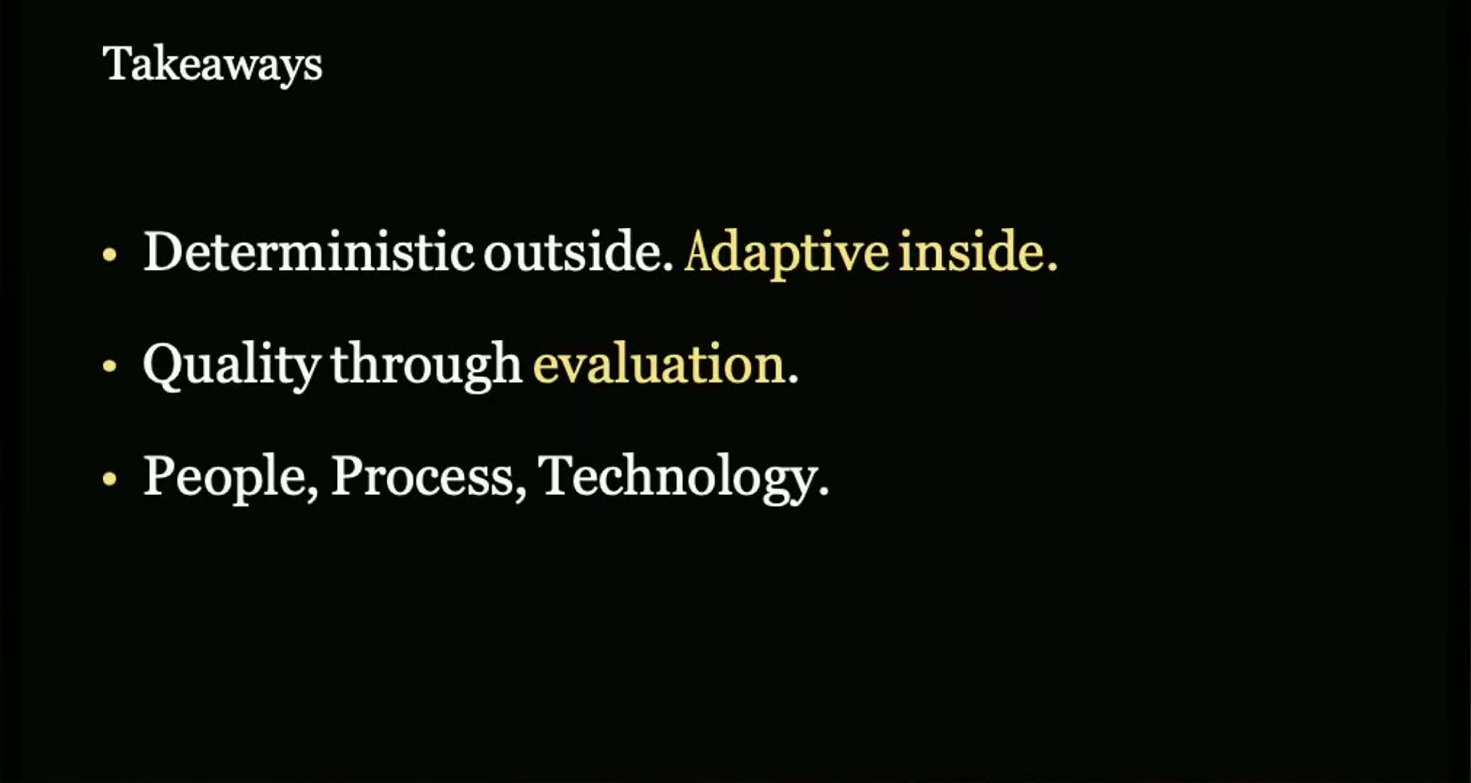
这是基础图论。但最终的问题是,如何构建如今已经存在、并由人执行的这些流程,再把智能体引入其中?真正的诀窍是在外部保持确定性,在内部保持自适应。下一点是通过评估保证质量。这实际上是在建立一种互补的信心机制。所以这不是凭感觉评价模型。我们可以拿出研究和统计数据,说明智能体的质量。
Basic graph theory. but ultimately how do we build these processes that exist today and where people are working them and bring agents into the mix? And the recipe really is to keep it deterministic on the outside and make it adaptive on the inside. The next is quality through evaluation. And this is really establishing a complementary confidence mechanism. So it's not a feeling about a model. We can actually provide research and statistics about the quality of our agents.
这会建立信心,并让人自然地信任输出。质量是一项团队工作。AI 工程师负责整条管线,接收来自各个方向的产品信号,交付构建良好的应用,并在幕后运用机器学习运维。最后,智能体会加速整个运营模式。
So this builds confidence and inherently trusts output. Quality is a team sport. AI engineers own the pipeline to taking product signals from all directions and deliver applications that are well-built and utilize ML operations behind the scenes. Finally, agents accelerate across the operating model.
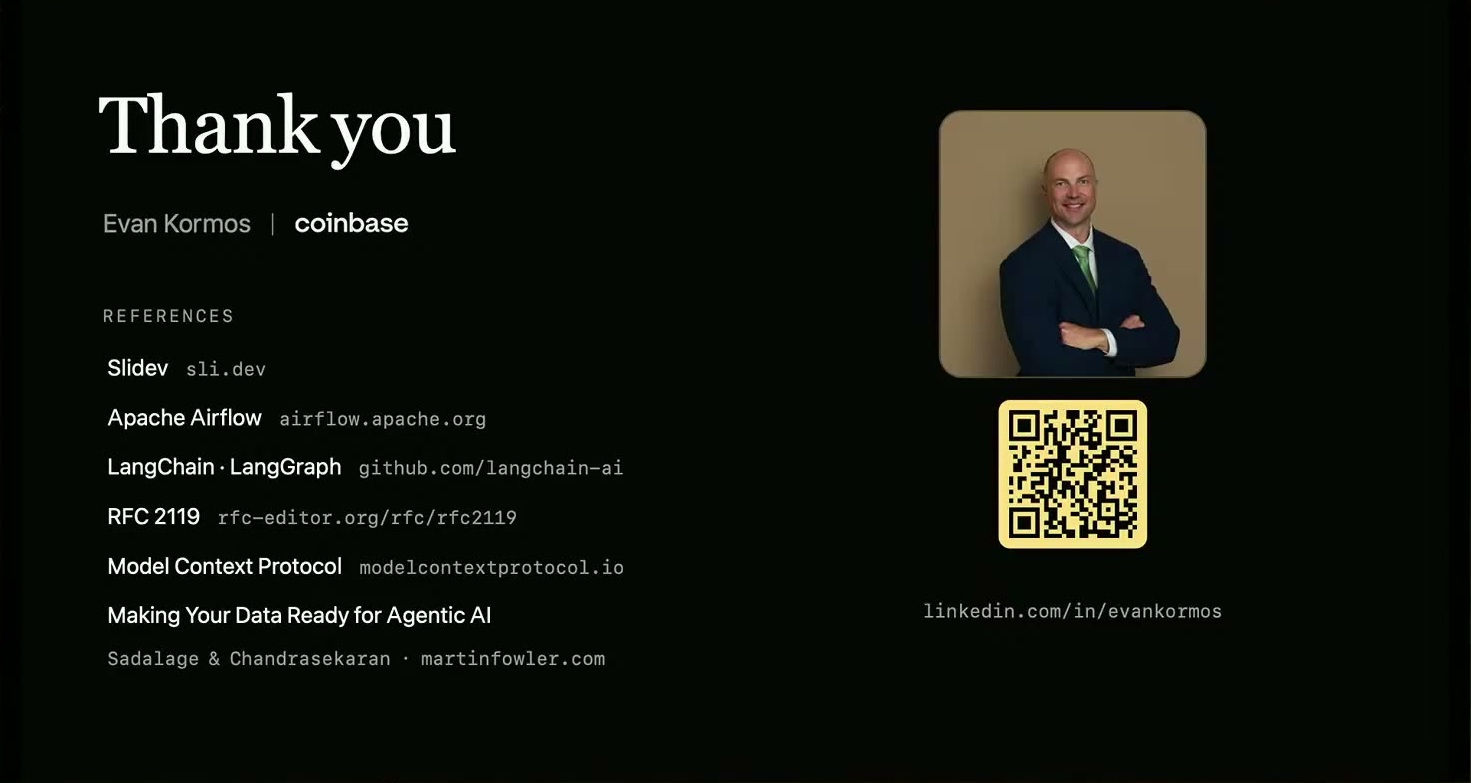
最后一页上我列出了一些参考资料,以及今天谈到的内容。我的演讲到此结束。非常感谢大家。
I've included some references on the final slide, things that I've spoken about today. This concludes my presentation. Thank you very much.