改变世界的机器:vAI
The Machine that Changed the World, vAI
原文由官网提供,中文由 GPT-6 Luna 翻译。相邻片段合并排版,正文与时间点保持对应。
已插入 22 张经核对的幻灯片或演示截图;点击图片可放大。图注链接为当前视频时间,左侧正文时间保留原转录版本,二者可能不同。
共 30 个阅读段落
大家早上好。我叫 Tariq Shaukat。正如刚才介绍的,我是 Sonar 的 CEO。今天我们要谈谈我们如何帮助企业构建真正可用的软件工厂。我想从实体工厂谈起,会很有意思,因为
Morning, everybody. My name is Tariq Shaukat. I am the CEO of Sonar, as you just heard. And we're here to talk today about how we have been helping companies build software factories that actually work for enterprises. And I thought it'd be an interesting way to start looking at actual factories, because
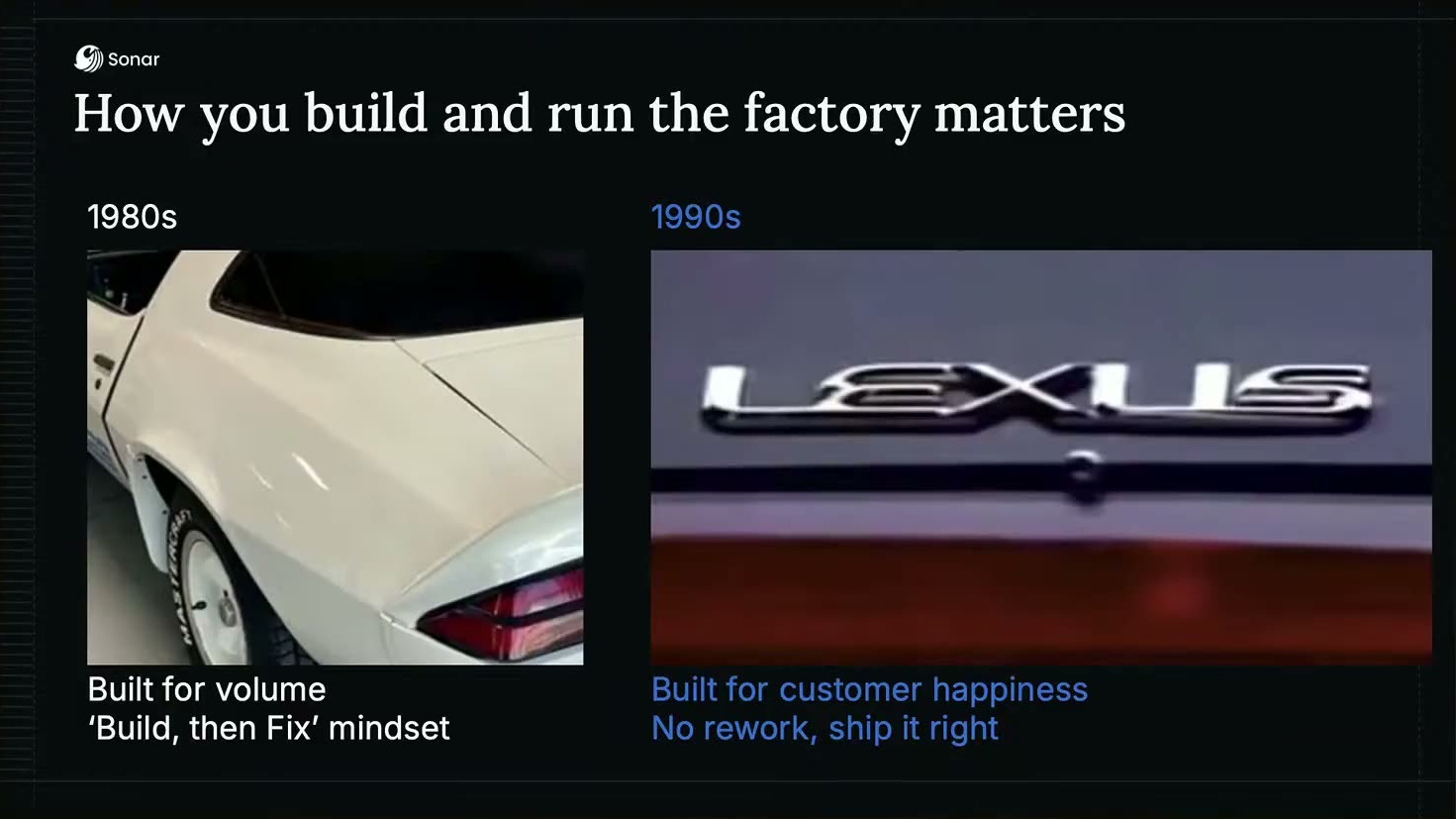
我们知道如何建造实体工厂。在座各位中,如果有人已经有点白发了,可能还记得 1980 年代。在 1980 年代,你能买到非常好的汽车。但如果你看这里的图片,或者记得那个年代,就会发现汽车各个部分并没有完美地拼合在一起。不同部件之间会留下很大的缝隙。车本身很好,却没有按照应有的方式配合运作。后来 Toyota,尤其是 Lexus,推出了一则广告,画面很简单:一颗滚珠沿着车身接缝滚过。这在当时相当具有革命性,因为它说明汽车确实可以造得严丝合缝。
we know how to build actual factories. And for those of you who have a little bit of the gray hair and all of this sort of thing, you may remember the 1980s. And in the 1980s, you could find cars that were really good cars. But if you look at the picture here and if you remember those times, the cars didn't quite fit together perfectly. You'd have different pieces that would leave big gaps. It would be really good cars that just didn't kind of work the way they were supposed to. And then Toyota, and particularly Lexus, came out with a commercial, and it showed something very simple, which was a ball bearing running across the seams of this car. And it was kind of revolutionary at the time because it showed that you could actually build a car that fit together perfectly.
与其追求产量,先大量生产再按旧思路修修补补,不如从一开始就注重一次交付正确、避免返工、让客户满意。
And instead of building for volume and building and then fixing the old mindset, you could actually have a mindset focused on ship it right, on no rework, on customer happiness.
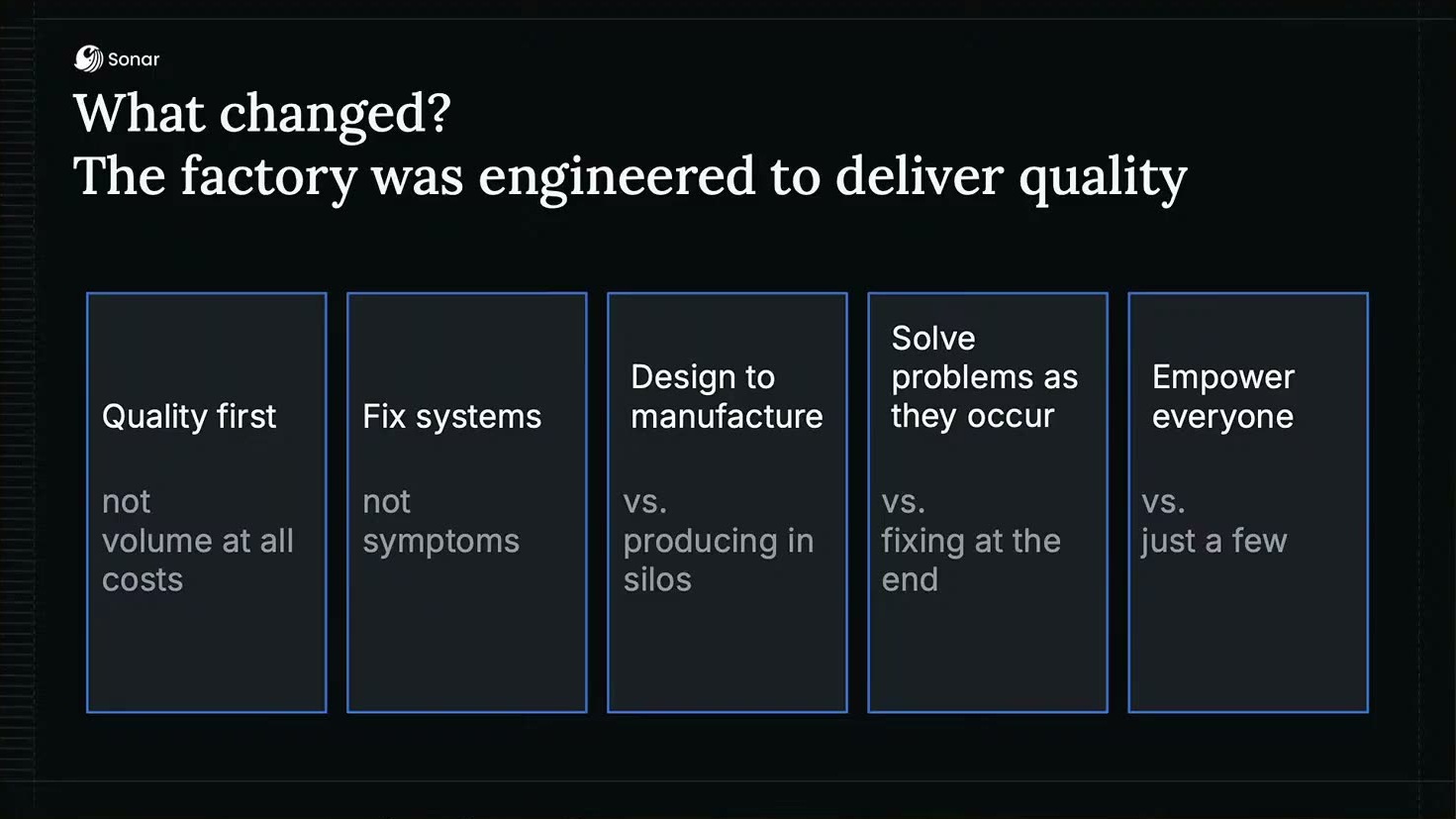
这并不是由某一项单独的改变造成的。实际发生的是,人们开始以不同方式思考工厂,开始设计和建造以交付质量为目标的工厂。我认为其中有几个不同的要素至今仍然适用。第一是优先考虑质量而不是产量;第二是修复整个系统,而不只是眼前看到的个别症状。第三是从整体可制造性出发进行设计,而不是单独设计车轮、洗涤液瓶等部件,然后寄希望于它们能够拼合。问题出现时就解决,而不是把问题拖到以后再处理。还有,要赋权给每个人,任何人都可以叫停生产线,而不只是老板。那我为什么要谈这些?因为现代软件开发
and there was not this was not a single change what happened was that people really started thinking about the factories differently they started engineering building factories that were engineered to deliver quality and there's a number of different pieces that i think still resonate today the first is you prioritize quality instead of volume the second is that you fix the system, not just individual symptoms that you see. The third is that you design for something that can be built as opposed to designing the wheels and designing the washer bottles and whatever it is and then hoping it fits together. You solve problems as they occur as opposed to kicking the can down the road and fixing it at the end. And you empower everybody. Anyone could stop the line, not just the boss. Now, why am I talking about this? It's actually because modern software
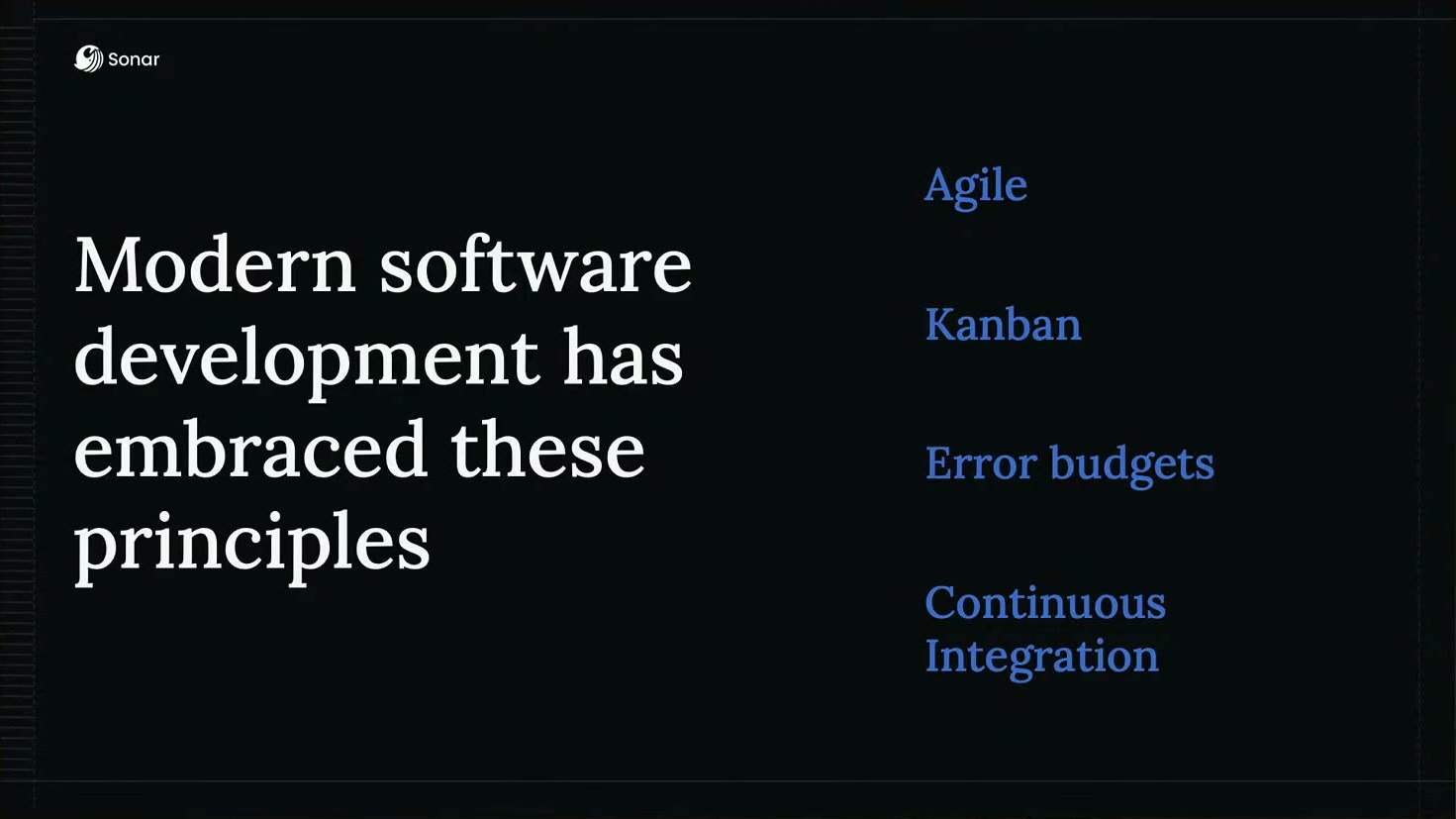
其实已经采纳了所有这些原则。想想今天我们如何构建软件,以及哪些做法被认为是最佳实践;很多术语和实践都来自 Toyota 生产系统的理念。敏捷、看板、错误预算,如果你在SRE 领域工作,还有持续集成。这些理念都源自如何建造高效工厂这个想法。到目前为止,它们在软件开发中在软件开发中一直很有效。但智能体正在改变游戏规则,正如大家都知道的;如果你不明白这一点,今天也不会坐在这里。随着智能体改变游戏规则,
development actually embraced all of these principles. If you think about how we build software today, what is considered best practice, a lot of the terms and the practices came from that idea of a Toyota production system. Agile, Kanban, error budgets, if you're in the SRE world, continuous integration. These ideas all kind of sprung from this notion of how do we build factories that work. And it's worked really well for us in software development so far. But agents, as we all know, you wouldn't be sitting here if you didn't understand that agents are changing the game. And as agents are changing the game,
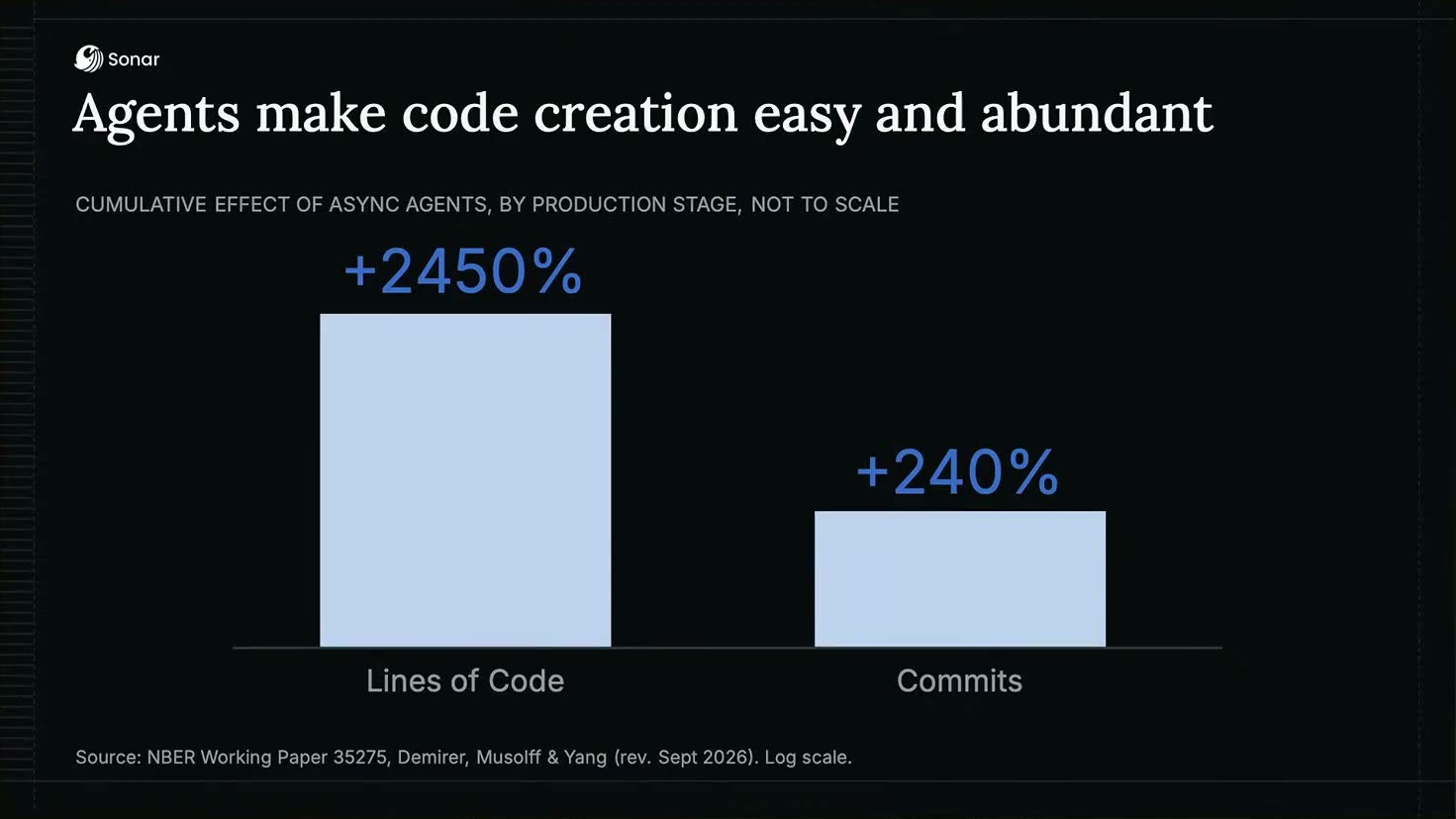
一些奇怪的事情开始发生。首先,这项研究是上个月发表的,研究异步智能体在开发生命周期中的影响。我相信你们很多人都看过。代码行数出现爆发式增长,增加了 2,450%,提交次数也增加了。代码现在很容易生成,而且数量充足。顺便说一下,越来越多的人,我
weird things start to happen. First of all, this is research that was published last month of the effect of implementing asynchronous agents in your development lifecycle. And I'm sure many of you have seen this. You have an explosion of the number of lines of code written up 2,450%, you have an increase in the number of commits. So the volume code creation is now easy and it is now abundant. And by the way, more and more people, I'm
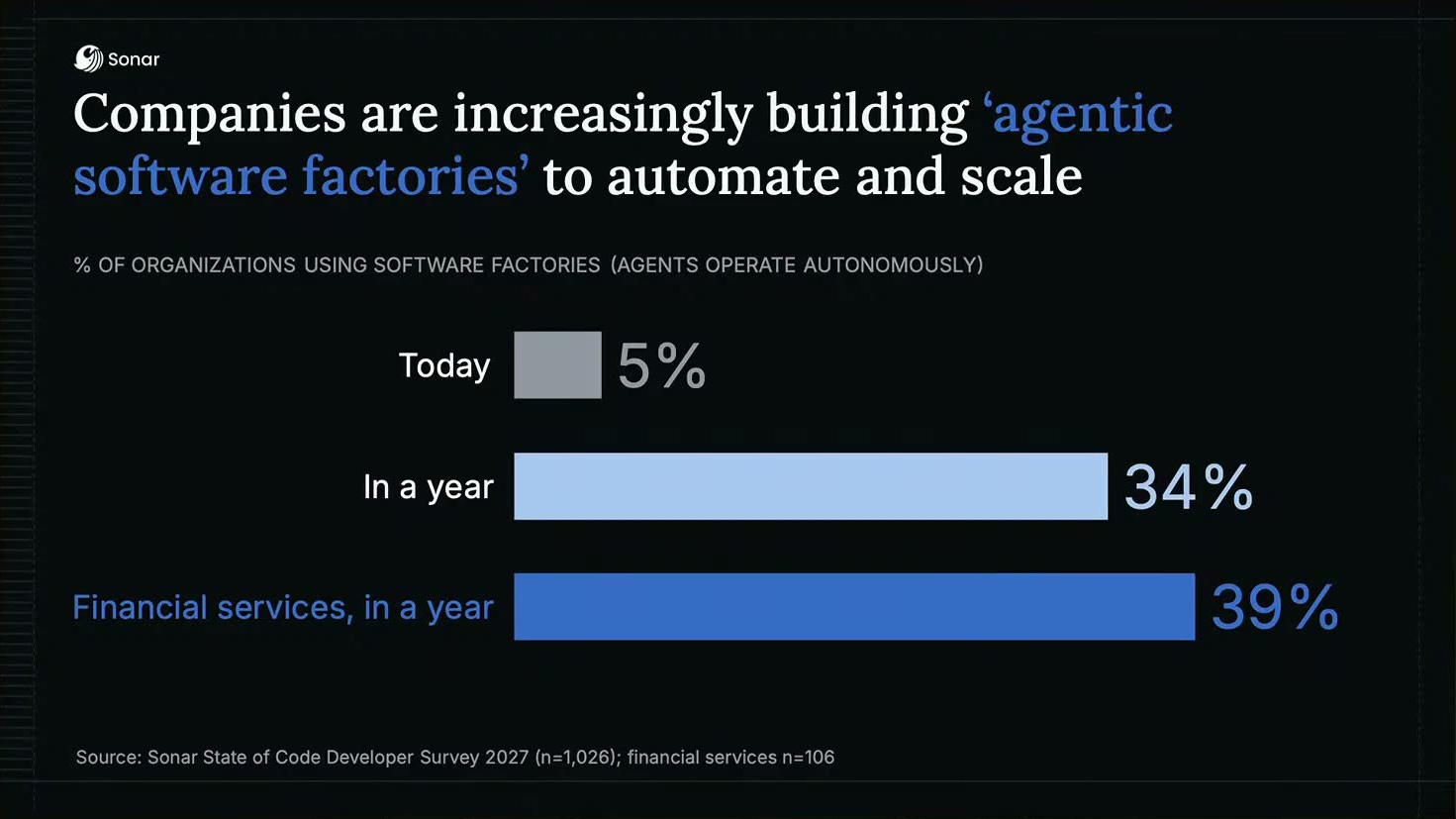
相信在座很多人都在想:既然容易生成、数量又多,我怎样才能实现自动化?怎样才能构建智能体驱动的软件工厂,帮助我们自动化并扩大规模?我们今天刚完成了所谓的 State of Code 开发者调查。调查下个月发布,今天先透露一点:我们访谈的开发者中有 5%表示他们正在运行智能体驱动的软件工厂;34% 预计一年后会这样做,金融服务行业的这一比例为 39%。因此大家都在思考如何构建下一代工厂。
sure many people in this room are saying, okay, if it's easy and abundant, how do I automate it? How do I build factories, agentic software factories that help automate and scale this? And today we just finished our what we call state of code developer survey. it'll be out next month but this is a little preview today 5% of developers that we spoke to say that they're running agentic software factories but 34% said in a year they expect to and 39% in financial services so people are thinking about how do you actually build these next generation factories and
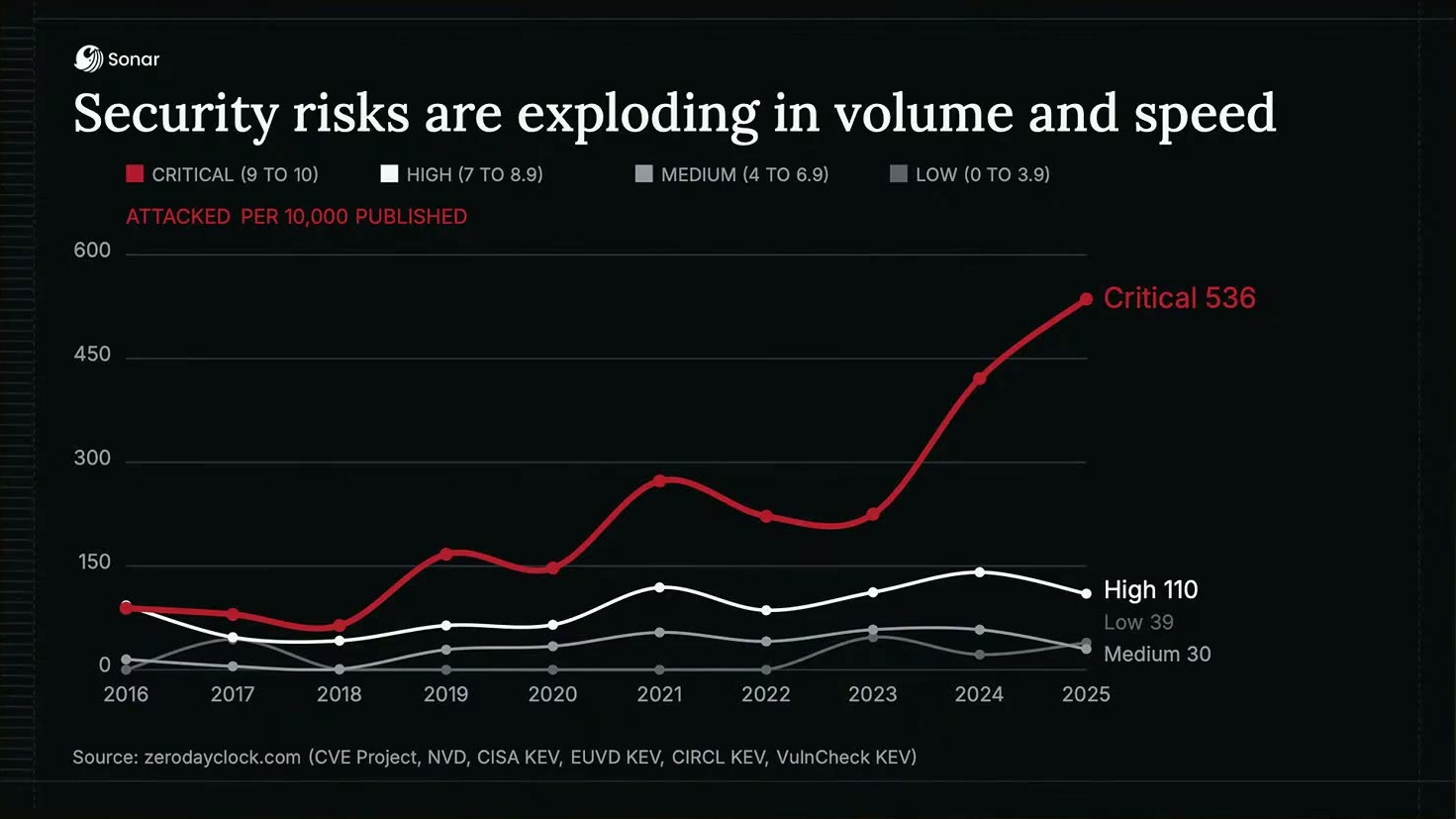
这里有几个需要注意的问题,包括安全风险。智能体可以很好地帮你构建东西,也可以很好地帮你攻击东西,帮你寻找漏洞、质量问题等等。所以,我上周末准备这场演讲时,恰好看到一则相关消息;这也呼应了 Toyota 生产系统的理念。
there's a couple of gotchas in here security risk the agents can work really well to help you build stuff it can also work really well to help you hack stuff help you attack stuff, find vulnerabilities, find quality issues, etc. And so as I was writing this presentation kind of over the weekend, a little just in time, again from the Toyota production system,
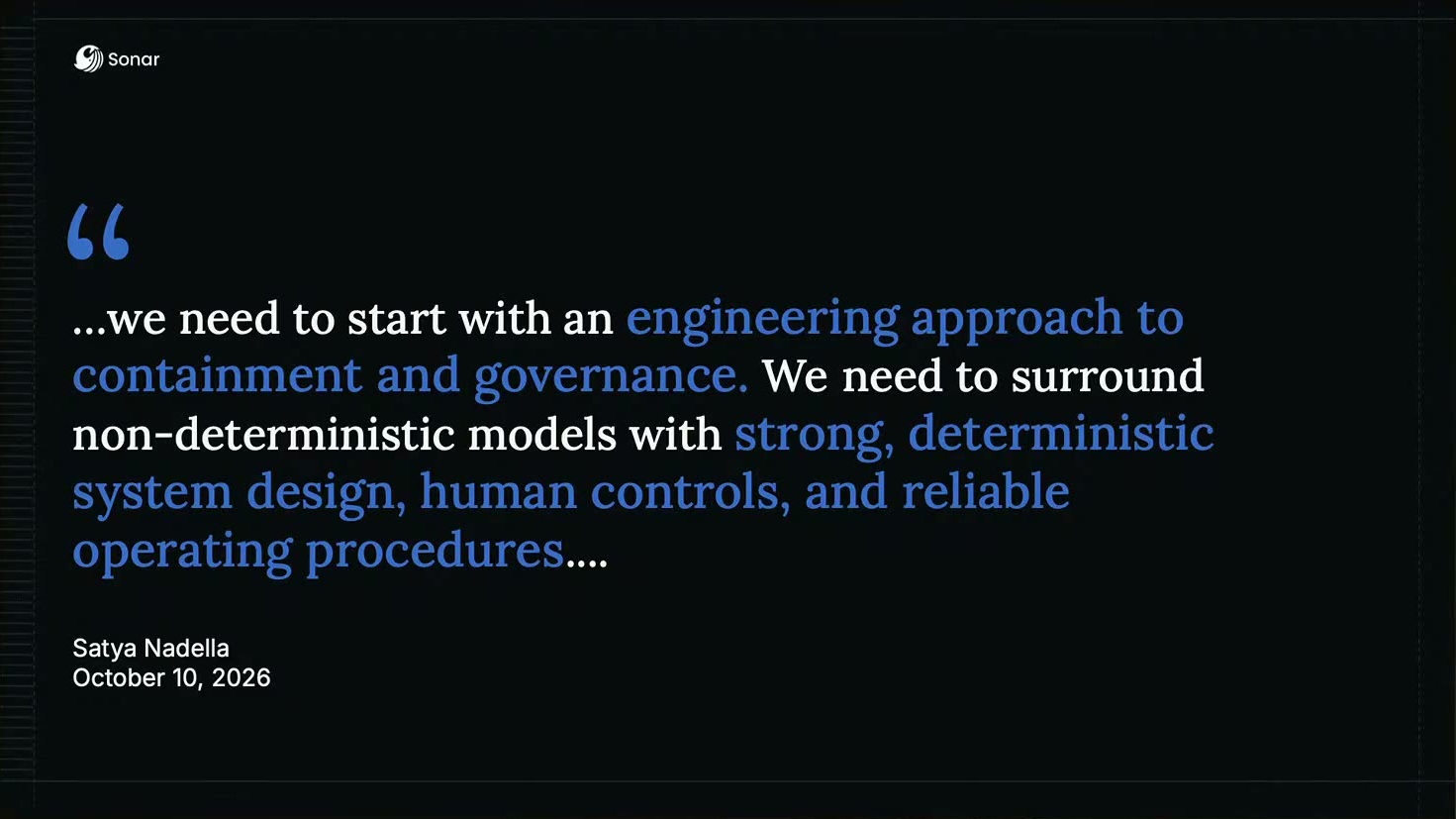
Satya Nadella 在 X 上发布了这篇文章。如果你还没读过,我觉得这是一篇很棒的文章,我认为每个人都应该认真领会。他谈的是公司内部模型带来的内部人员风险。他提到的一点是,需要以工程方法实施遏制与治理,并以强大的确定性系统设计为基础,同时配合人工控制和可靠的操作流程。这段话让我很有共鸣,因为我们看到的是软件工厂设计或软件开发范式正在转变。更广泛地说,我们需要通过工程设计,构建能够让智能体驱动的软件工厂具备可信度和质量的系统。
Satya Nadella posted this article on X. And if you haven't read it, I think it's a great article that I think everyone should internalize. But he was talking about insider risk of models inside of companies. And one of the things that he talked about was the need for an engineering approach to containment and governance built around strong deterministic system design, human controls, and reliable operating procedures. And this really resonated with me because what we are seeing is a paradigm shift in software factory design or software development, let's call it more broadly, that we need to engineer, we need to build systems that engineer confidence and quality into agentic software factories.
为此,我认为首先要了解我们面临的限制。这件事难在哪里?我想指出五个问题。第一,人工参与审核无法规模化。这对在座各位来说可能不算什么争议话题,
So to start doing that, I think it's important to understand the limitations that we're facing. So what's the hard thing about this? And there's five that I'm going to call out. The first is that human in the loop doesn't scale. and this may be, I don't know, to this room
我也不确定,但我几乎每次和公司交流都会问:“你们的 AI 治理策略是什么?”他们会给我讲一大堆内容,然后说:“不过不用担心,我们有人参与审核。”但人工参与审核的问题,
it may not be all that controversial but virtually every company I talk to I say, what's your AI governance strategy? And they give me all this stuff and they say but don't worry, we have humans in the loop and the problem with humans in the loop
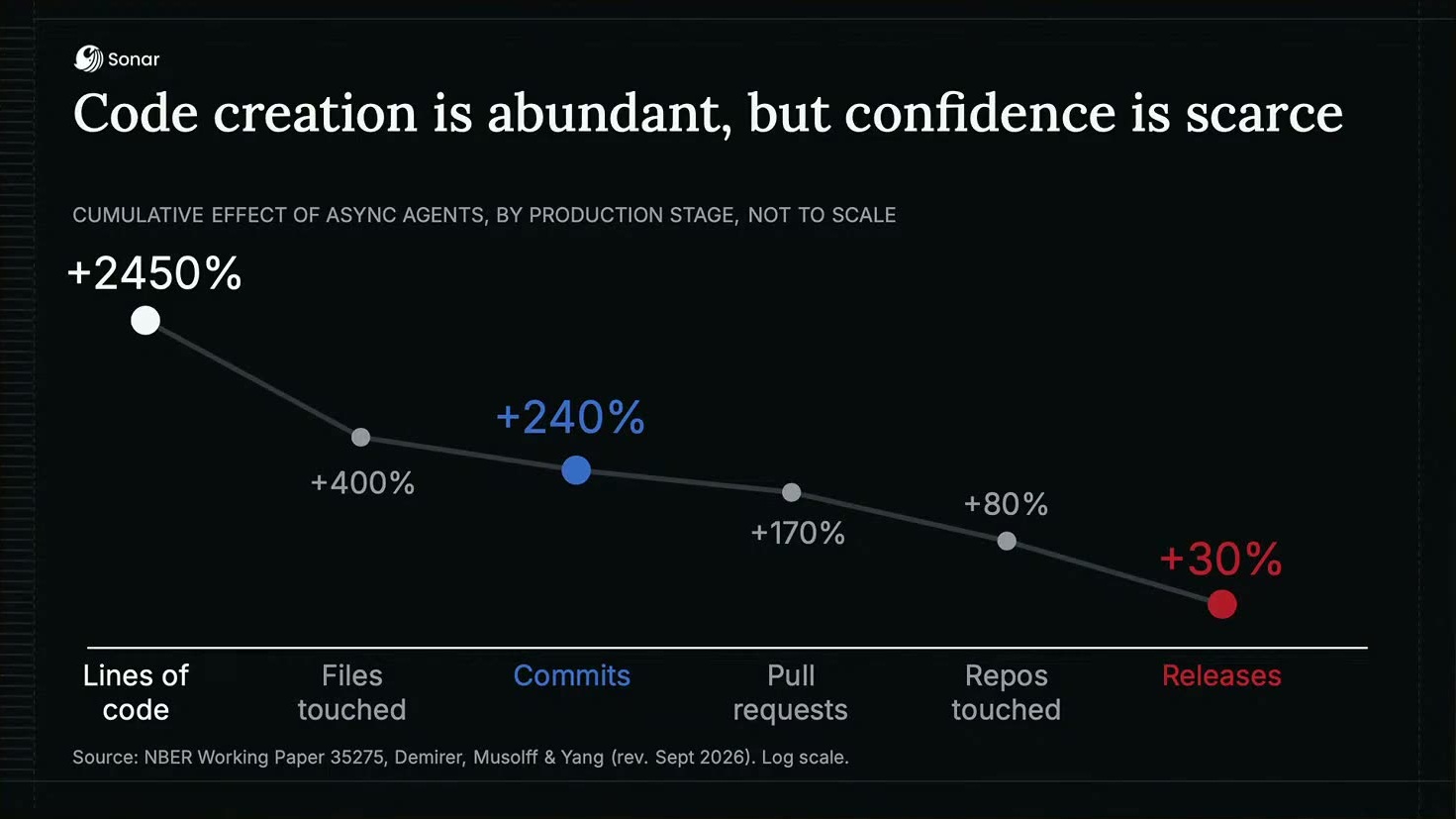
正如我之前提到的,代码行数增加了 2,450%,提交次数增加了 240%,但同一项研究显示,发布次数只增加了 30%。我们还没弄清楚如何扩大规模,把产出转化成真正的交付。我们需要自动化,也需要新工具。还有一个非常重要的概念,
as I mentioned earlier, 2,450% increase in lines of code 240% increase in commits but the same study showed only a 30% increase in releases we haven't figured out how to scale from producing stuff to shipping stuff. There's automation needed, there's new tools needed, and really importantly, this is a concept that really,
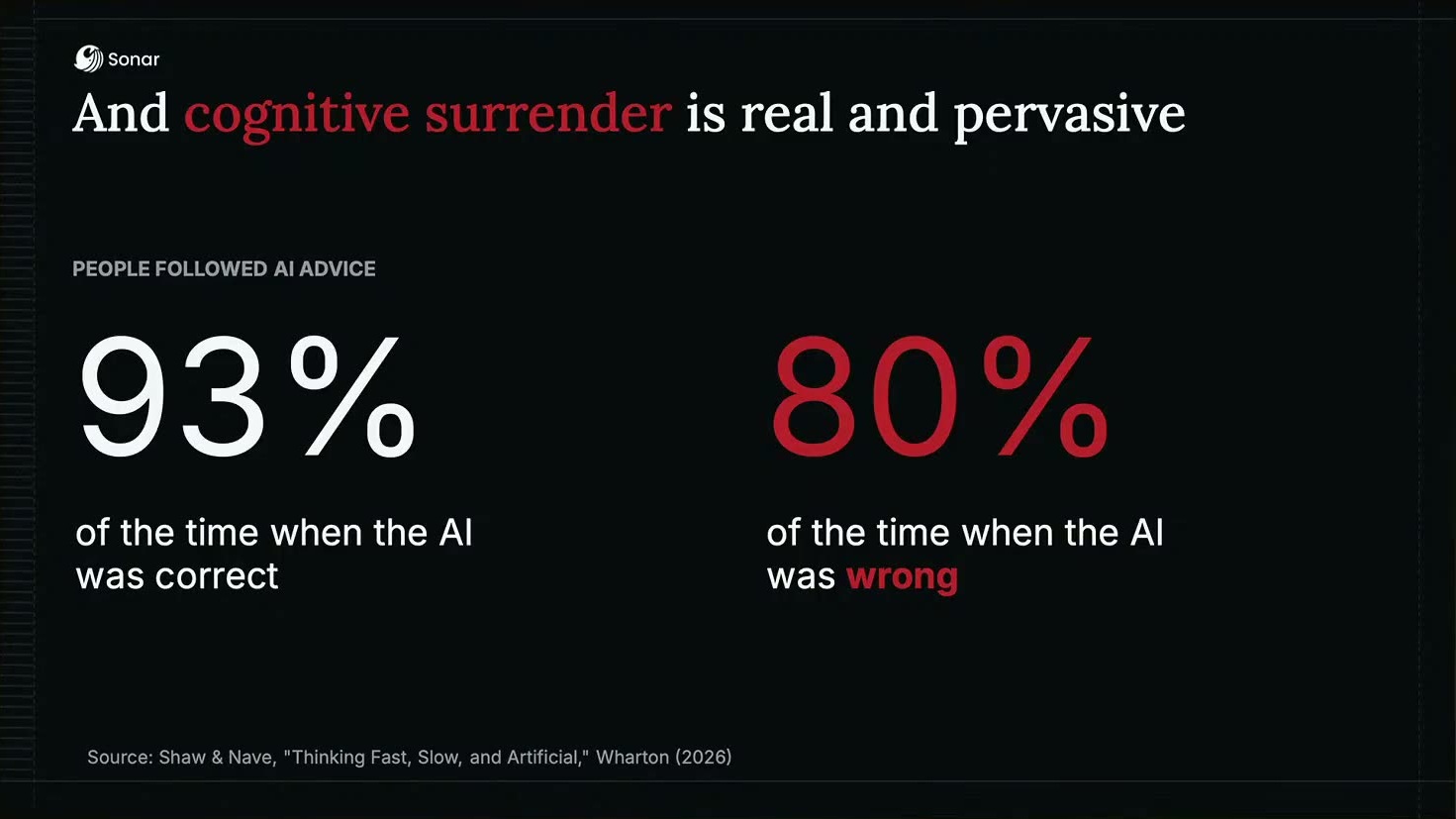
我现在每天都能看到,我相信你们许多人也一样,这叫作认知投降。这项研究就在几个月前完成,它考察人类在多大程度上会赞同 AI。结果发现,当 AI 正确时,人们有 93% 的时候会同意它。而 AI 错误时,人们仍有五分之四的次数会同意它。所以问题并不是人工审核只要再快一点就行。而是这种模式在智能体时代行不通。这是第一个问题。
I see it every day now, and I'm sure many of you do as well, called cognitive surrender. And this study was done just a couple months ago, and it looked at how often do humans agree with AI. And it turns out they agree with AI when AI is right 93% of the time. And four out of five times they agree with it when the AI is wrong. So it's not that human in the loop is, we just need to make things faster. It's actually that it doesn't work in the agentic era. So that's problem one.
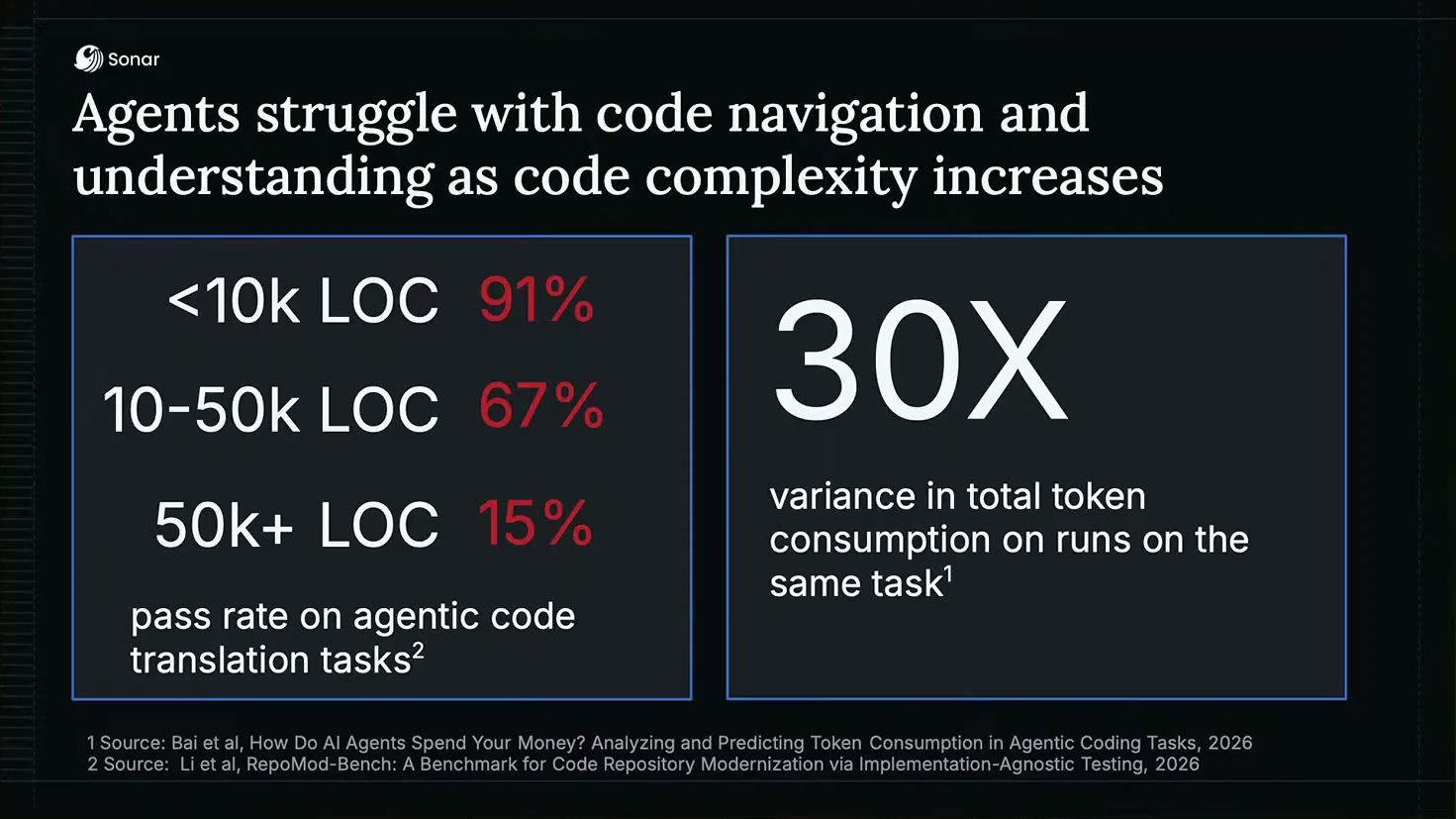
第二个问题是,智能体很难处理大型复杂代码库。它们非常聪明,但要在代码库中工作,就必须理解代码库里发生了什么。左边展示的是一项关于代码迁移的研究。研究显示,当代码库有 10,000 行时,智能体有 91% 的概率能正确完成任务,也就是代码库包含 10,000 行代码。等代码库达到 50,000 行,我相信在座各位使用的代码库都大得多,但尝试迁移 50,000 行代码时,准确率就大幅下降。另一项研究则考察,在大型复杂代码库中完成同一项任务需要消耗多少 token。
Problem two is that agents struggle with large complex code bases. They are very, very smart, but you need to understand what happens in a code base in order to work on it. The left-hand side is a study that was done on code translation. And what it shows is that the agents were able to get it right 91% of the time when the code base was 10,000 lines of code. And by the time it got to even 50,000, and I'm sure everyone in this room operates off of much bigger code bases than this, but when it was trying to translate 50,000, the accuracy collapsed. Similarly, another study looked at how many tokens does it take on a large complex codebase to complete the same task.
差异达到了 30 倍。不是 30%,而是 30 倍。原因是智能体会消耗大量 token 来理解如何浏览代码库、代码库的结构等内容。这就像我想从洛杉矶来这里,却随机挑了一个起点。如果我选 White Plains,就能很快到纽约。如果我选 Albuquerque,就要花很长时间和很多成本。智能体也会遇到同样的情况。错误会不断累积。
And the variance was 30x. Not 30%, but 30x. And the reason is because the agent spends a huge amount of their tokens trying to understand how to navigate the codebase, the structure of the codebase, things like this. And it's kind of like if I'm trying to go from L.A. to here, and if I pick a random starting point. If I happen to pick White Plains, I will get to New York pretty quickly. If I pick Albuquerque, it's going to take me a long time and a lot of cost. Same thing happens with agents. Errors compound.
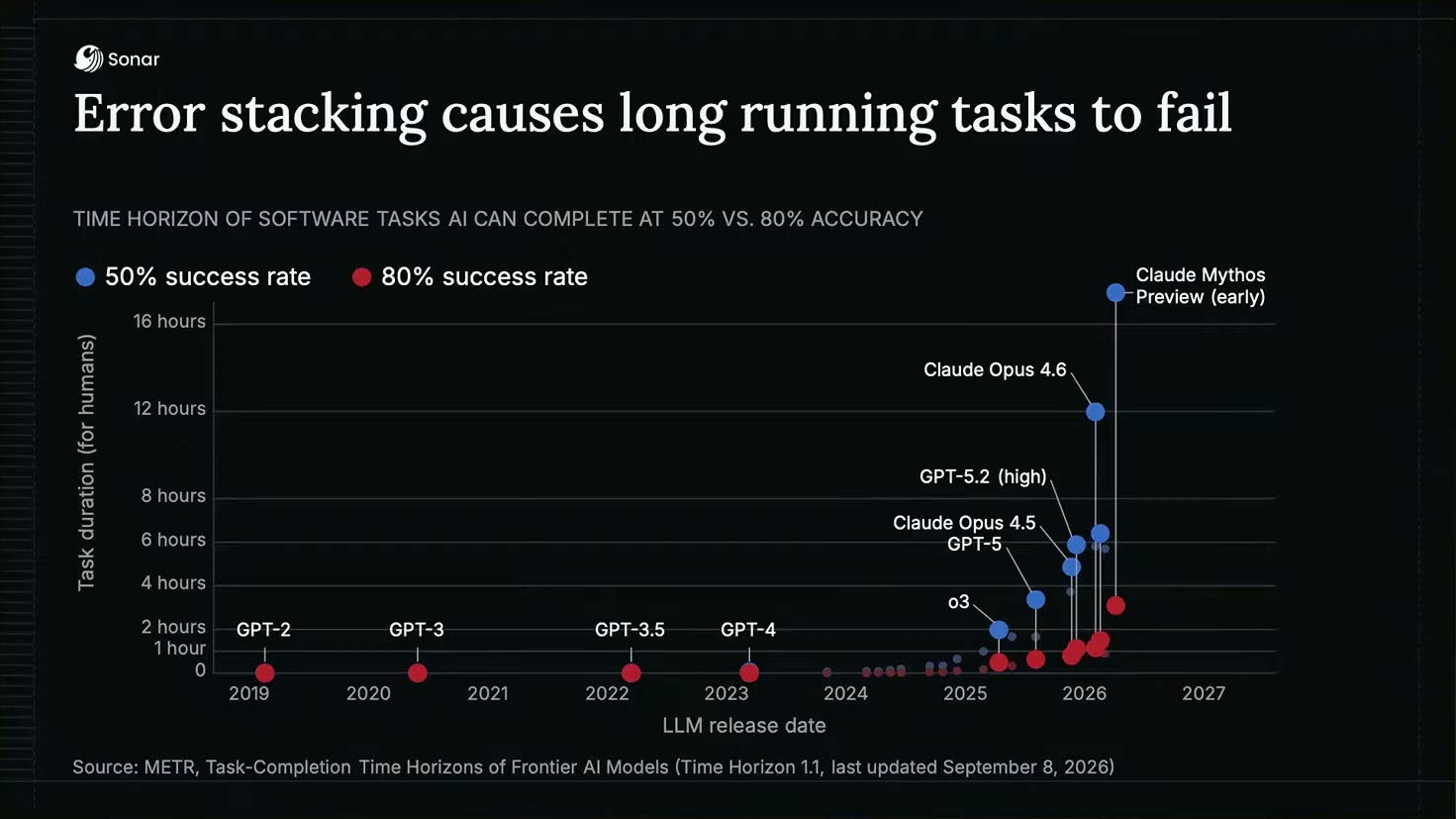
这是另一个重要概念。这是一项来自 Meter 的研究。Meter 在其网站上发布了这项研究,考察智能体完成人工可执行任务的能力。具体来说,他们会问:智能体能否完成一项需要人类花 X 小时的任务?这里可以看到 Claude Mythos preview,也就是他们发布的最新版本,它能够完成需要人类工作 16 小时的任务。这表现非常好。但小字里有个重要限定:它的准确率只有 50%。把准确率提高到 80% 时,曲线就会明显趋于平缓。
This is another important concept. This is a study out of Meter. And Meter looks at, and you can find this on their website, they look at how effective are agents at completing tasks that humans can do. And the way they look at this is can you complete a task that takes X number of hours. So you can see here the Claude Mythos preview, which is the latest version that they've published, was good at completing tasks that take a human 16 hours. So that's really good. But there's an important caveat in the fine print here, which is this is at 50% accuracy. When you dial up the accuracy to 80%, the curve flattens substantially.
因为长期运行的任务中,错误会累积。如果每个步骤的准确率是 95%,那么到了第 20 步,整体准确率就只有 36%。这是软件工厂必须处理的另一个问题。
Because as you do long-running tasks, errors compound. If you have 95% accuracy on each task, by the time you're at 20 steps, you have 36% accuracy. And so that is another issue we have to deal with in software factories.
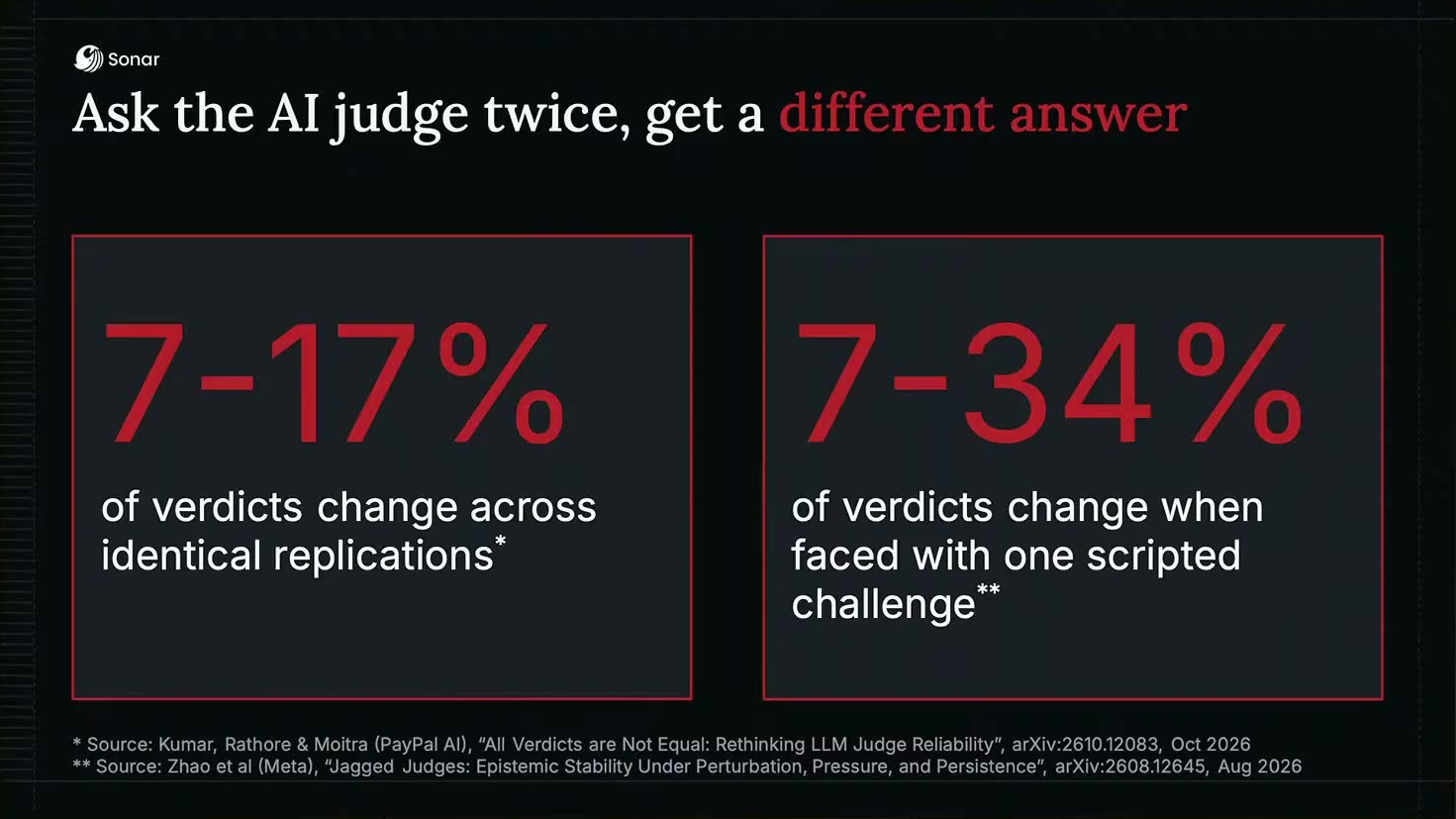
我在这里写得可能最耸动的标题,是第四点:LLM 是不可靠、追逐奖励的评判者。大家总会问:“不能直接问 LLM 吗?”人们也研究过这个问题。左边的第一项研究来自PayPal AI 研究实验室,他们这个月刚发表了一篇论文,发现根据模型和具体情境的不同,在他们称为相同条件重复测试的实验中,有 7% 到 17% 的判定会发生变化。同一个问题问两次,有 7% 到 17% 的概率得到不同答案。
probably the most aggressive headline I put in here is is this fourth point that LLMs are unreliable reward-seeking judges you know so the question that we always get is well can't you just ask an LLM and so people have been studying this as well and this is all again the first on the left-hand side is from PayPal AI's research lab they published a paper this month actually and and found that depending on the model and the situation, between 7% and 17% of verdicts change across what they call identical replications. Ask the same question, get a different answer between 7% and 17% of the time.
Meta 的另一项研究发现,如果你开始质疑 LLM,问它“你确定吗?”,这只是一个非常简单的质疑,它仍会改变主意,比例为 7% 到 34%,具体取决于模型。所以,问 AI 评判者两次,可能会得到不同答案。
And if you start challenging, this is a study out of Meta now, if you start challenging the LLM, are you sure? Very simple challenge. It'll actually change its mind 7% to 34%, again, depending on the model. So you ask the AI judge twice and you may get a different answer.
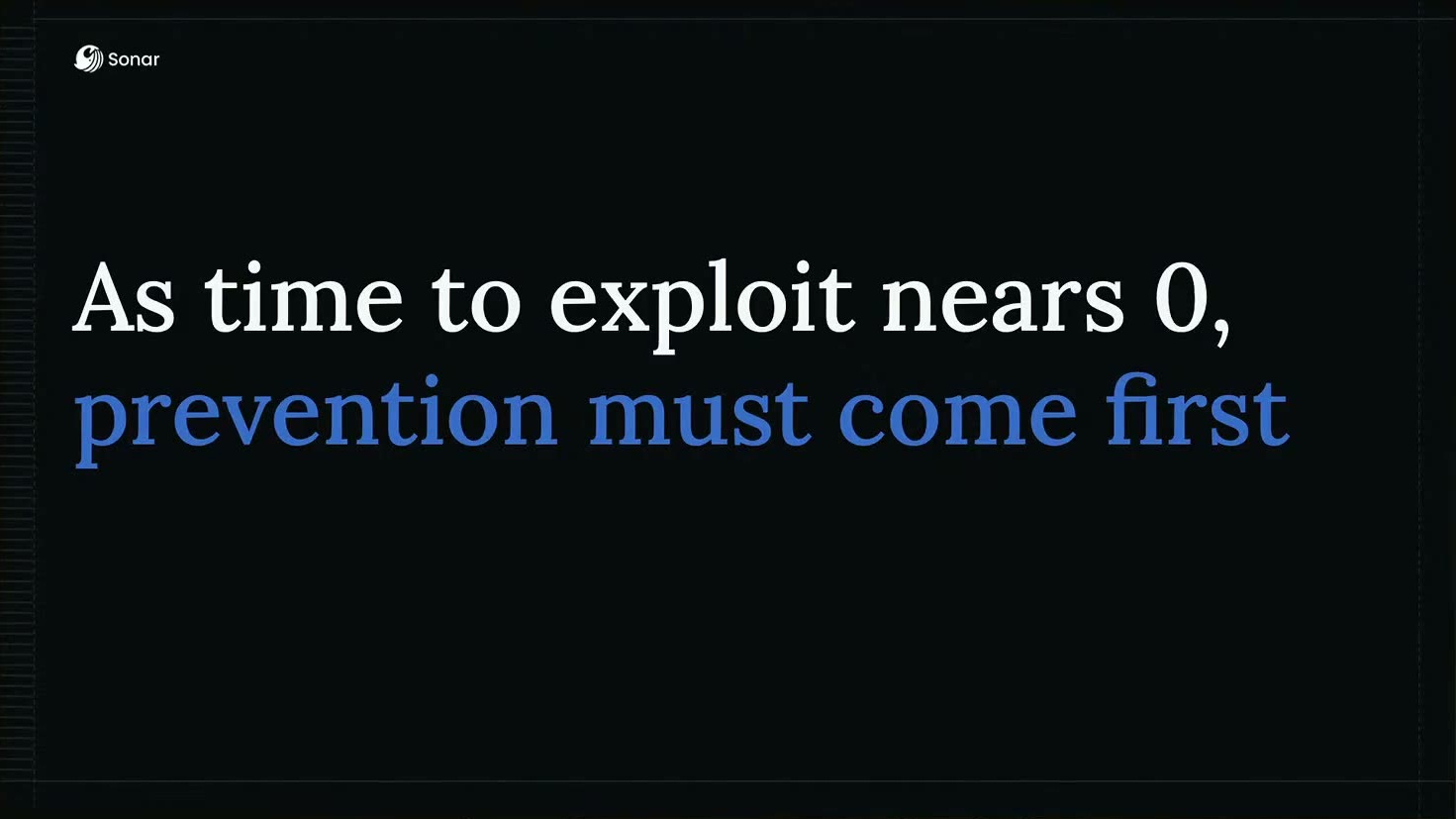
最后一点,我不打算展开太多,因为我认为大家都能看出来:当攻击时间几乎为零时,我们的响应能力会受到极大挑战。因此,我们认为软件工厂必须把预防纳入设计,并通过工程手段融入工厂。
And then lastly, and I won't dig into this one too much because I think it's probably self-evident to everyone, as a time to exploit near zero, the ability for us to respond is incredibly challenged. And so prevention is something that we believe the software factory has to bake in to the design, has to engineer into the factory.
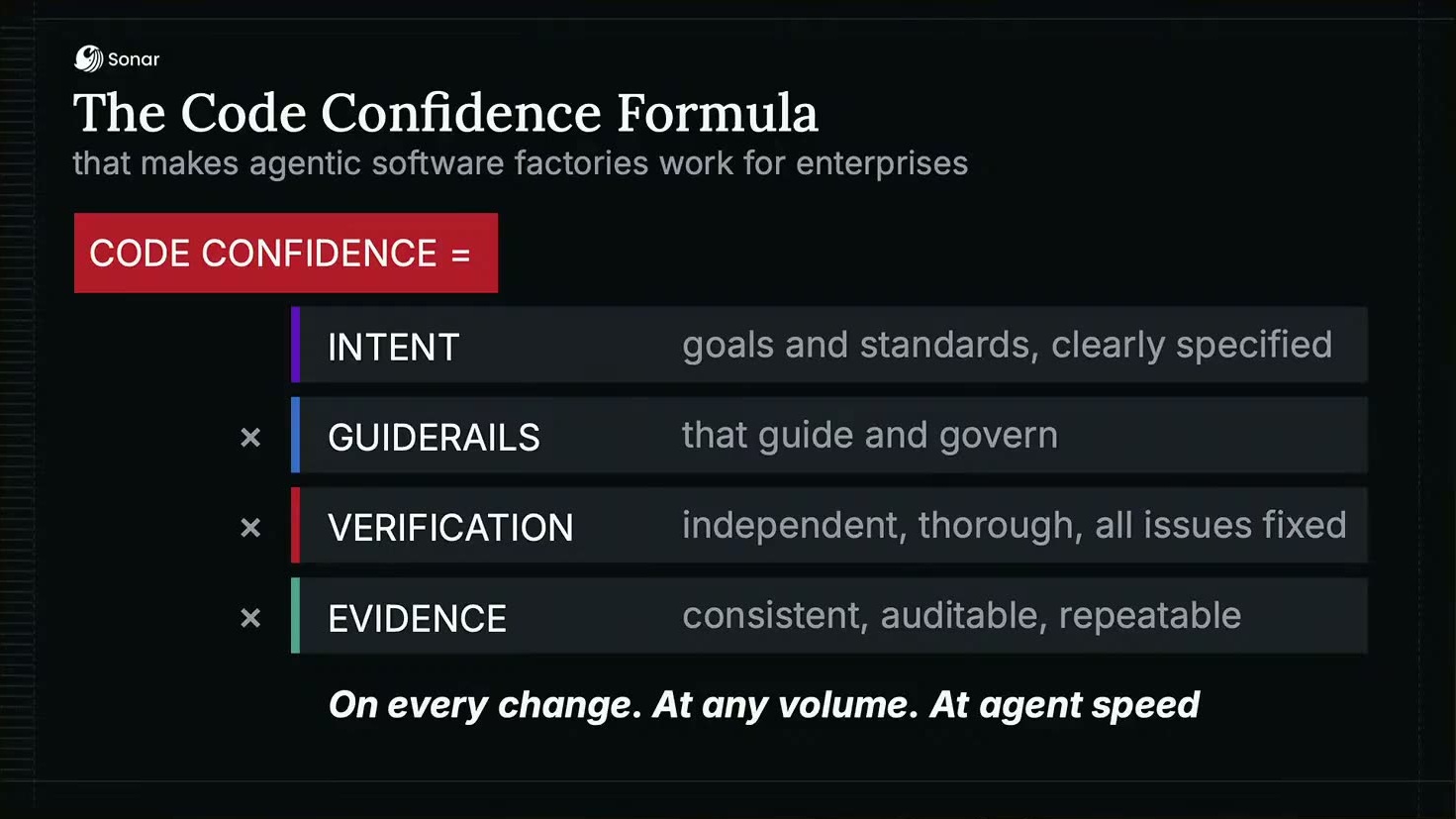
我们经过思考后,写下了一个叫作代码可信度公式的东西,它基本上是在问如何构建,如何思考软件工厂,能够交付我们所有人都想要的东西,也就是让我们有信心的结果。不是盲目信任结果,也不是毫无根据的信任,而是让我们感到放心的结果。我们可以坐下来告诉高管、客户、股东、CEO 和董事会:“是的,我相信这座工厂运行良好。”我们认为这需要四个组成部分。第一,清楚明确地表达意图。如果你不知道自己要构建什么,就没法告诉智能体要构建什么,也就得不到想要的结果。第二是引导轨道。我们特意称之为引导轨道,而不是防护栏。防护栏防止你驶出道路,引导轨道则帮助你留在正确道路上。我认为智能体需要一些小小的引导和约束,帮助它们沿着正确路径行动。第三是验证,验证必须独立、全面,并修复问题,而不是把问题一再拖延。
So as we've thought through this, we have written down what we call the code confidence formula, which is basically how do you build, how do you think about a software factory that delivers what we all want, which is outcomes that we can feel confident in. Not outcomes that we can trust, not blind trust or anything like that, but outcomes that we can feel comfortable with. We can sit and tell our executives, our customers, our shareholders, our CEOs, our boards, that yes, I believe this factory is working well. And we think there's four components to this. The first is being crystal clear about the intent. If you don't know what you're trying to build, you can't tell the agent what to build, and you will not get the outcome you want. The second is guide rails. And we very specifically talk about guide rails, not guard rails. Guard rails prevent something from going off the road. guide rails help keep you on it and I think what agents need are the small nudges to guide and govern those agents the third part is verification that needs to be independent thorough and issues fixed as opposed to just cans kicked
最后是证据:信任,但要验证;同时也要确认工作确实完成,并有一致、可审计、可重复的证据。我们把这几个要素相乘,因为我们见过许多情形,其中某个要素缺失。只要有一项为零,信心就会归零。如果其他事情都做了,却没有证据,结果还是零。你就无法对结果有信心。
down the road and then lastly evidence trust but verify trust but understand that it was done with proof that is consistent auditable and repeatable and And we multiply these together because we've seen a number of situations where one of these elements is missing. And if it's zero, the confidence goes to zero. If you do all of this but don't have evidence, you go to zero. You don't have confidence in the outcome.
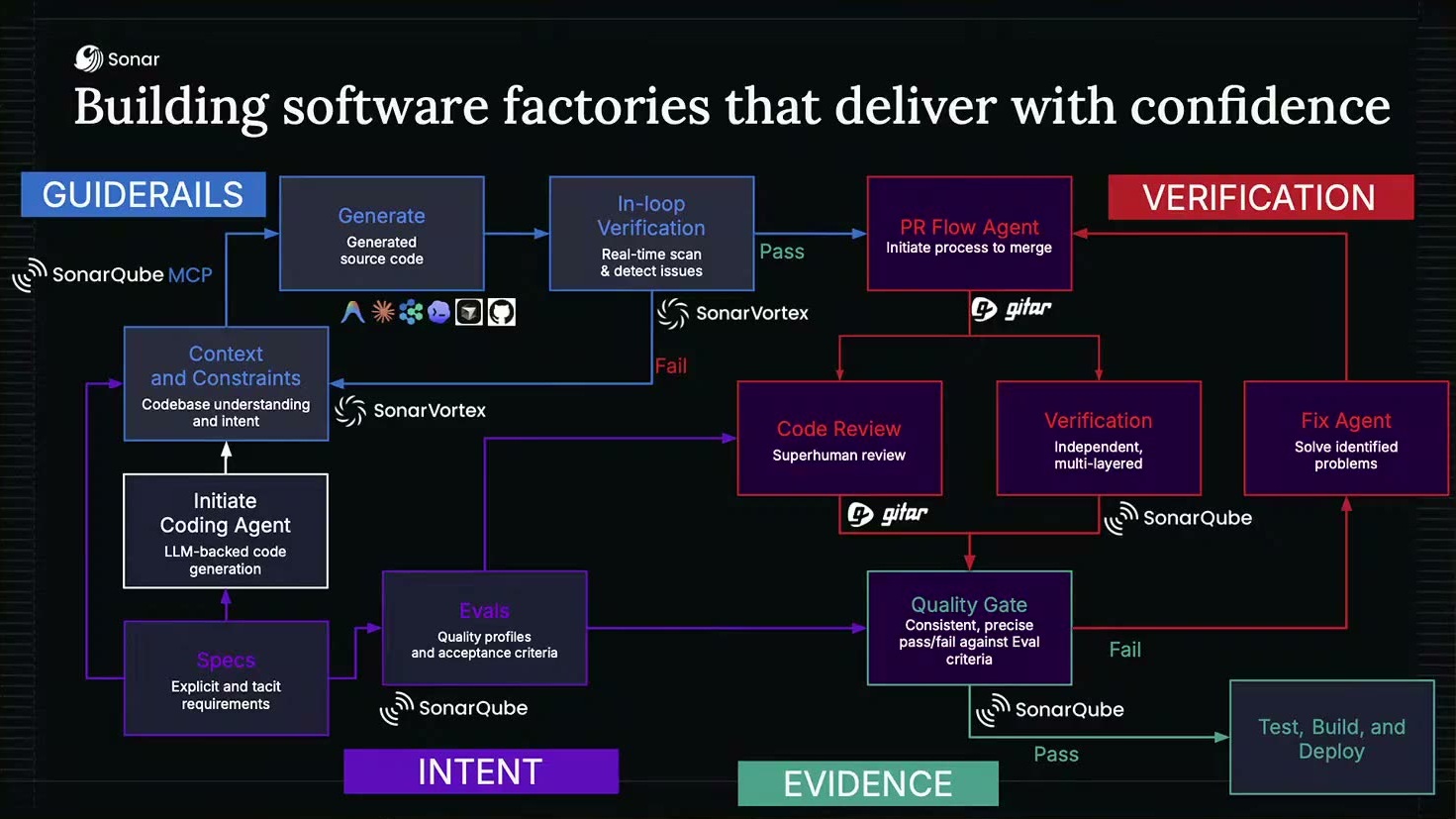
所以我们认为,工厂设计必须包含这四个要素。我们构建工厂、帮助客户时,我不会逐一介绍这页上的每个方框,但我们会帮助客户和合作伙伴构建软件工厂,仔细思考如何表达意图,也就是左下角的紫色部分,如何设置防护规则,如何彻底且独立地进行验证,以及如何生成证据。这样做带来了惊人的成果,以下是
So we really think about factory design as requiring these four elements. And as we put together factories, as we help customers, I'm not going to walk through every box on this page but as we help our customers and partners build these software factories we're very deliberate about how do you get the intent bottom left hand side in purple how do you put the guardrails in place how do you do verification in a way that's thorough and independent and how do you produce the evidence and by doing this we see amazing results so these
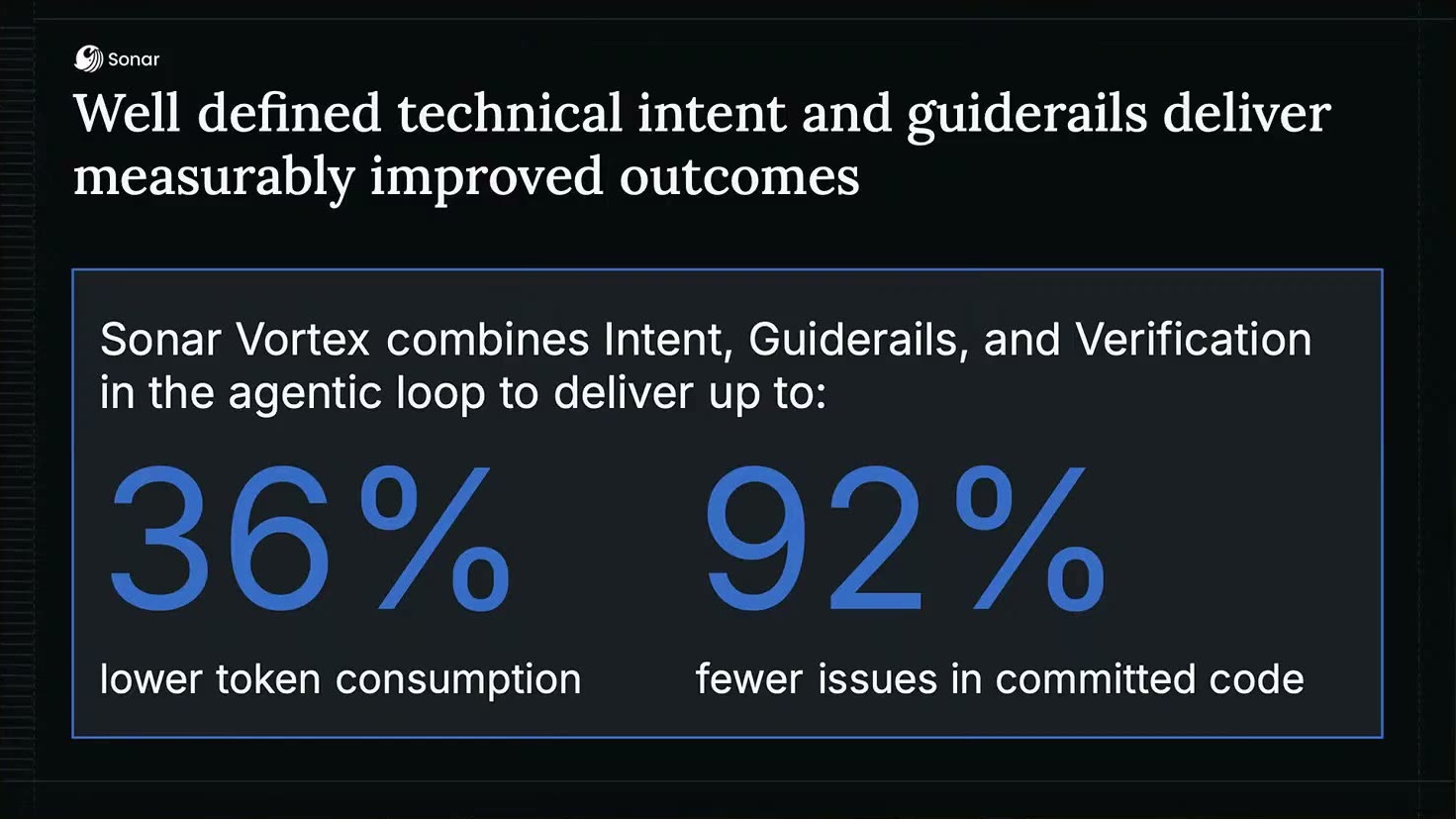
我们客户的真实结果。第一种侧重意图和引导轨道,在意图和引导轨道方面,我们有一款名为 Sonar Vortex 的产品,能够提供意图引导,规则,并在智能体循环中反复进行验证,继续引导智能体。对于大型复杂代码库中的长时间运行任务,我们给智能体提供这些信息后,token 成本降低了 36%,因为我们把它放在它能理解的位置,实际上就是放在答案附近,帮助它理解整体地图。它不用把 token 浪费在我们已经知道的事情上。提交中的问题数量也减少了 92%。因此成本更低,也能更好地进入验证阶段。
are real results now from our from our customers the first one is focusing on intent and guide rails and intent in guide rails we have a product called sonar vortex which gives intent guide rails and in the agentic loop starts to do verifications again nudging the agents and what we see when we provide agents in long running in large complex code bases with long running tasks with this information is a 36 percent reduction in token cost because you're putting it in white planes you actually you're putting it close to the answer you're helping it understand the map. You don't have to burn tokens on things we already know. And 92% reduction in issues in the commit. So it's cheaper and we can get a better outcome to go into that verification stage.
这再次说明,引导智能体保持在正确轨道上非常重要。
This is again all because we're nudging the agent to keep on track.
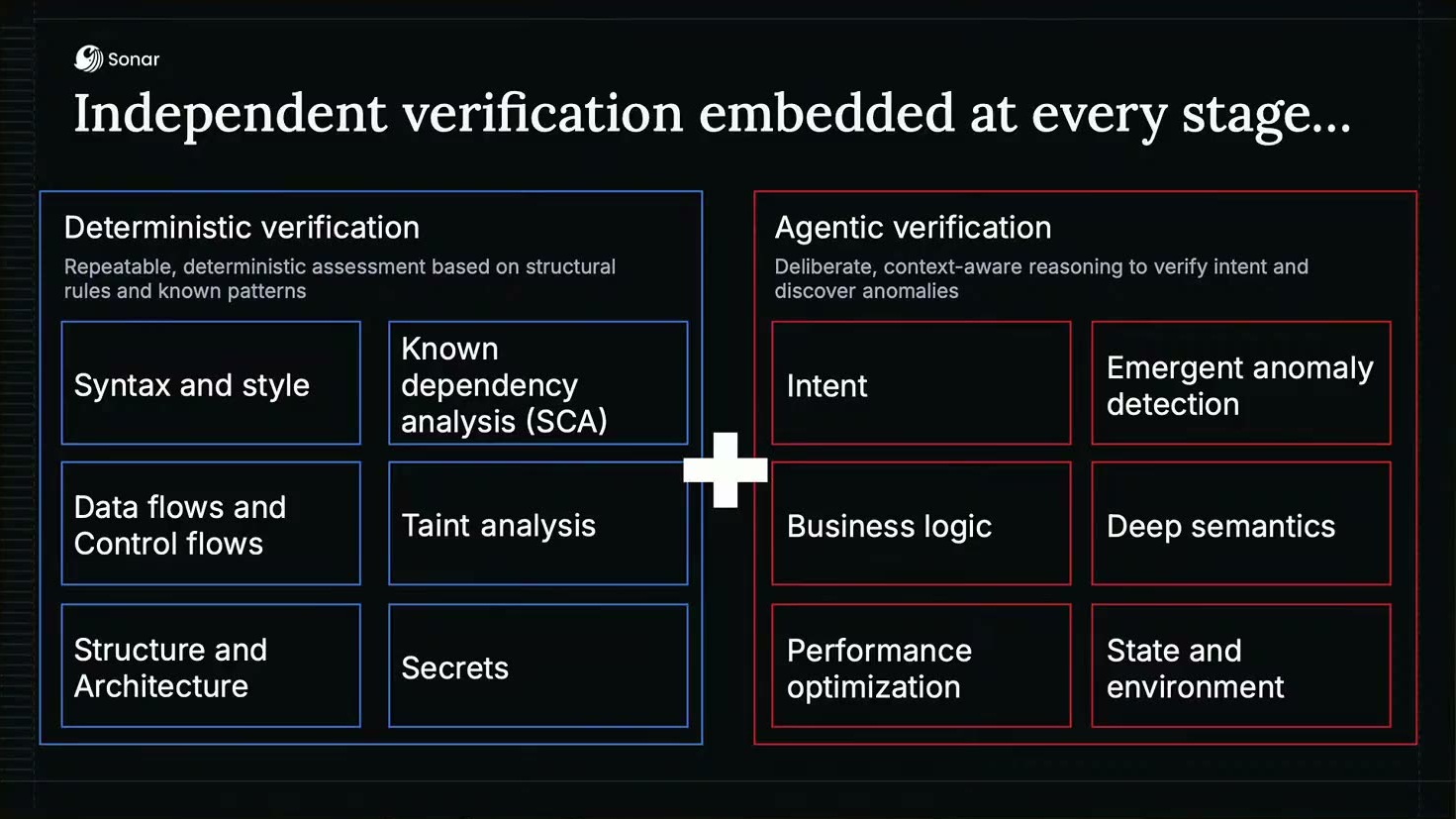
然后是验证。我们最初就是一家验证公司,我们从验证的角度看待这个世界。我们坚信,独立验证必须覆盖各种问题,既要精确,也要具备成本效益。能用 CPU 时就用 CPU,需要 GPU 时再用 GPU。我们采用确定性方法的组合,再加入智能体驱动的方法组合,这就形成了我们认为的
Then you get to verification. And we started life as a verification company. This is how we see the world is through a verification lens. And we have a very strong point of view that independent verification has to cover the full range of issues that is both precise and cost effective. Use CPUs when you can use CPUs, use GPUs when you need GPUs. So we look at deterministic mixture of methods, and then you add in agentic mixture of methods, and it comes up with what we think is
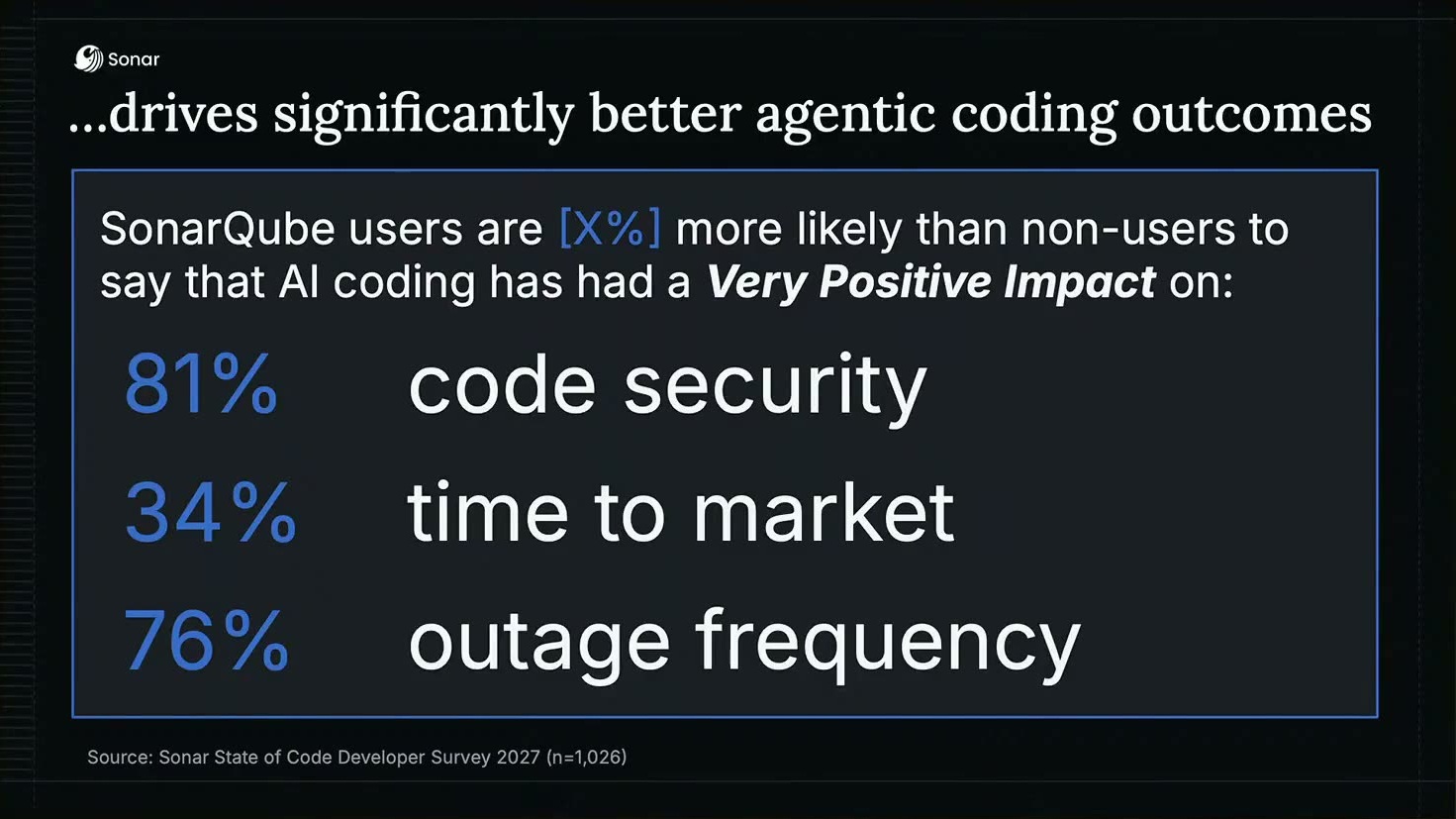
验证金标准。应用这种方法时,我们的产品叫作SonarQube。最近我们采访了 1,000 多位客户,问他们:你们多大程度上、或多频繁地看到了智能体编程带来的这些问题?问题调查陈述为:SonarQube 用户比非用户更有可能认为 AI 编程带来了非常积极的影响。具体而言,拥有这套验证金标准时,他们认为 AI 编程对代码安全产生非常积极影响的可能性高出 81%,前提是拥有这套验证金标准。认为上市时间有所改善的比例高出 34%,认为故障频率有所改善的比例高出 76%。
the gold standard of verification. And what we see is when you apply this, our product is called SonarQube. So we talked to our customers, over a thousand customers recently, and we said, how likely are you or how often have you seen these issues from Agenda coding? And the statement to read here is SonarQube users are X percent more likely than non-users to have seen a very positive impact. So 81 percent more likely to have seen, to believe that AI coding has had a very positive impact on code security if you have that gold standard for verification. 34% more likely to have seen an impact on time to market, 76% on outage frequency.
所以,回到怎样才能有信心发布软件这个问题,我们看到,只要把这些要素结合起来,并把验证作为工厂中的一等公民,你实际上就在建立信心,并且会看到实际成果:安全性更高,对上市时间更有信心,故障数量减少,可靠性提升。
So again, as I come back to how do we have confidence to ship, what we're seeing is that if you put these pieces together and you build verification incredibly strongly as a first-class citizen in the factory, you are actually building confidence and you're seeing results. Better security, more confidence in our time to market, improved or a reduction in number of outages, improved reliability.
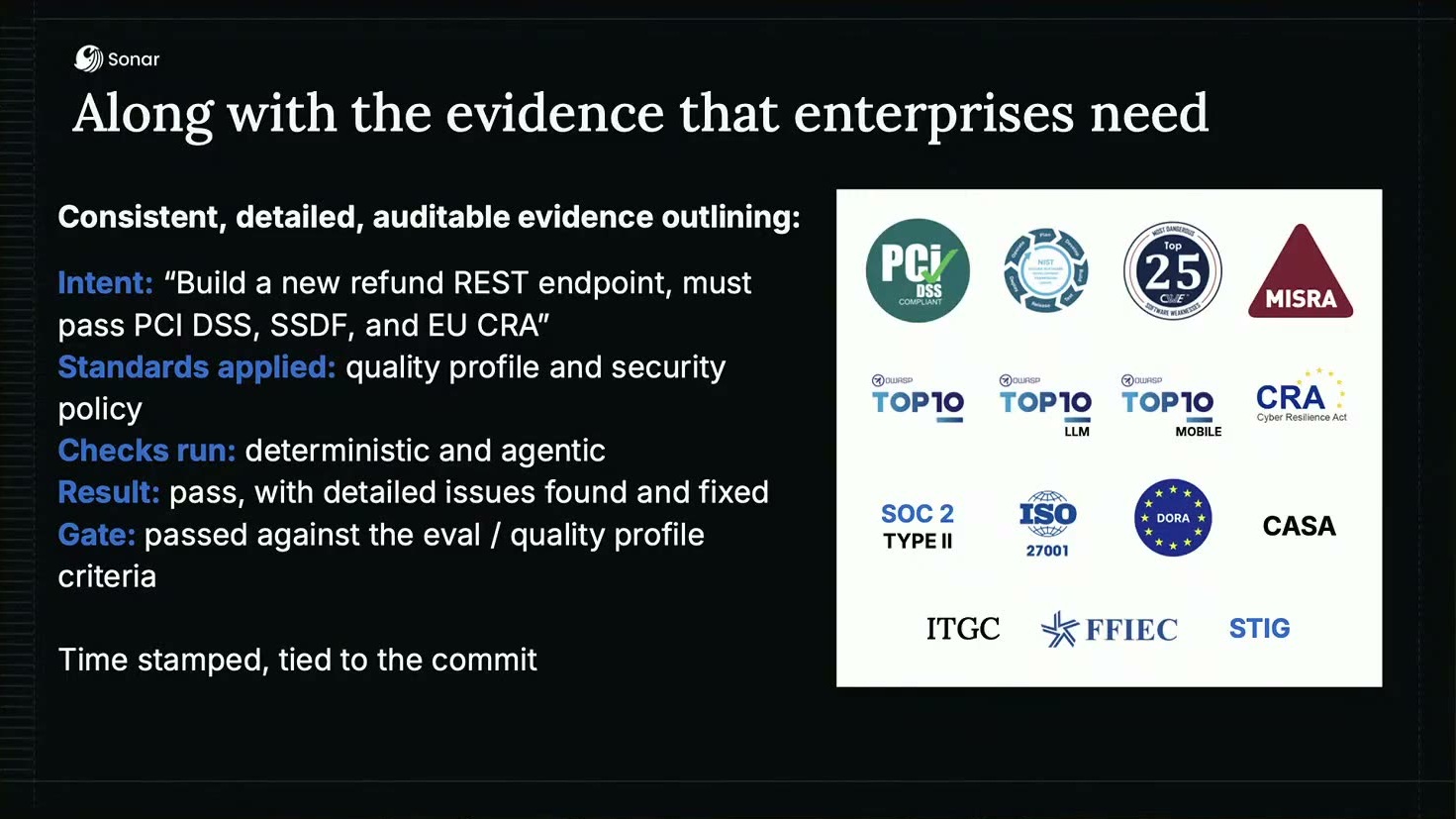
当然,正如我提到的,这一切都必须有证据支撑。确保通过质量关卡。确保满足所需要求。这里有很多缩写,你需要通过哪些就通过哪些,例如你们内部控制和运营中的 IT 一般控制,或者如果你在造汽车,就包括 MISRA,以及这里列出的其他标准。生成证据能让你安心。它让你有信心继续前进。
And of course, as I mentioned, you have to do this with evidence. Make sure you pass the quality gate. Make sure whatever, there's lots of acronyms up here, whichever ones you need to pass, whether that is your IT general controls inside of your internal controls and operations, whether that's MISRA if you're building cars, or any of the other ones that are on here, producing the evidence is what lets you sleep at night. It's what gives you confidence that you can move forward.
所以,归根结底,我们认为未来的挑战是:代码越来越充足,而信心越来越稀缺。我们真正的目标,也是我们认为每个人在思考软件开发的未来时都应该追求的目标,是怎样交付信心。未来的工厂必须能够交付信心。说到这里,我要感谢大家。我们有一个很大的展位,是个红色的大展位,就在那边的展厅里,欢迎来和我们进一步聊聊这些内容。非常感谢大家。祝大家早上愉快。
So that, in essence, is how we think about the challenge of the future, that code is abundant, that confidence is scarce, and really the goal that we have and that we think that everyone should have as we think about the future of software development is how do we deliver confidence and the factories of the future need to be able to deliver confidence. So with that, I want to say thank you to everybody. We have a big booth. It's a big red booth on the floor right over that way and would love to talk to you more about all of this. Thank you very much. Have a great morning.