一切都会被模拟
Everything will be Simulated
原文由官网提供,中文由 GPT-6 Luna 翻译。相邻片段合并排版,正文与时间点保持对应。
已插入 23 张经核对的幻灯片或演示截图;点击图片可放大。图注链接为当前视频时间,左侧正文时间保留原转录版本,二者可能不同。
共 34 个阅读段落
大家好。非常高兴来到这里。感谢大家留下来听最后一场演讲。欢迎来听我的分享:关于《黑客帝国》,以及我们如何生活在其中。我做 Runway 快 10 年了。大约 10 年前,我们在纽约起步。我想和大家分享创建这家公司过程中学到的一些经验,还有在纽约建立这家研究实验室的经验,以及我们对许多相关工作的看法,尤其是视频和像素生成领域接下来会如何发展。我不是在夸大其词;我开玩笑说,这也许是个模拟世界。为了帮助大家理解,我想讲一段历史。
Hey, guys. Very excited to be here. Thank you for staying for the last talk. Welcome to my talk about the matrix and how we're living through it. I have been working on Runway for almost a decade now. Started here in New York, maybe around 10 years ago. I want to work through some of the learnings we have seen through building the company, building this research lab here in New York, and where do we see a lot of the work that we do in video, in pixel generation, really moving forward. So I don't exaggerate and I joke that this might be a simulation or not. Maybe for perspective, I will walk you through a piece of history.
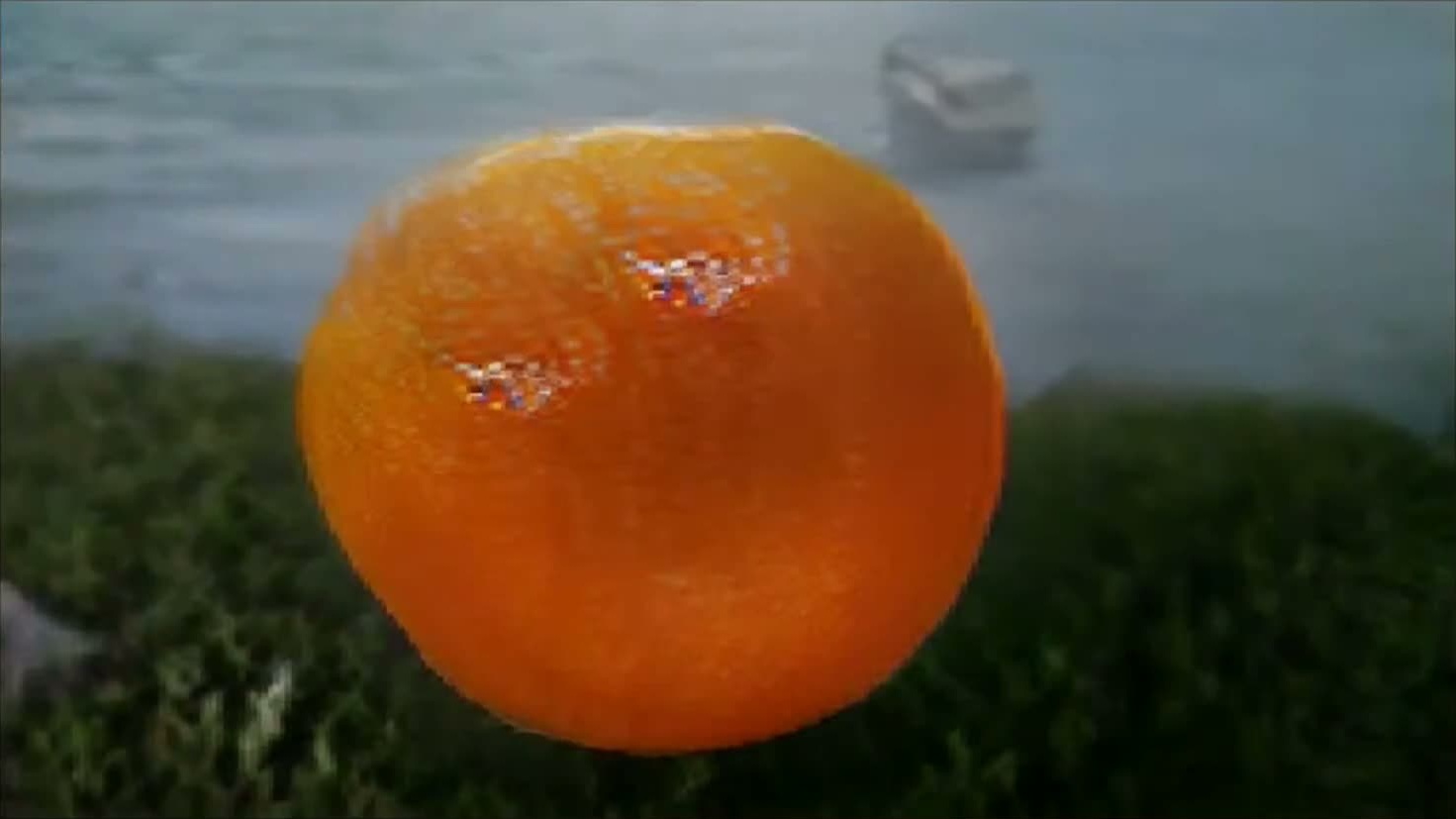
这就像在看史前古代遗迹。这是我们制作的第一部 AI 电影,制作于 2019 年,叫《The Orange》。正如你们很容易看出来的,这是一颗从树上掉下来、穿梭于世界各地的橙子。这是当时的视频模型,也是一种图像模型,它生成 128×128 像素的画面,然后我们强行把画面放大到现在这样的分辨率。我现在把它看作一件艺术品。就像在看一部 1900 年代的电影。你知道,它很美。
This is like watching prehistoric ancient ruins. is our first AI film we ever made. It was done in 2019. It's called The Orange because, as you can tell very clearly, it's an orange that falls from the tree and walks through different parts of the world. This is done, this is a video model, an image model that we had back then that was creating pixels in 128 pixels by 128 pixels that we then forcefully up-sample to this kind of resolution. I think of this as art now. This is like looking at a film from the 1900s. You know, it's beautiful.
背后有很多历史。不过这是 2019 年的作品。我们在 2017 年、2018 年创办了公司。当时我们试图弄清楚,它有没有什么延迟。我们想说服自己,如果扩大它的规模,它自然会进步到某个程度,让我们能够接近这样的效果。这是今天最先进的视频。
There's a lot of history behind it. But this is 2019. We started the company in 2018, 2017. And so we're trying to figure out if this had any lags. We're trying to convince ourselves that if you scale this, it will naturally improve to the point where we can get somewhere close to this. This is a state-of-the-art video today.
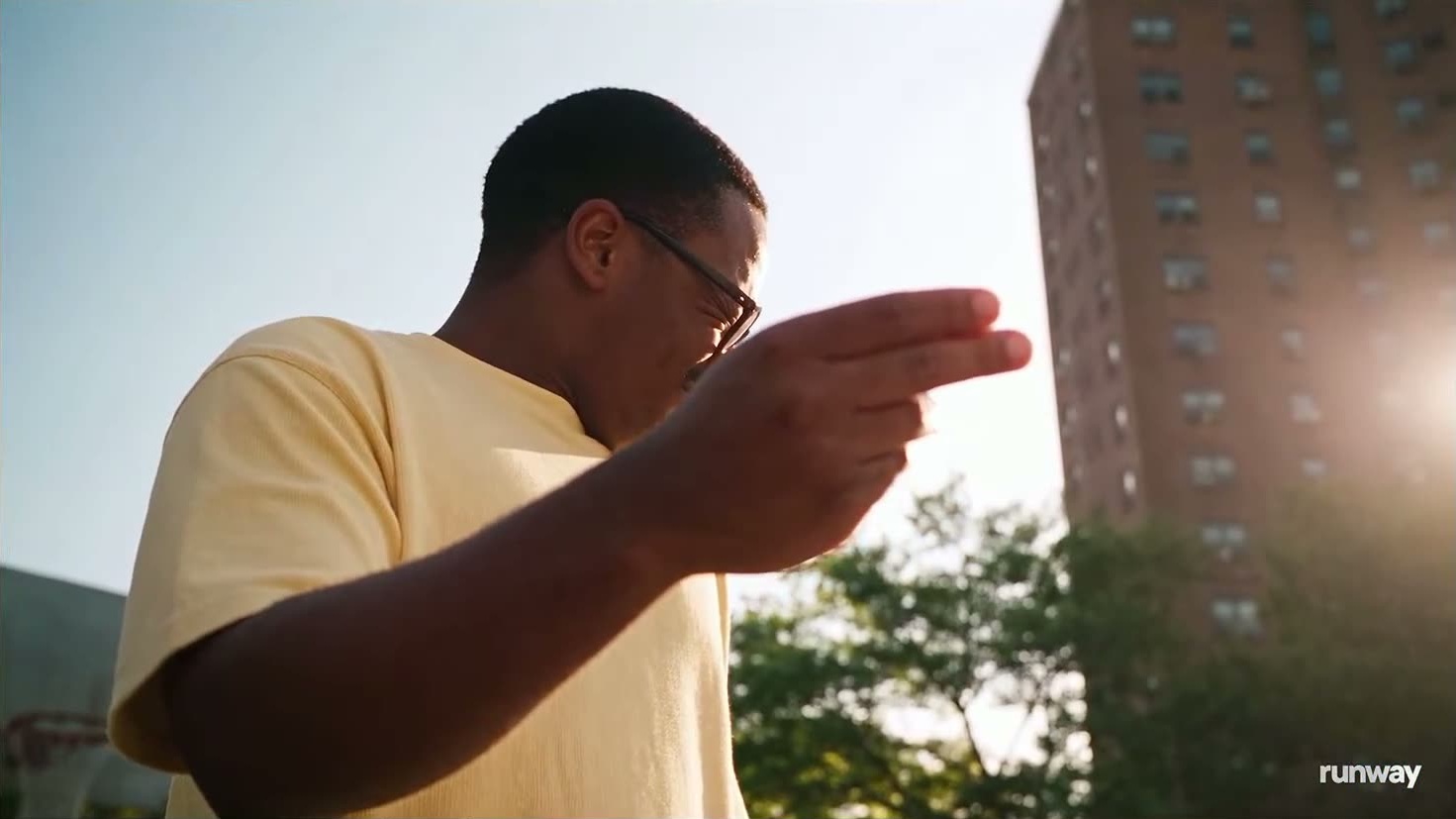
这些都是生成的。这些角色都不是真人。这些地点也都不是真实的。如果你们今天来到这里,我想大家应该都知道这一点。到现在你们可能已经在网上、Twitter 上看过这个。这些模型真的非常厉害。最有意思的是,我看着这类作品时,仍然相信再过几年,它看起来就会像那颗橙子一样。我想介绍我们如何思考 Runway 今天在做的事情,以及未来几年我们会做什么,还有塑造这些工作的研究。我们是一家处于艺术与科学交汇处的公司。我们深深扎根于艺术和创意社群,也有全球最优秀的一些研究人员在研究扩散模型和大型视频模型。
This is all generated. None of these characters are real. None of those locations are real. I'm sure if you're probably here, you know this. By now, you probably have seen this online, on Twitter. The models are just incredibly good. And the most interesting thing is that when I look at stuff like this, I still believe this will look like the orange in just a couple more years. So I want to walk you through how we're thinking not only through what we're doing at Runway today but also in the next couple of years and the research that's shaping that. We are a company that's at the intersection of both art and science. We have deep roots in artistic and creative communities, and we have some of the best researchers in the world working on diffusion models and large video models.
我喜欢这种组合,因为它让我们能汇集两方面的优势。
And I like that combination because it allows us to bring the best of both worlds.
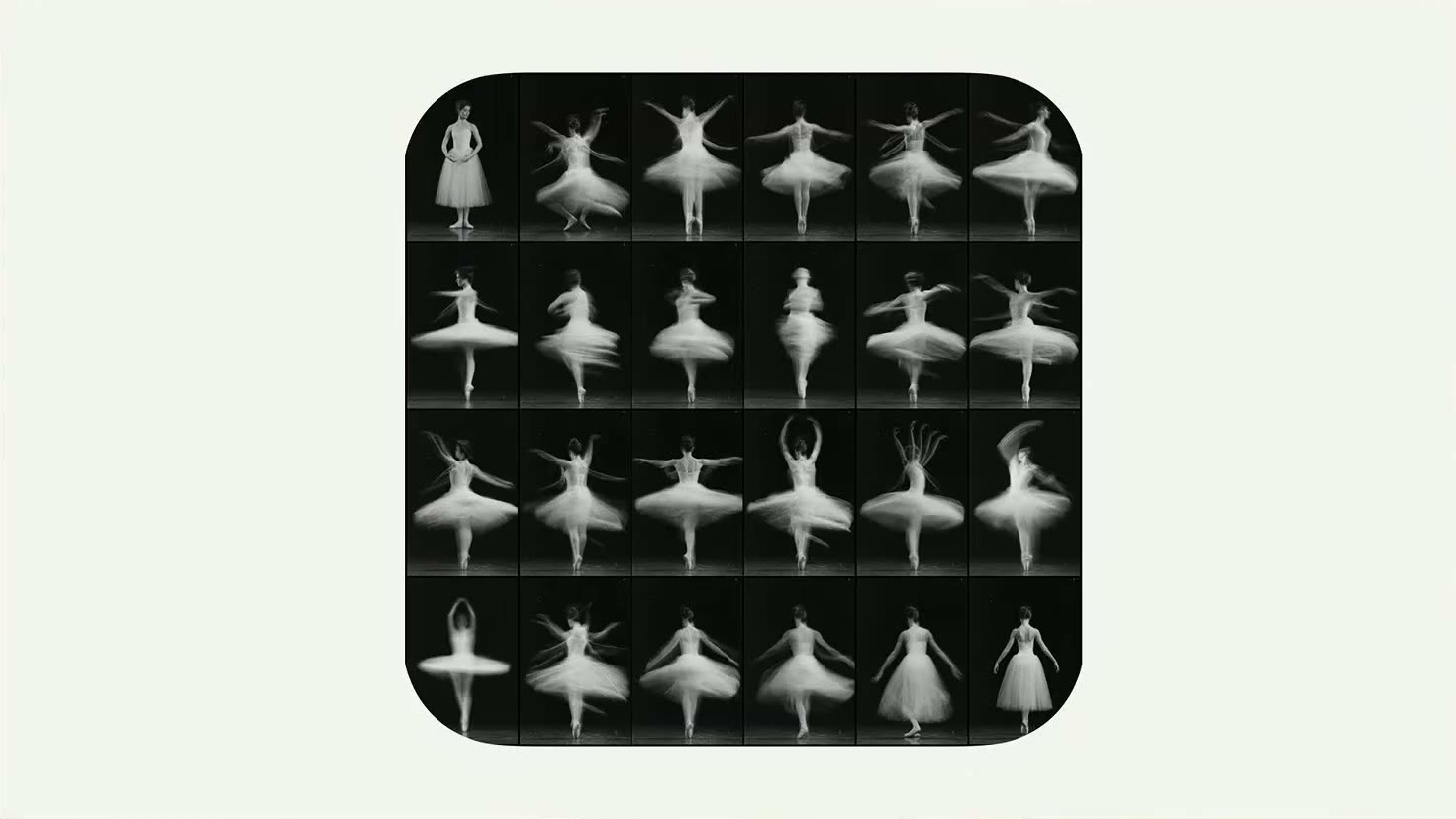
我们的团队由科学家和艺术家组成,一起思考如何扩大视频和世界模型的规模。不过,公司的核心想法其实早在电影和活动影像诞生时就已经被发现了,也就是 120、130 年前。你们或许还记得高中学过的内容:视频是一种视觉错觉,视频就是运动的幻觉;如果你把画面帧拼接得足够快,就能创造运动,创造运动的幻觉,创造动态影像。Runway 做的事情也非常类似,我们把这个想法提升到一个新层次:怎样才能足够快、足够大规模地预测下一帧,从而希望不只能制作好看、漂亮、有创意的视频。
We're a team of scientists and artists thinking about the problem of scaling video and world models. but in a way the core idea of the company was already discovered by cinema and by moving pictures 120 130 years ago which is if you think about video and maybe you remember this from uh from high school video is an optical illusion video is the illusion of movement that if you do if you stitch frames fast enough you will create movement you will create the illusion of movement you create motion pictures and so at run we were doing kind of something very similar we're taking that idea to the next level, how do we do next frame prediction fast enough, scale enough, in such a way that we can hopefully do more than just pretty and nice creative videos.
Runway 当然是由规模定律驱动的。
And so, Aloto is powered by, of course, scaling laws.
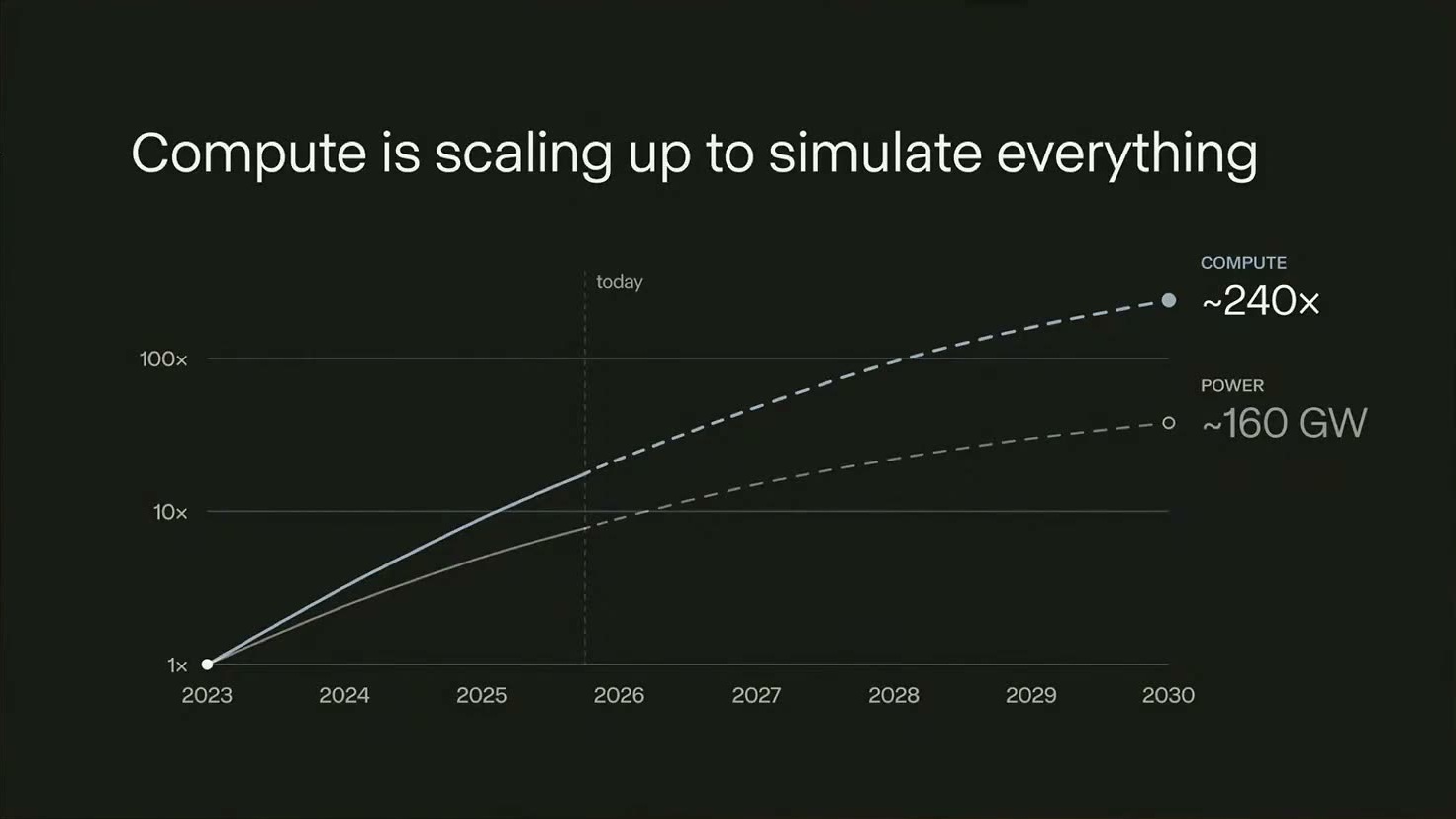
我们相信规模定律不仅适用于语言模型,也适用于视频。事实证明确实如此。我们现在正在大幅增加投入到模型上的计算资源,这些模型你们已经看过了。随着模型不断扩大规模,最有意思的是出现了一些涌现特性,也就是当你开始采用一个非常简单的想法时,出现的智能,这个想法是 120 年前电影领域想到的:预测下一帧,然后把下一帧预测提升到一个全新的层次。比如,拿一张这样的图像来说,它不是真的,那两个人也不是真的;
I think we believed in scaling laws not only applied for language models but also for video. And this has been true. We're now really ramping up the amount of compute that we put behind the models that you already have seen. And I think the interesting thing about seeing the models scale over time is the emerging properties that appear, the intelligence that appears when you start taking this very simple idea that cinema found itself figuring out 120 years ago, which is next frame prediction, and taking next frame prediction really to the next level. So if I take an image like this, which is not real, those two people are not real, and
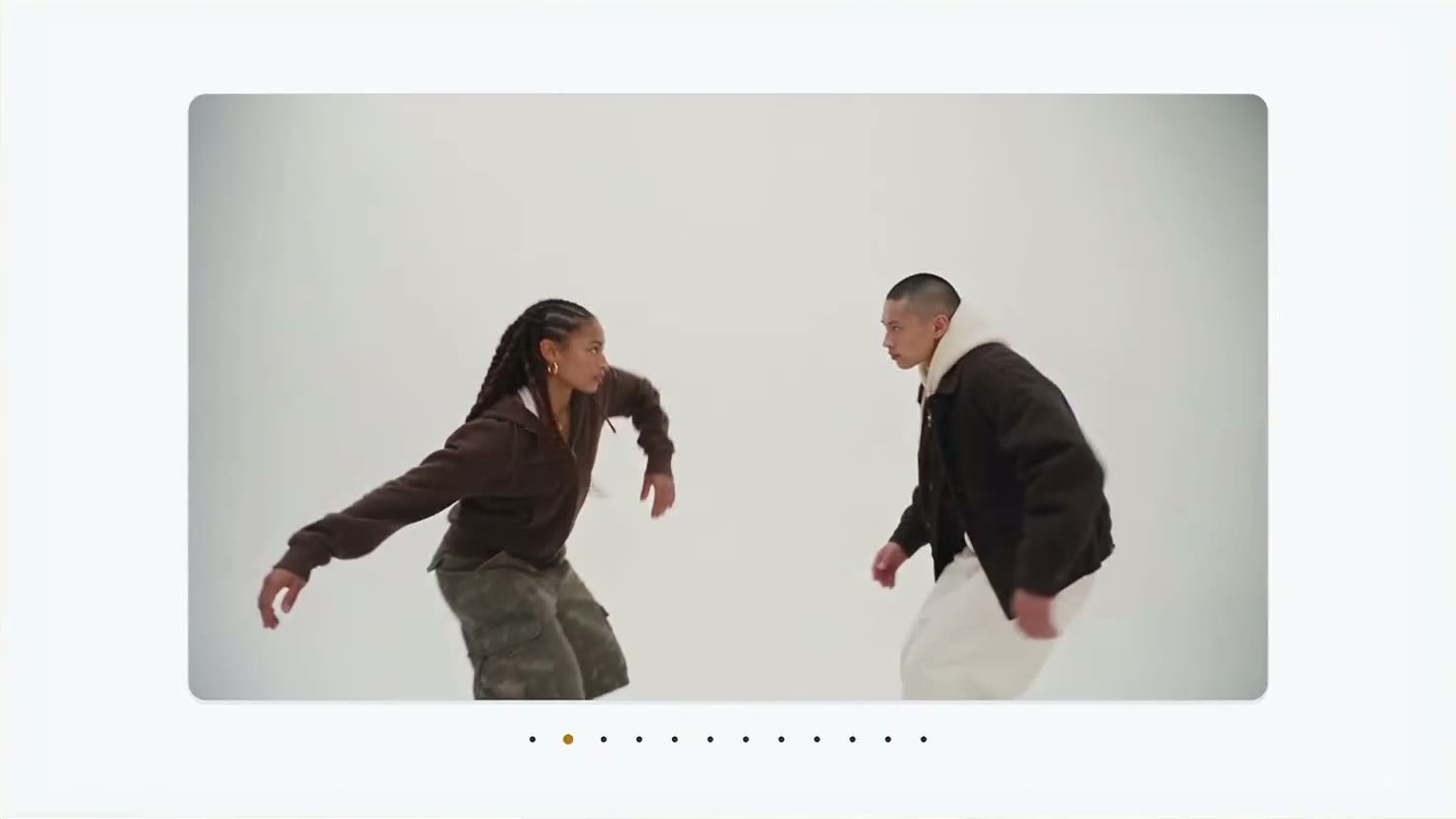
接着我不断根据前一帧,预测下一帧会是什么样,然后再接着预测。如果速度足够快,神经网络规模足够大,我就能得到运动效果。我会得到运动的幻觉。我会得到看起来如此逼真的东西,以至于我们人类都无法分辨。我看着那段视频;我做这件事已经 10 年了,也没法告诉你那到底是不是真的。我们对此进行了测量。我们实际测量并尝试量化人们能否区分真实视频和生成视频,我想图灵测试已经通过了。人们已经无法分辨。
And I just keep on predicting what the next frame will look like based on the previous frames. And if I do it fast enough, and if I do it with a network that's big enough, I'll get movement. I'll get delusion of movement. I'll get something that looks so real to us that we humans can distinguish. I look at that video and I've been doing this for 10 years. I can't tell you if that's real or not. And we measure that. We've actually measured and tried to quantify if people can distinguish between real and I think that Turing test was already passed. People are not able to distinguish.
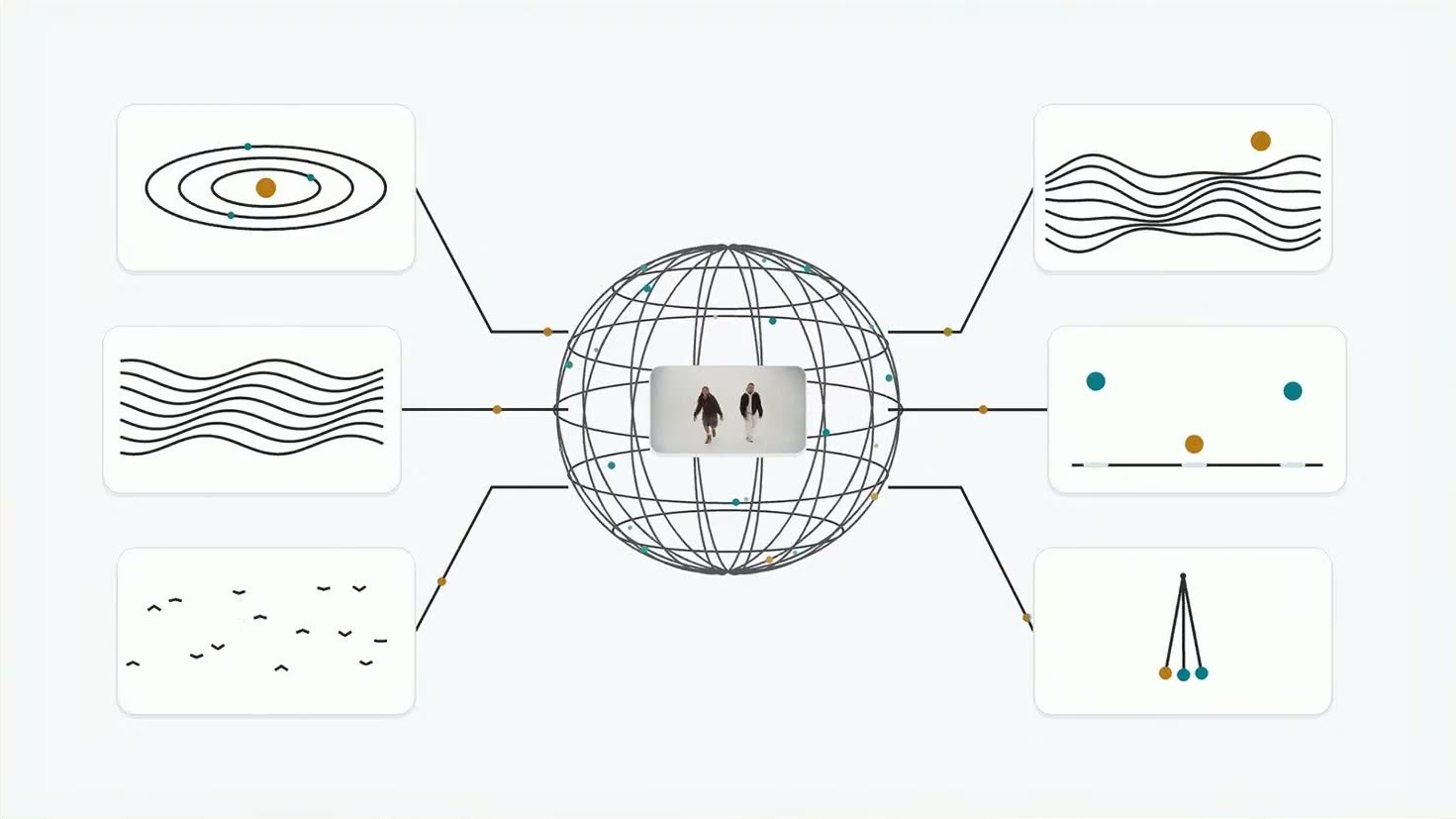
但最有意思的是,当你预测下一帧时,你学到的远不只是如何生成漂亮画面。你会学到物理知识。你会学到物体恒存性。你会学到重力。你会学到遮挡关系。你会学到运动规律。你会学到物体在真实世界中如何运作。而这一切都只通过视频、图像和下一帧预测来完成。
But the most interesting thing is here is that really what's happening as you predict next frames is you're learning a lot more than just pretty frames. You're learning about physics. You're learning about object permanence. You're learning about gravity. You're learning about occlusion. You're learning about movements. You're learning about how the objects work in the real world. And you're doing that all through just video, through images, through next frame prediction.
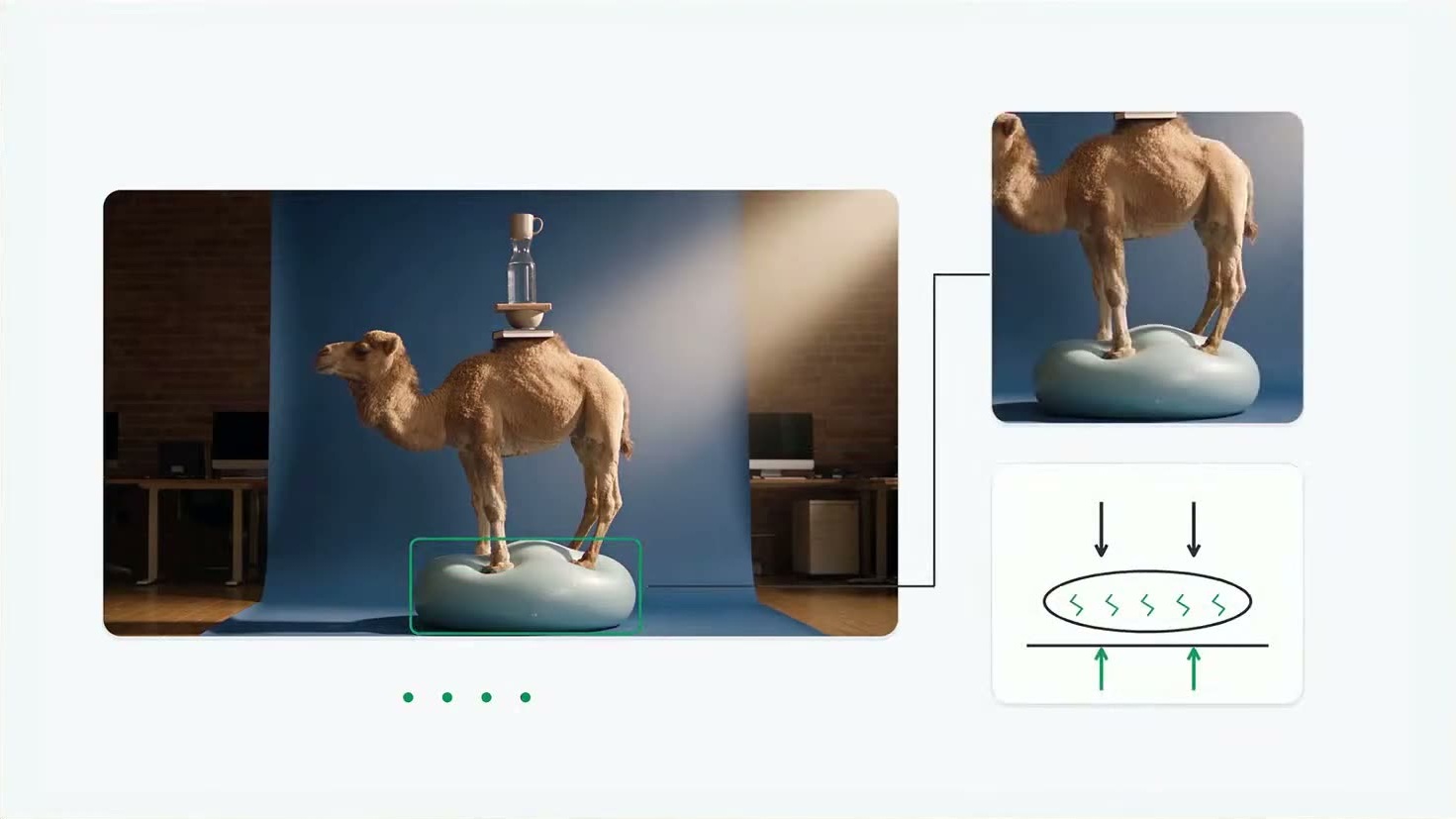
所以,如果你看这样一个复杂的场景,一个优秀的视频模型要理解如何把它生成连贯的视频,就必须自然地理解所有这些主题分别是什么、彼此之间有什么关系,骆驼可能如何站在那样的球上,以及容器里的水是什么样子。如果我把这一切结合起来,并且速度足够快,希望我就能得到一段看起来真实、连贯的视频。因此,我们用来评估视频模型的许多基准,不只是看创意表现,也就是你喜不喜欢它,而是实际上依据物理规律、
So if you look at a complex thing like this, a good video model for it to understand how to make this a consistent video will need to naturally understand what all these subjects are, how each of them relate to one another, how a camel might probably stand on a ball like that, what water in a container looks like. And if I do all of that together and I do it fast enough, I'll get, hopefully, a consistent video that looks real to us. So, a lot of the benchmarks that we use to evaluate our video models are not only creative, it basically means do you like it or do you don't, but are actually based on physics,
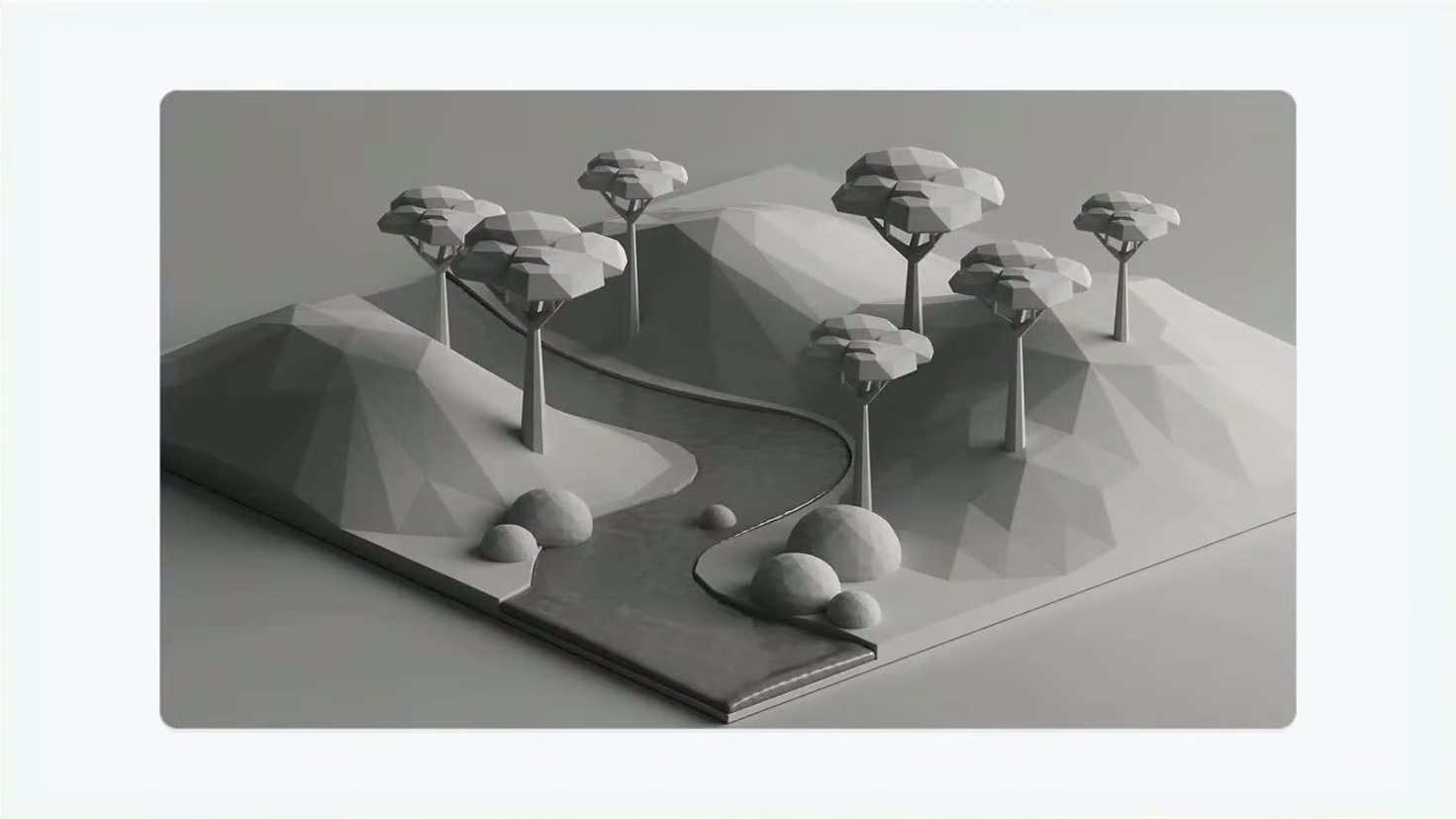
几何关系、物体在真实世界中的行为,以及这些物体的行为与模拟器或真实世界之间的关系来评估。所以,你把下一帧预测这个想法做得足够快,就会得到——当然,现在呈现出来的东西更像我们对视频应用或游戏应用的期待。再说一次,这只是视频,对吧?然后你把这个想法再推进一步。如果我们把下一轮预测这个想法放进一个 3D
on geometries, on how objects behave in the real world and how those objects behave, and also simulator or the real world. So, you take that idea of next-frame prediction and you do it fast enough and you get, of And of course, now something that looks more like what we should expect from a video application or a game application. Again, this is just video, right? And you take that idea to a next level. What happens if we start this idea of next-round prediction, but do it in the context of a 3D
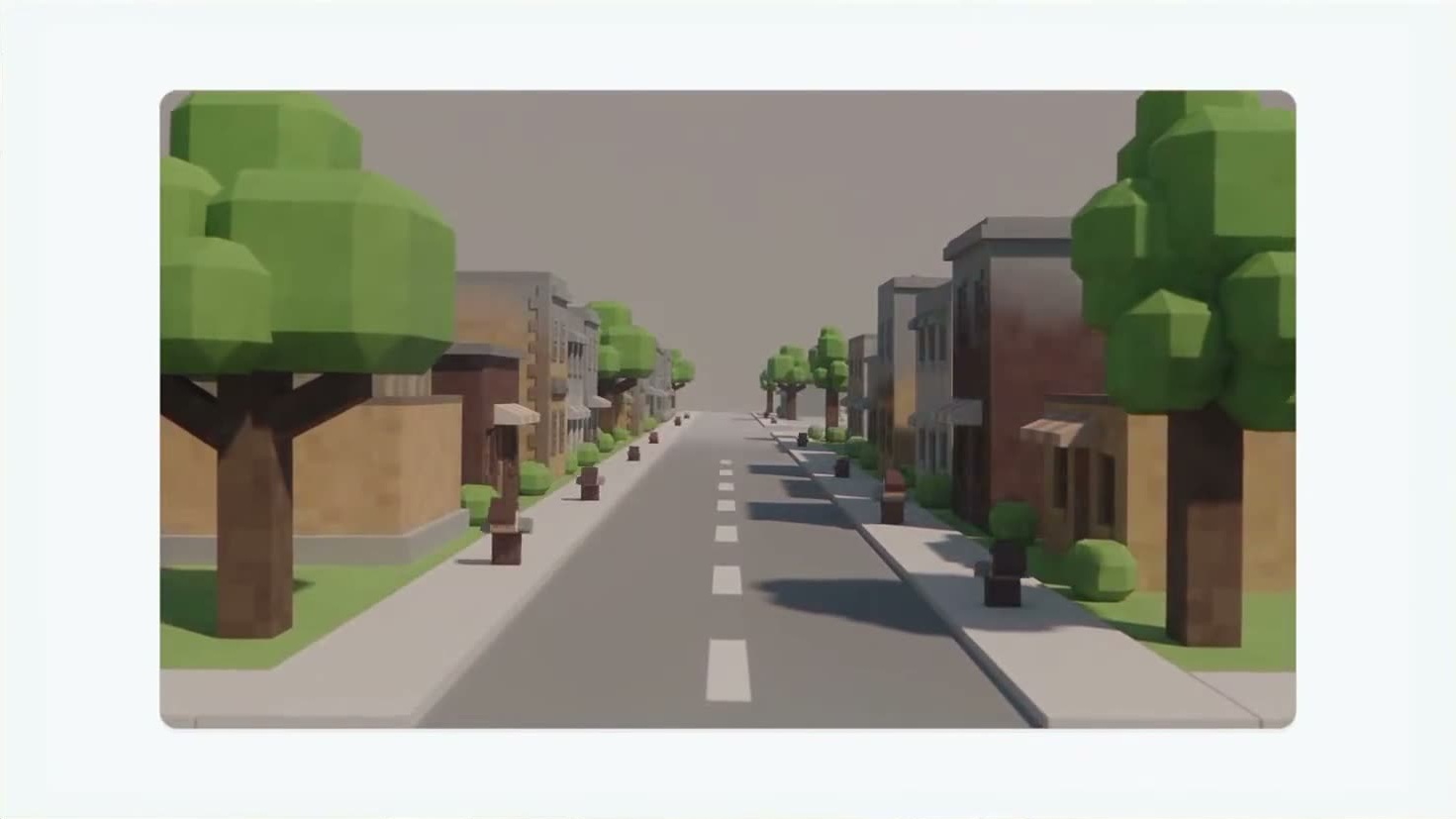
环境,或者类似游戏的场景中,会发生什么?这样你就能开始接近物理引擎或仿真系统。但这个仿真系统没有物理定律。我们没有描述物体应该如何运动。模型只是凭借规模的强大力量学会了怎么做。
environment or something that looks similar to a game? You can start actually getting closer to a physics engine, a simulation system. But the simulation system has no physics laws. We didn't describe what the behavior of the object should be. The model just knows how to do that by poor force of scale.
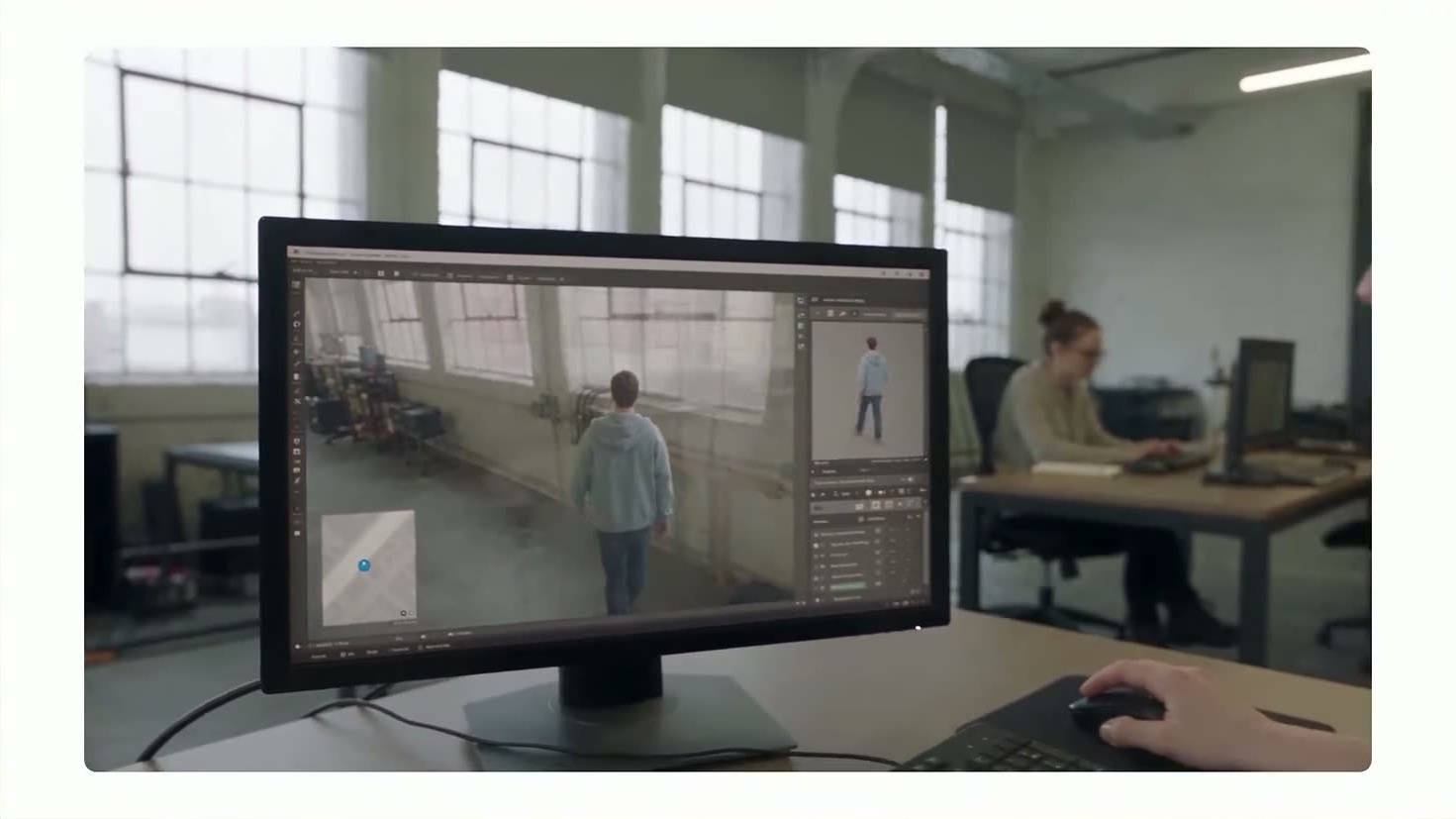
这就变得挺有意思,因为你可以想象在这些世界里玩耍。这不是《GTA》。这是某个人在一个环境里操控另一个人,而软件并没有访问权限。这一切都是对模拟的再模拟,听起来非常元,对吧?所以我说“欢迎来到我的《黑客帝国》式模拟世界”时,并不是在开玩笑。
And this gets kind of interesting because you can only think about playing worlds. This is not GTA. This is someone playing someone else in an environment and a software that doesn't access. It's all simulation of the simulation, which gets really meta, right? And so I'm not kidding when I said welcome to my metric simulation.
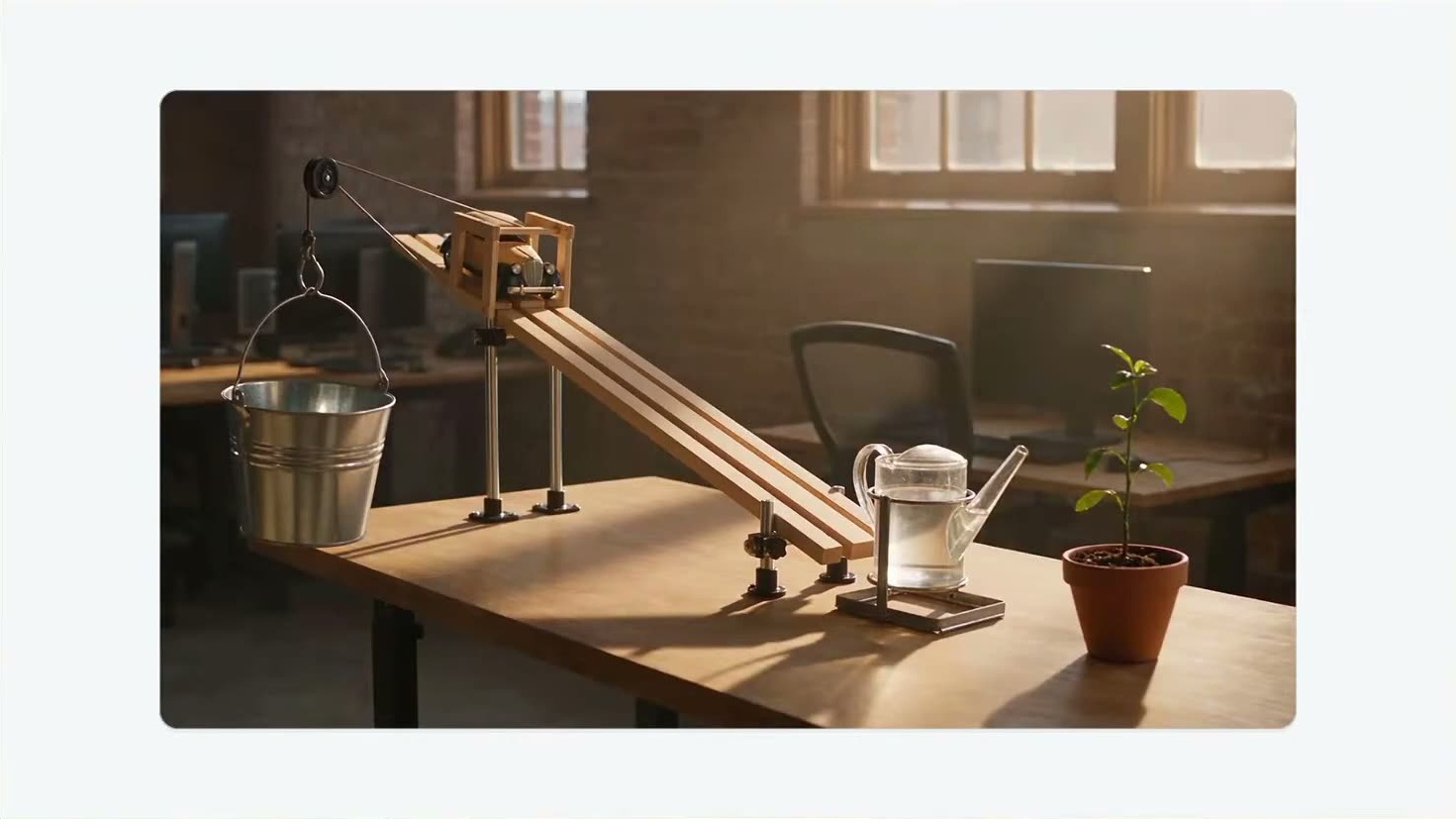
但对我来说,最有意思的是,你们之前看到的一切都不是实时生成的,那些视频需要几分钟或几秒钟才能生成。我们现在思考视频模型和世界模型未来三四年的发展时,很多讨论都在深入思考:当你开始不只是扩大模型规模,让它们变得大得多、大得多,并涌现出更多能力时,如果再让它们具备交互性,会发生什么?所以,沿用下一帧预测这个想法:给模型一帧,让它预测下一帧,然后 X、再 X、再 X;但它可以在帧预测过程的任意时刻采取行动,这意味着我可以模拟这个世界中任何可能的分岔或动作。
But the most interesting thing for me is that everything you saw before was not real-time, that it took a couple of minutes or seconds for those videos to be made. A lot of what we're seeing right now, when we think about the next three, four years of video models and world models, is to deeply think about what happens when you start not only scaling the models and making them much, much, much bigger, with much more emerging properties but also what happens when you start making them interactive. So take the same idea of next frame prediction, you take a frame, you predict the next frame, then X, then X, then X, but then it can act at any point in time in that frame prediction, which means I can simulate any possible divergence or action in that world.
所以在这个世界里,我可以播放视频,也可以触碰其中的每个部分,图像的任何方面,并让它变成交互式的,从而影响这个世界的后续结果。而且确实有效。
So in this world, I could play the video, but I can also come and touch every part, any aspect of that image, and make it interactive to affect the consequences of that world. And it works.
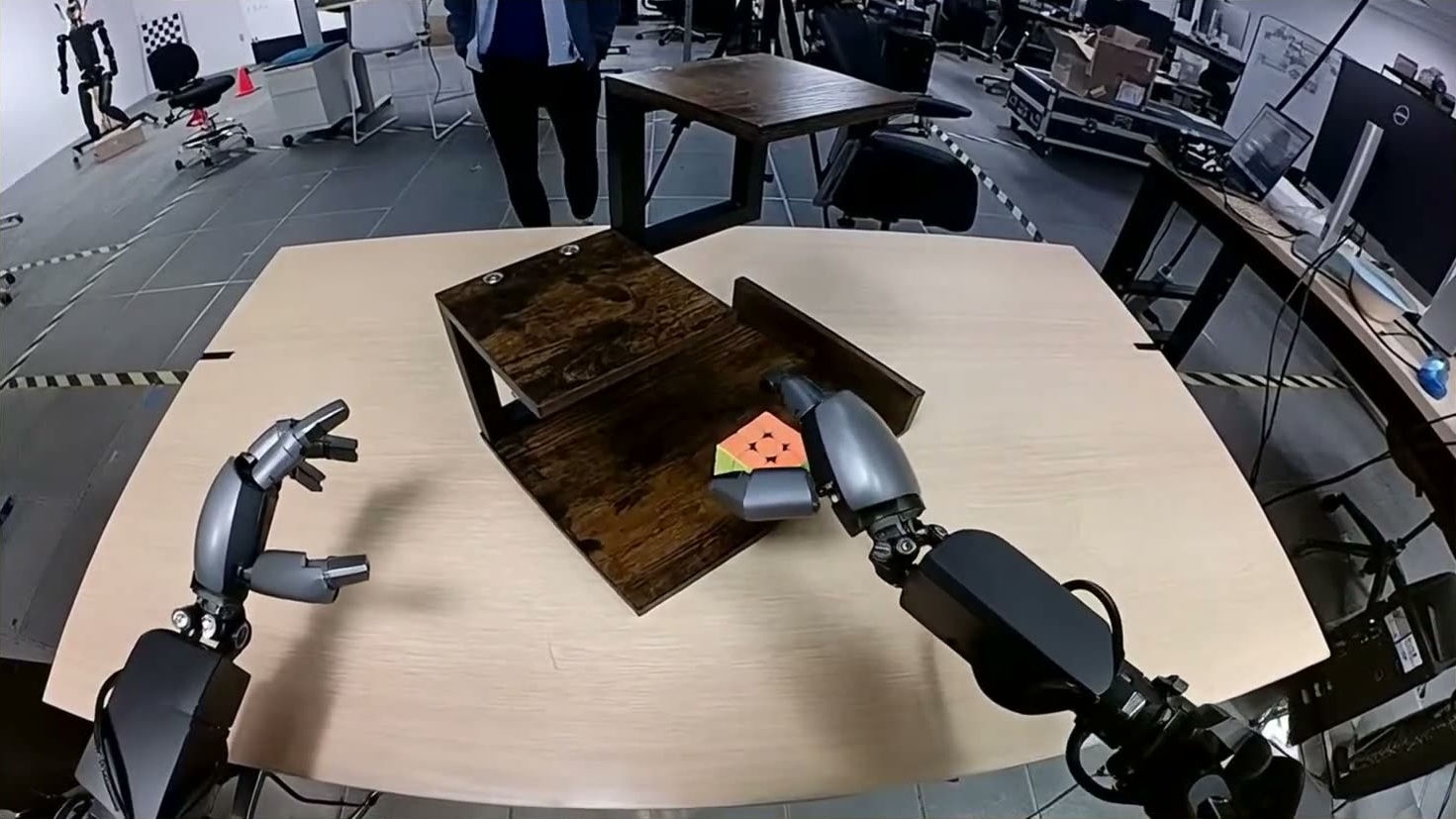
当然,这对各种不同的应用场景都非常有用。你们可以想象,我们现在正在 Runway 建立一个完整的机器人实验室。如果你们来我们在纽约的办公室,一半看起来像好莱坞摄影棚,另一半则有一群机器人在办公室里走来走去。因此,我们能够让这些模型,或者开始让这些模型,成为自主系统和具身系统的大脑,让它们行走并推理周围的世界。不过我认为,还有几个更有意思的应用场景,超出了最显而易见的视频和机器人这两类;如果把屏幕上的任何东西、任何一个像素都看作视频模型,会发生什么?
And of course, this is incredibly useful for a variety of different use cases. As you can imagine, we're now spinning an entire robotics lab in Runway. So if you come to our office in New York, half of it is what looks like a Hollywood studio, half of it is a bunch of robots walking through and moving through the office. And so we're able to make these models or start making these models the brains of how autonomous and embodiment systems walk and reason about the world. But there's a couple of more interesting use cases that I think go beyond the too obvious one, which is video and robotics, which is what happens when you think about anything, anything, any pixel on a screen as a video model.
这是个很好的例子。这是一个视频模型。你们现在看到的东西,首先是一张图像。这张图像可能是真实的,也可能不是;但我可以实时运行我们的视频模型,把它变成一个交互式应用。
This is a great example. This is a video model. What you see right now, well, this is an image, first of all. That image could be real or not, but I could run one of our video models in real time and make this an interactive application.
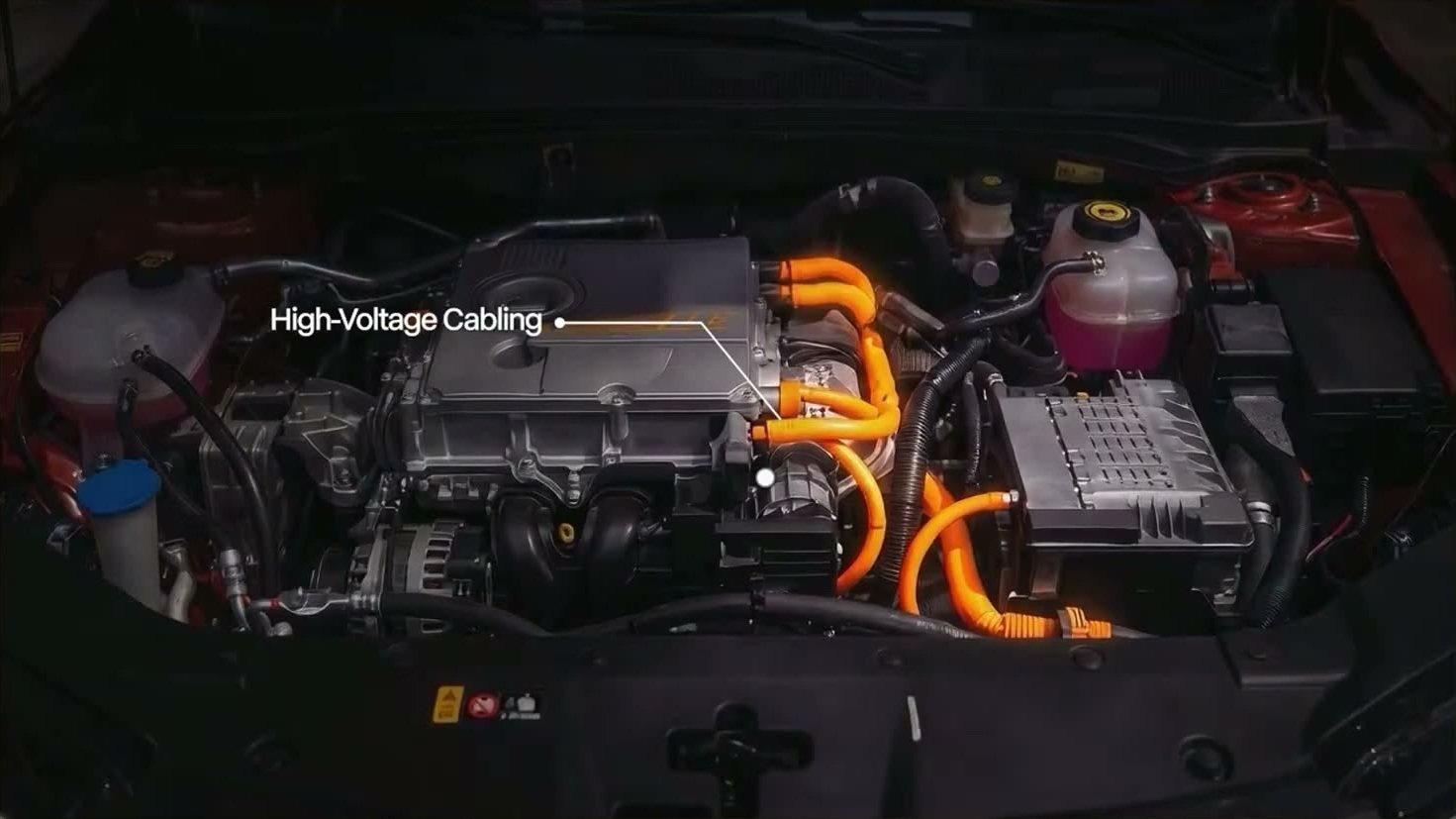
比如说,我想打开汽车的车灯。也许我想让汽车转过来。我只要点击几下就可以做到。我可以再把它转过来,也许打开引擎盖,看看车里有什么。你们刚才看到的这一切都没有物理 3D 表示。没有 Unity。没有 Unreal。没有 Blender。它只是一个视频模型。这个视频模型经过训练,能够理解界面中的操作和点击。我们把它称为“世界界面模型”。我觉得现在你们已经理解了:世界界面模型既是一个界面,也是一个世界模型;这种世界界面模型能让你做出很酷的事情,比如这样。
So let's say I want to turn the lights of the car. Maybe I want to turn the car around. I can just click through it. I can turn it around again, maybe open the hood and see what's inside the car. Now, everything you just saw here has no physical 3D representation. There's no Unity. There's no Unreal. There's no Blender. It's just a video model. A video model has been trained to understand actions and clicks in an interface. We call this a world interface model. And the world interface model, I feel you guys understand now, it's an interface and it's a world model, world interface model, allows you to do very cool stuff like this.
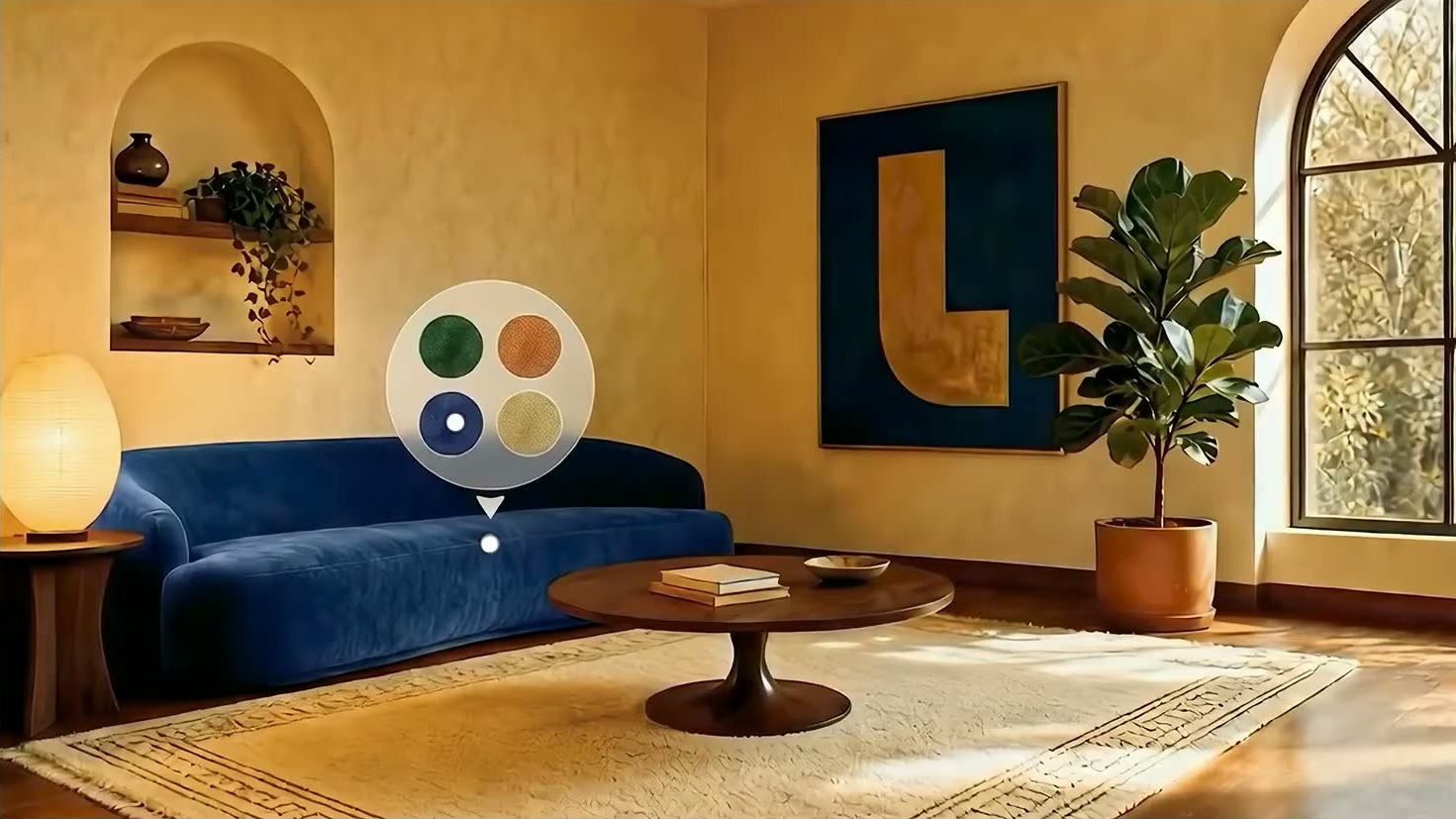
下面再举一个例子,说明你可以如何设想实时使用这样的模型。我可以拿一张图像或一种表示,把物体移动起来,并期待它们像我真的身处那个房间里一样移动。再提醒一下,这里并没有它的 3D 表示。这个环境之前甚至可能从未被建模过。它只是一张图像,以及一个理解物体如何在空间中移动的模型,因为有一个非常简单的想法:只要下一帧预测的规模足够大,就能成为世界模型或仿真引擎。
And so here's another application, another example of how you could think about using a model like this in real time. I can take an image, a representation, move objects around and expect them to move as I was actually in that room. Again, remember, there's no 3D representation of this. This environment might not actually have been modeled before. It's just an image and a model that understands how objects move in a space because of this very simple idea that next frame prediction scale well enough can become a world model or a simulation engine.
我剩下的 8 分钟里,想向你们展示这个想法如何被推向另一个极端。我们思考的不只是如何控制各种应用和各种界面,还包括如果继续外推会发生什么;顺便说一句,我认为外推可能是当今 AI 和公司建设中最重要的技能之一。思考未来6 个月、12 个月、18 个月会发生什么,可能是最重要的事情之一,值得尝试预测、理解。嗯,这也是我们在 Runway 经常问自己的问题:如果我们继续扩大模型规模、继续增加数据、继续让它们变成更好的仿真系统,如果把它们做成能够预测屏幕上任何东西的通用仿真系统,真的是什么都能预测。
So with the eight minutes I have left, I want to show you this idea taken to another extreme we're thinking not only about what happens if you can control the school applications and the school interfaces but what happens if you keep extrapolating and i think by the way extrapolating may be one of the most important skills these days in ai in company building what happens over the next six months 12 months 18 months may be one of the most important things to to try to predict understand um and so we ask ourselves that question a lot at runway what happens what will happen if we keep scaling the models, if we keep adding more data, if we keep making them better simulation systems, if we make them universal simulation systems that can predict anything on a screen, literally anything on a screen.
所以我们一直在研究一个称为 Continuum 的想法。Continuum 的构想是把实时视频模型或世界模型真正推向更高一个层次。这是一个操作系统。设想在不久的将来某个时候,你打开电脑,屏幕上流动呈现的内容可能来自一个视频模型。接下来我会具体展示这个想法会如何发展。这仍是非常早期的研究,但我想让你们看看,如何把视频模型融入操作系统和日常工作中。这是一个例子。
So we've been working on this idea that we call Continuum. And Continuum is the idea of real-time video models or role models taken really to the next degree. This is an operating system. The idea here is that you might open your computer at some point in the near future and what you see streaming to your screen might be coming from a video model. So I will show you next specific how this idea could shape. This is still very early research, but I want to show you this idea of combining video models as part of your operating system, as part of your daily work. So here's an example.
我当时在研究旧金山,以及旧金山的雾。我想进一步了解雾何时、如何形成。
I was researching San Francisco and the fog in San Francisco. I wanted to learn more about when and how it happens.
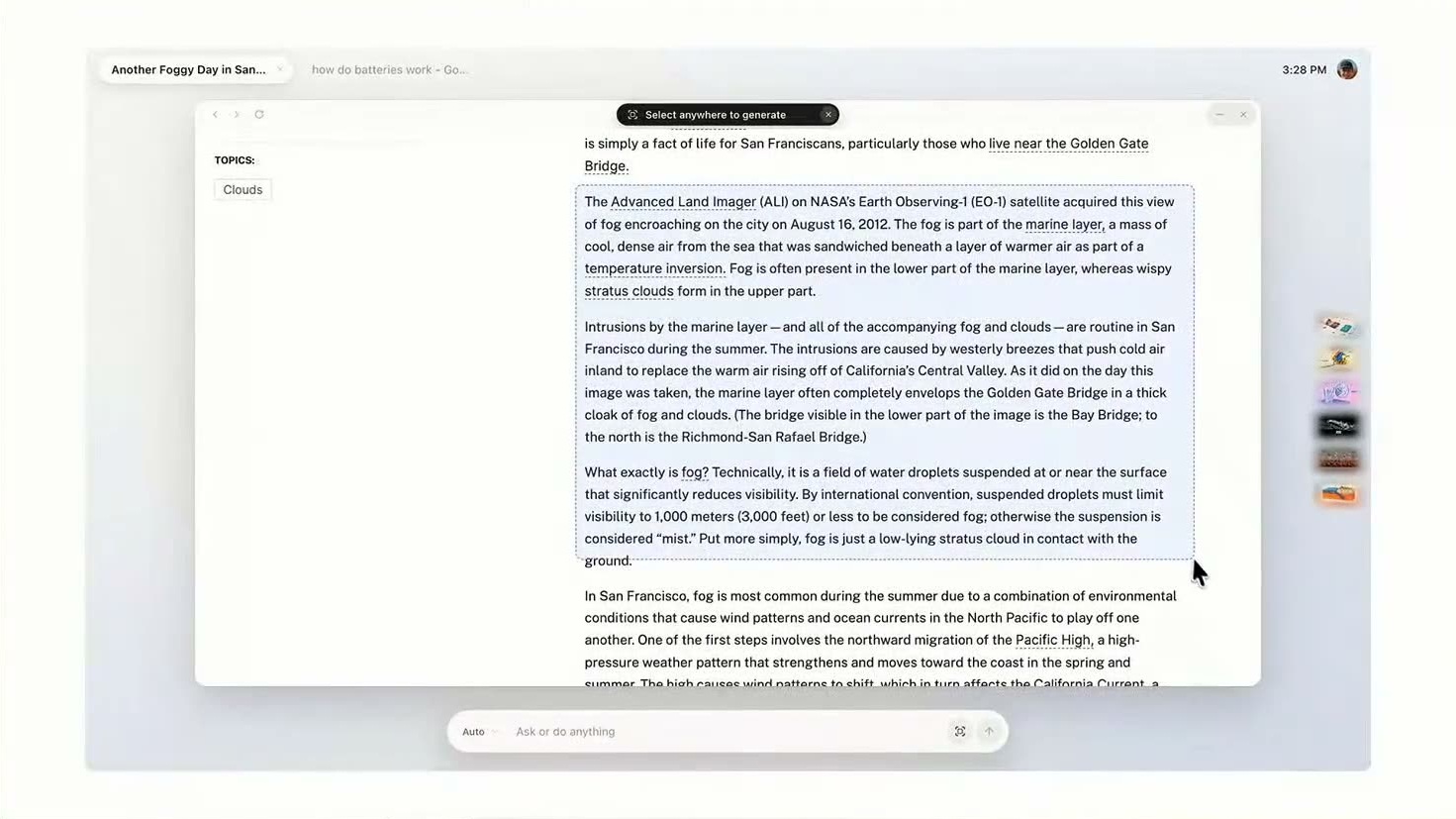
这是结构化数据。这实际上是一个网站。这是你可以从互联网上获取的内容。Continuum 的想法是,我可以从网站中选取任意一部分内容,并把它变成一个门户。我们把它称为“门户”。这个门户是一段实时视频。它完全可交互,并且完全基于你正在体验的内容——你正在阅读的内容。我大概不会把那些文字全部读完,太多了,对我来说文字实在太多,所以我只想生成一段视频,而且生成的视频可以用来呈现你在那里看到的文字。这些门户可以是 3D 呈现,也可以是任何你正在观看或交互的内容,都可以。右侧可以展示你之前体验过的所有可视化和门户,以及任何你一直在尝试学习的内容。
This is structural data. This is actually a website. This is something you can take from the Internet. And now Continuum has this idea that I can select any part of content in that website and make it a portal. We call this a portal. And the portal is a real-time video. It's fully interactive and fully based on the content you're experiencing experiencing reading through, I probably won't read through all of that text, it's too much text for me, so I just want to make a video and I can make a video that's represented by the text you see there. These portals can be 3D realizations, it can be any content that you're watching or interacting with. On the right, you can have all the visualizations and portals you've experienced before, anything you've been trying to learn.
基本上,它就像一段记忆,是你看过的想象内容或可视化内容的硬盘,把它们都存了下来。
Basically, it's a memory, it's the disk of the imaginations or the visualizations you've seen before.
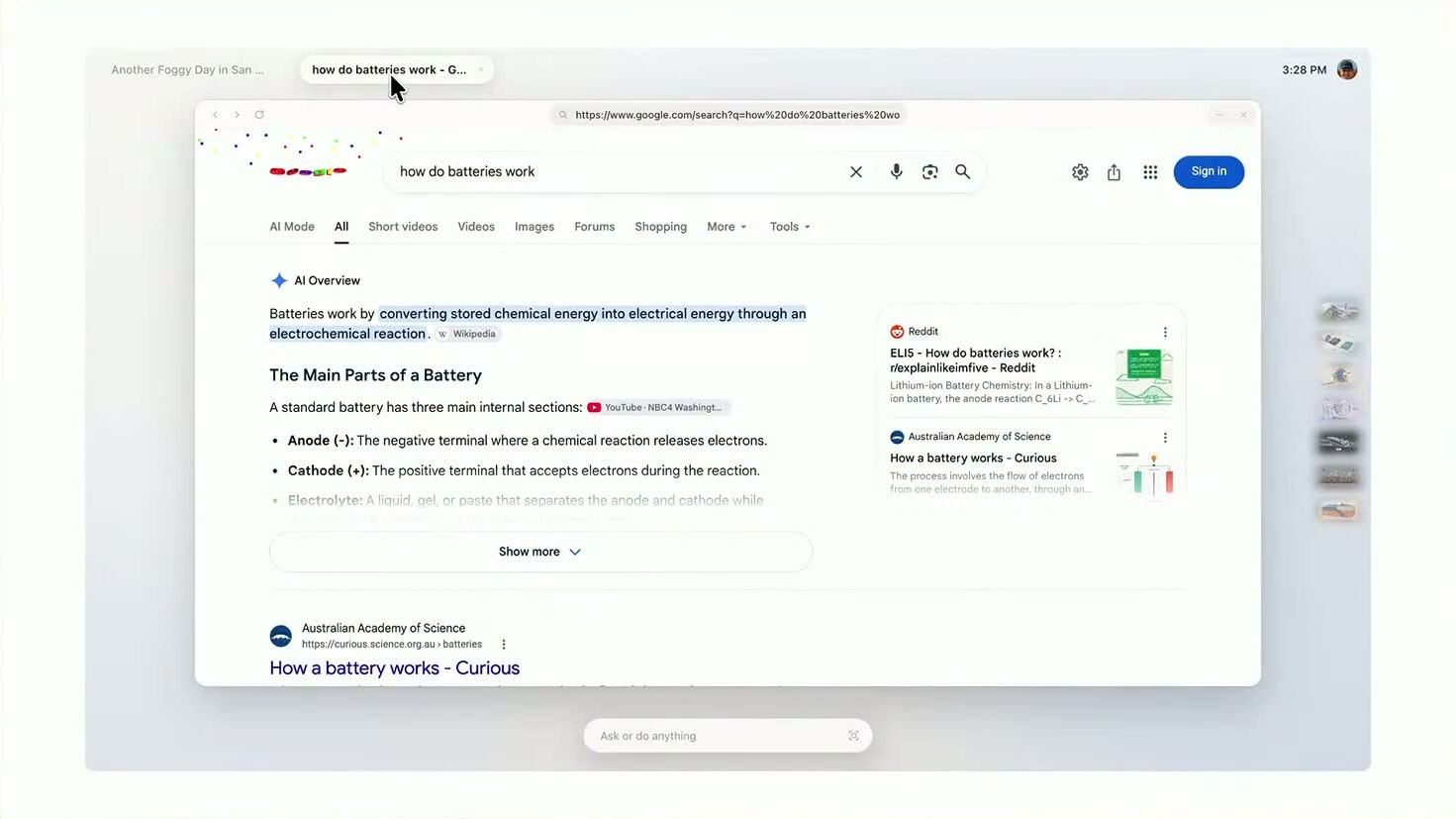
所以我之前在研究电池。我可以回到之前关于电池的那个门户。由于这些都是实时交互应用,我可以在任意位置点击。我可以移动它们。我可以开始提问,视频和内容本身会根据我的交互以及我浏览内容的方式而改变。这里还有另一个很酷的例子。
So here I was researching about batteries. And so I can go back to the portal I had around batteries before. And since there are real-time interactive applications, I can click them anywhere. I can move them around. I can start asking questions, and the videos and the content itself will change based on my interactions and the way I'm managing through it. Here's another very cool example.
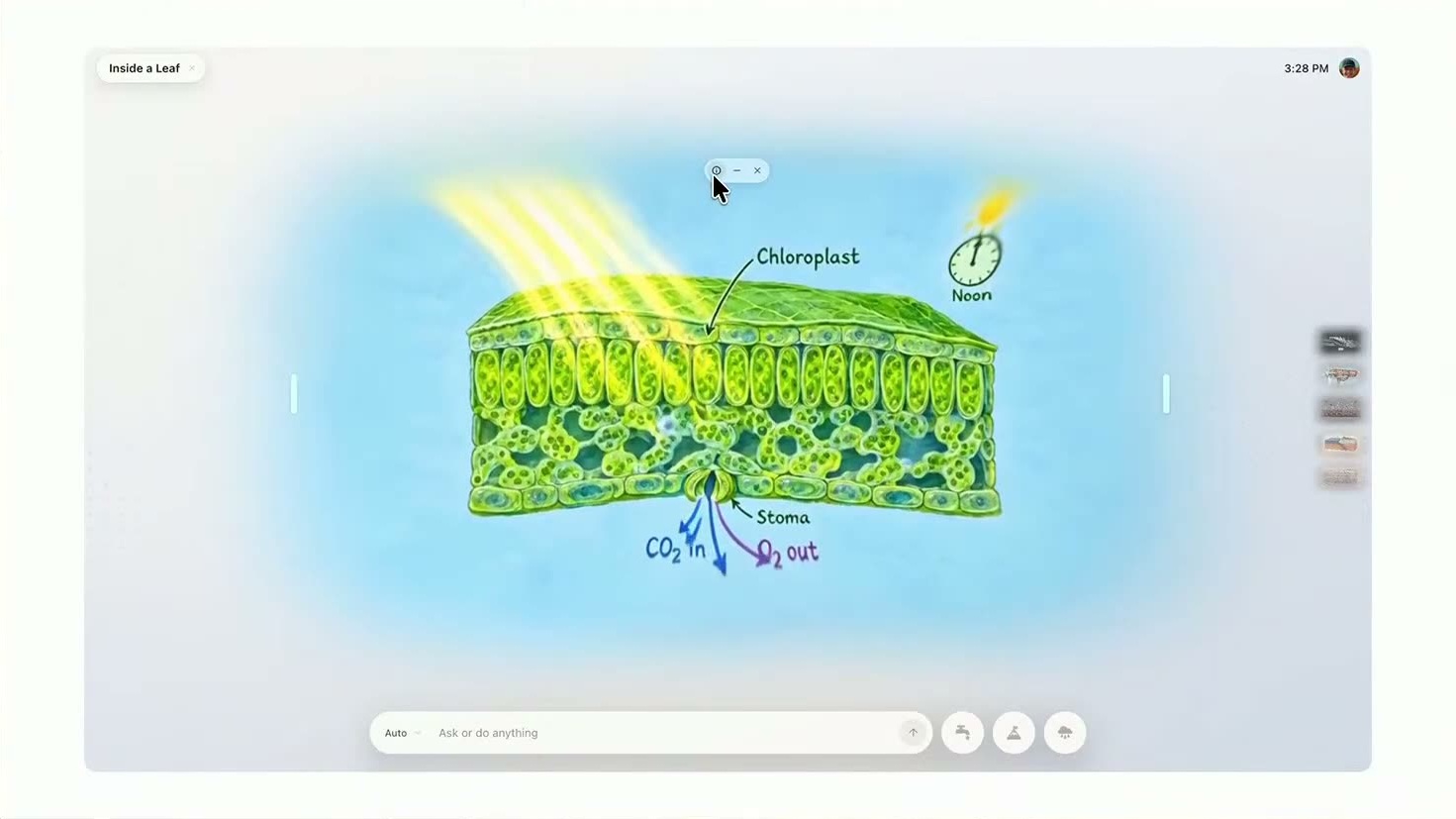
团队第一次给我看时,我简直惊呆了。因为这是实时视频,所以任何内容都可以完全交互。不只是点击,调整应用窗口大小也应该能改变它的行为。所以我可以调整大小。我在这里学习光合作用。调整应用窗口的大小后,我会获得不同的体验。再说一次,这是一个完全可交互的应用,所以我可以点击操作,浏览细胞的各个部分,或者了解光合作用如何运作,从而更好地理解我想要学习和完成的内容。有一点我仍觉得有些说不清:我不知道该怎么称呼它。
that the first time I saw it, when the team showed it to me, it blew my mind. Since it's a real-time video, you can make it full interactive with anything. Not only with clicks, but resizing the application should also change the behavior. So I can resize. I'm learning about photosynthesis here. If I resize the application, I get a different experience. And this is, again, full interactive application, so I can click through it, navigate through parts of the cell or how photosynthesis works to get a better understanding of what I'm trying to learn and do. The one thing that still feels to me kind of unsigned about this is I don't know how to call this.
我不知道这算不算——它感觉既不像可视化内容、视频、游戏,也不像其他明确的东西,像是介于两者之间。我认为我们需要共同努力,弄清楚首先该如何称呼这类交互。你们肯定也注意到了另一点:你可以改变提示的结构,或者改变最初生成这种交互的内容。
I don't know if this is ‑‑ it doesn't feel like a visualization, a video, a game, something in between. And I think we need to do the collective work of figuring out how we call these kind of interactions in the first place. And I'm sure you hear the other thing is that you can change the structure of the prompt or what's actually creating that interaction in the first place.
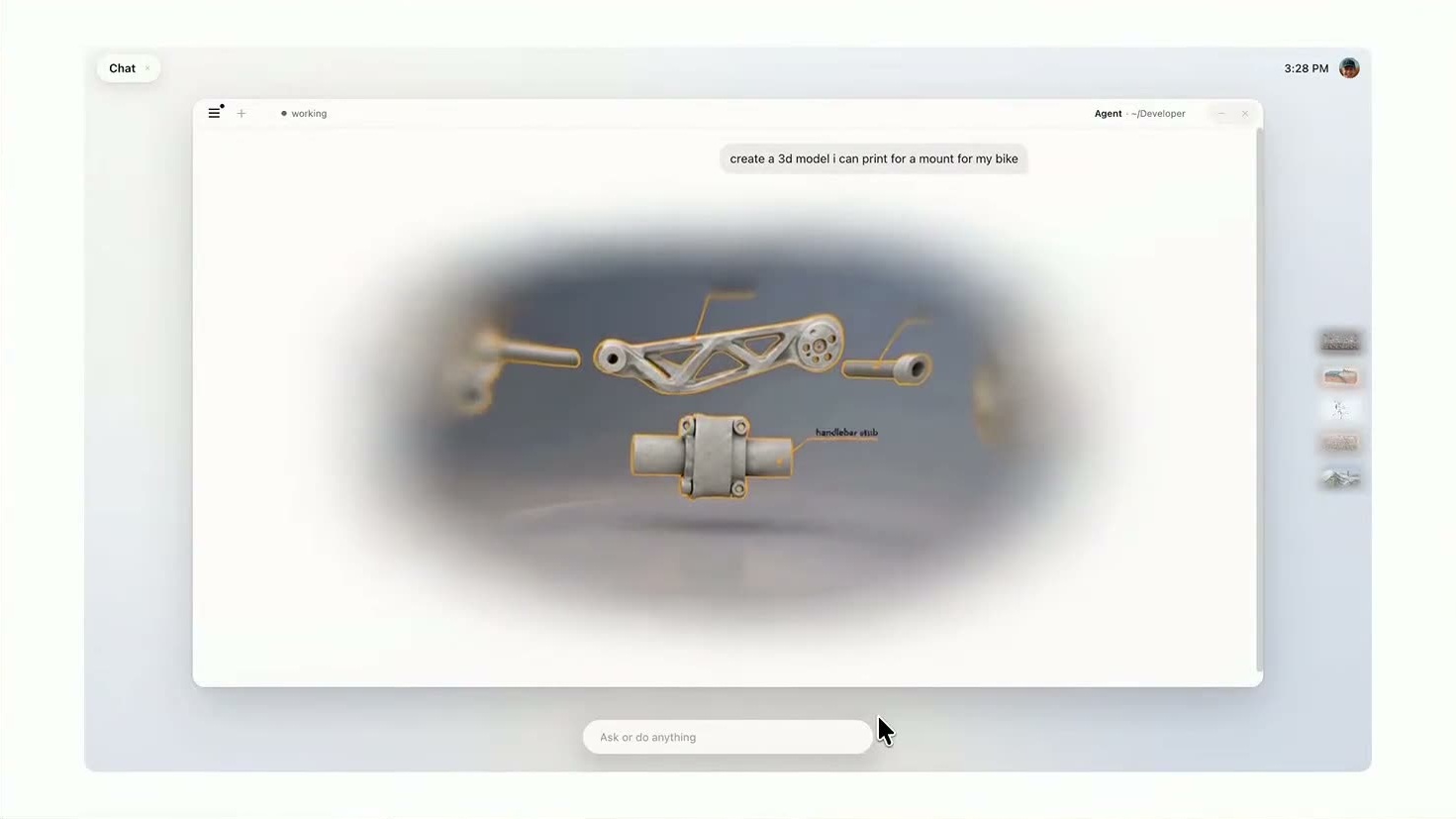
这里还有一个例子。我准备输入一些内容。这是我觉得目前最未被充分探索的方向之一。我们称之为“视觉思考”。我们把Continuum 接入了一个编程智能体。这个编程智能体可以利用 Continuum,通过可视化来逐步思考一个问题。比如,你让编程智能体为你的自行车创建一个 3D 模型,
Here is another example. I'm going to type something. And this is one of the ones that I feel has been the most under explored yet. We call this visual thinking. So we've connected Continuum to a coding agent. And what the coding agent can do is it can use Continuum to visualize through a problem. So imagine you ask your coding agent to create a 3D model for your bike,
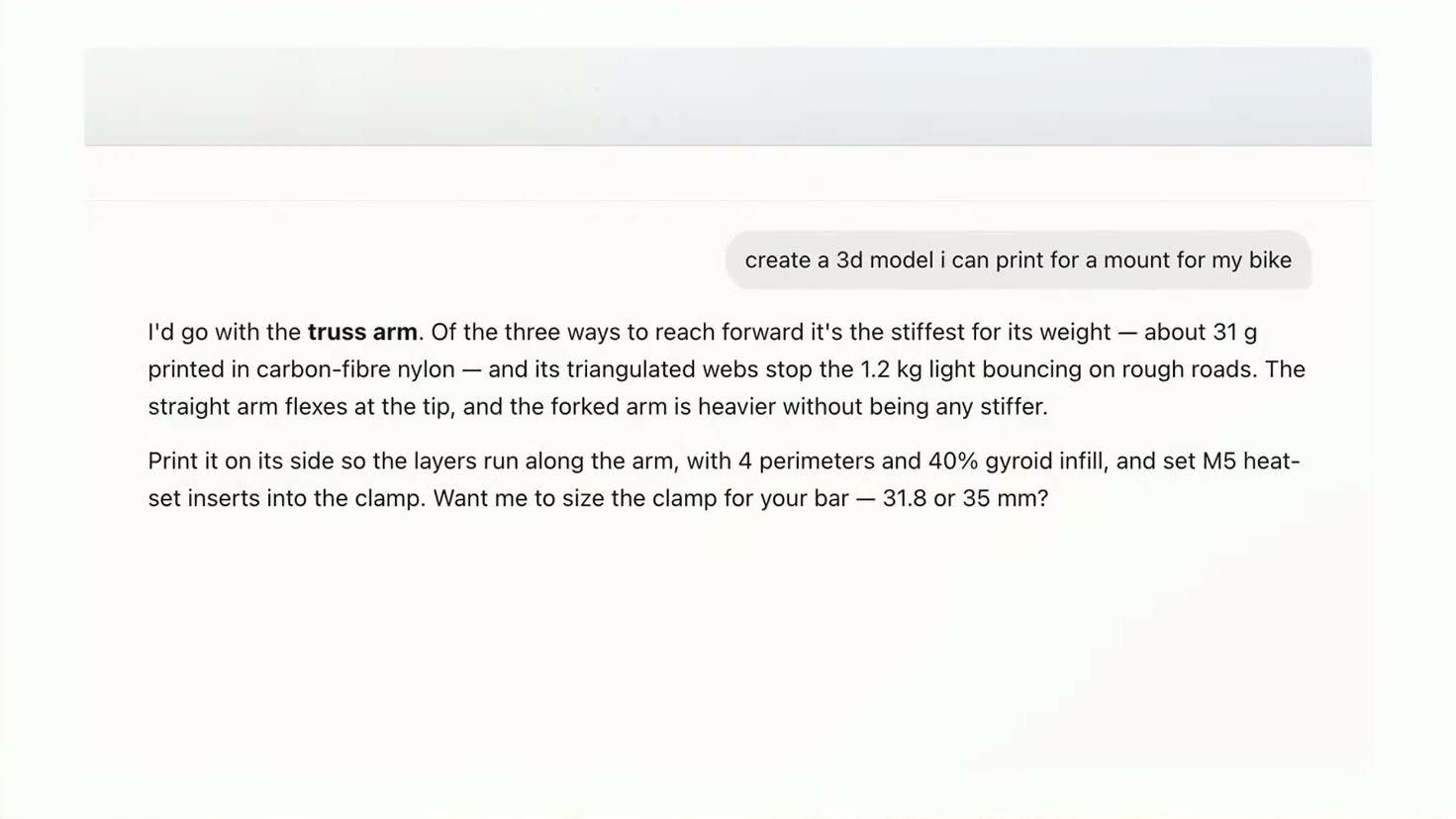
而不是让模型只通过代码来思考这个问题,它可以启动一个Continuum 版本,通过可视化来思考问题。所以,如果你想想某个人——我相信你们有些朋友,或者在座很多人,可能都是视觉思考者——那么视觉思考者就是先通过视觉来思考问题和想法。这能帮助你把握并设想自己想做的一些最佳方案。这在某种程度上非常相似。智能体能够进行视觉思考。智能体可以生成一种想象空间,让你调用并与之互动。因此,不只是智能体能与之交互,我自己也能看到它。
and instead of the model trying to just think through that via code, the model can spin a version of continuum to think through the problem visually. So if you ever think about someone, I'm sure you have friends or maybe a lot of people here may be visual thinkers, what a visual thinker is, is it thinks through problems and through ideas visually first. And that helps you ground and project some of the best things you want to do. This is somehow very similar. Agents have the ability to do visual thinking. Agents can spin up a sort of imagination that you can tap and interact with. So not only the agent can interact with it, I can also see it myself.
而且我可以用比单靠文字更好的方式引导智能体。对我们来说,这是一个非常有力量的想法。这是一个全新的范式。视觉思考。最后一个例子是:如何设想把 Continuum 变成远不止像我之前展示的那样使用或浏览交互式结构化内容,而是让它们成为完全实时、能够响应变化的体验。所以,
And I can guide the agent in much better ways than I might have been able to guide it just via text alone. Which is for us a very powerful idea. It's a completely new paradigm. visual thinking. The last example I have is how you think about taking Continuum to become much more than just using or navigating interactive structural content in the way I've showed you before, but actually making them fully live experiences that are reactive. So in
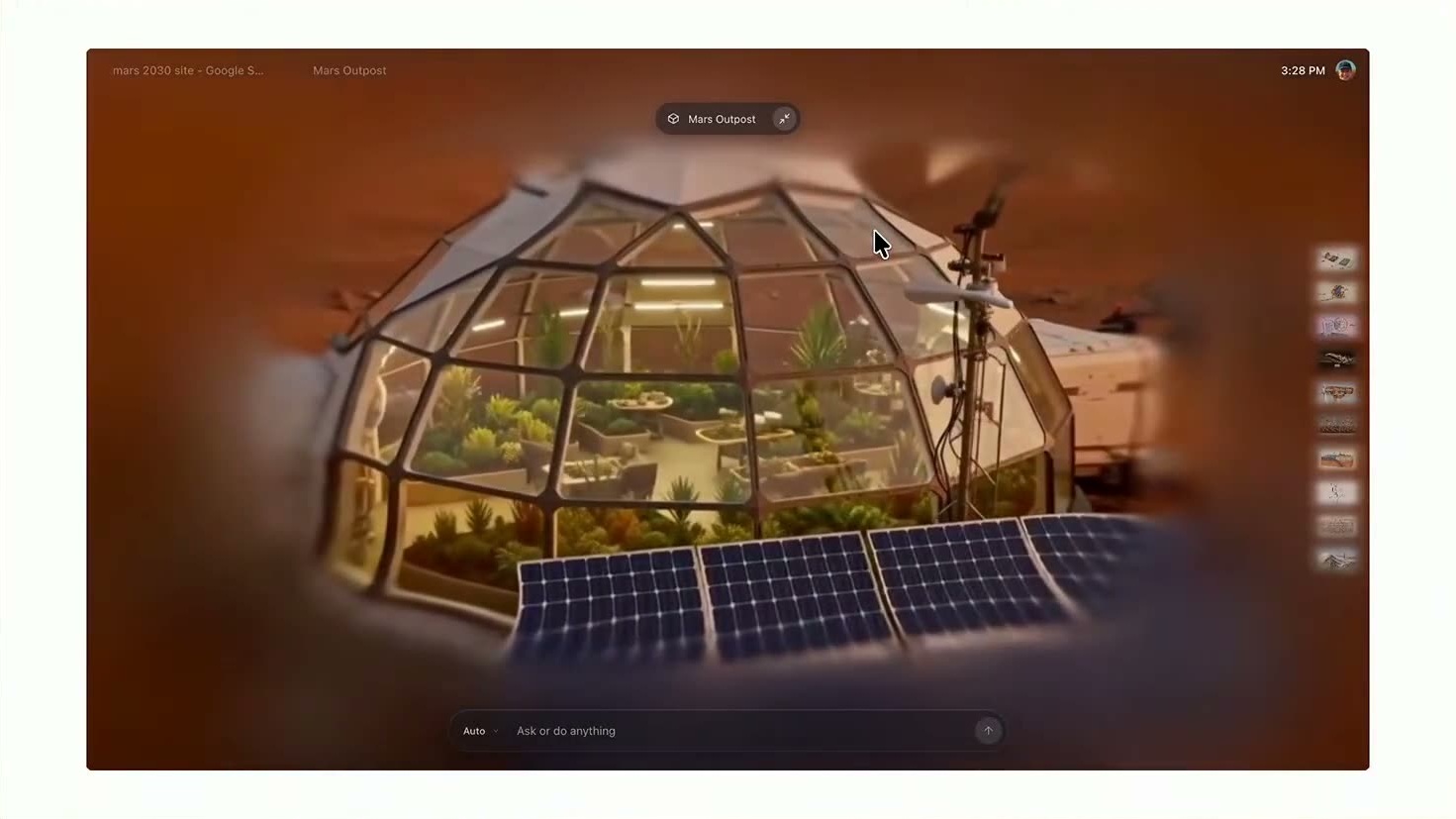
当 Continuum 理解了我想搜索什么之后,它还会实时为我推荐专门针对这一目的设计的界面。比如这里,它为我创建了一个火星前哨基地;它理应符合关于目前火星上实际运行的机器人,或者预计到2030 年可能会有的机器人的数据。由于它完全可交互,我可以和它互动。我可以前往不同地点。我可以像在 3D 系统或 3D Continuum 中那样四处移动。而且确实可行。真令人着迷。
And as Continuum understands the intention of what I'm trying to search from, it also suggests interfaces that are specifically designed in real time just for that. So here it created for me this Mars outpost that actually should be accurate with the data about the actual robots that are in Mars right now or the ones that are projected maybe in 2030. And since this is fully interactive, I can interact with it. I can go to places. I can move around in the same way that I might move around in a 3D system or a 3D continuum. And it works. Just fascinating.
所以,当我说“一切都将被模拟”时,我真正想做的是帮助世界——不只是帮助我们的团队——达到这样一个阶段:今天我们看到的很多东西,希望再过几年或几个月,这一切就会变得显而易见。我们回头看 Continuum,它可能会让人觉得非常接近我们刚才给你们展示的《The Orange》视频。Continuum,以及我们正在做的许多视频方面的工作,以及 Runway 在仿真领域的工作,都还处于非常早期的阶段,但我们正在走向一个真正能够运行并实现规模化的阶段。所以我们真正感到兴奋的是,接下来的8 到 12 个月里,我们会陆续发布这里展示的大部分内容,供所有人使用。谢谢大家。
So when I say everything will be simulated, I'm really trying to understand or help not really our team but the world get to the point where a lot of what we'll see today will found obvious hopefully in a few more years or months. We'll look back at Continuum and it might feel very close to the video of the Orance that we just showed you. Continuum and a lot of the things we're doing in video and in runway when it comes to simulation are still in very early days, but we're getting to a point where it actually works and it really scales. So what we're really excited about is that for the next 8 to 12 months, we're releasing most of what I showed here for everyone to use. Thank you, guys.
谢谢
Thank