自动化证券主数据:用智能体保持主数据库干净
The Automated Security Master: keeping your master database clean with agents
原文由官网提供,中文由 GPT-6 Luna 翻译。相邻片段合并排版,正文与时间点保持对应。
此场仅有官方公开节选;以下为已公开部分的中文译文。
已插入 28 张经核对的幻灯片或演示截图;点击图片可放大。图注链接为当前视频时间,左侧正文时间保留原转录版本,二者可能不同。
共 47 个阅读段落
好。嗯。我们要把它叫作 Jiro 吗?可以,就叫 Jiro。我们可以直接说:“这是我们的智能体 Jiro。”我觉得也可以做一个挺有意思的剪辑,比如我们问 Jiro:“准备好开始了吗?”“好了。”然后视频就可以转场,让 Jiro 画点什么,比如做个回应之类的。对对对。可以把它当作一个过渡镜头,一个转场剪辑。好,我们开始吧。谢谢大家来听这场演讲,这是 AIE 线上专场的演讲。不过说“来听”好像不太准确,毕竟你们显然不在我们这个房间里。一路长途跋涉。对,长途跋涉。对对对。
Okay. Yeah. Do we want to call it Jiro or no? Yeah, we could call it Jiro. We could just be like, this is our agent Jiro. I think it's also like a helpful potential cut, which is like if we ask Jiro, are you ready to get started? Yeah, sure. And then our video can move, Jiro can draw something, acknowledgement, whatever. Yeah, yeah, yeah. It can be like a transition pain, transition cut. All right, let's get started. Thanks, guys, for coming to listen to a talk on the AIE online track. I guess coming to listen is not quite right because obviously you guys are not in the room with us. Making the long, long trip. Yeah, making the long, long trip. Yeah, yeah, yeah.
踏上前往 YouTube.com 的艰辛旅程。每次做这类演讲,我们都想稍微尝试一下不同的形式。我不太喜欢深夜站在房间里的 Loom 镜头前照着幻灯片讲。所以我把 Cliff 拉来,一起做点不一样的内容。我们想把它做成稍微带点播客形式的演讲。部分原因是,有几个人可以一起发挥、交流想法,感觉很好。另一个原因是,我们想找个办法让我们的智能体 Jiro 也参与进来。当然,对我们来说,Jiro 并不是真的和我们待在同一个房间里。它大概就住在这台电脑里。不过希望你们在 YouTube 上观看时,能看到我们三位都在场。你会看到我和 Cliff 在聊天,而 Jiro 会在中间画图并描述、描述各种内容。Jiro,请向观众挥手打个招呼。
The arduous journey to YouTube.com. Whenever we do these kinds of talks, we always want to play around with the format a little bit. I'm not a huge fan of just standing in front of a loom and doing slides late at night in my room. So I dragged Cliff along to do something a little bit different. We wanted to do this in a little bit of a podcast format. And part of that is just because it's nice to have multiple people to riff with and bounce ideas off of. But also because we wanted to find a way to include Jiro, our agent. So obviously, on our side, Jiro is not quite in the room with us. He's kind of living on this computer. But when you guys are watching this on YouTube, hopefully you'll have all three of us present. You'll have me and Cliff talking and then Jiro will be sort of in the middle, drawing things out and describing, describing things. Jiro, please wave hi for the viewers.
对,Jiro,请向观众挥手问好。
Yeah, Jiro, please wave hi for the viewers.
这场演讲要讲的是如何让证券主数据(SecMaster)智能体化。这是 AIE New York 的一部分;这个活动在 2026 年非常关注金融以及 AI 在金融领域的应用。在深入讨论之前,我们或许应该先简单介绍一下自己,然后解释一些术语,比如什么是证券主数据,什么是云端智能体,以及如何用智能体来做这些事。我先来。我叫 Amol,是 Nori Agentic 公司的 CEO。你们可能已经猜到了,我们花了很多时间研究云端智能体,以及如何把智能体放到云上,解决金融领域的问题,也包括许多其他行业的问题。好,Cliff。
So this talk is all about agentifying a SecMaster. This is part of AIE New York, which, of course, is very, very focused on the finance and like AI and finance in 2026. and so i think uh before we really dive in maybe it makes sense for just us to briefly introduce ourselves and then we probably want to just give some definitions even like what is a sec master what is a cloud agent how do you like use agents to do any of these things um so i'll go first my name is amol i am the ceo of a company called nori agentic and as you might have guessed we spend a lot of time thinking about cloud agents and how we can put agents in the cloud to solve problems, both in finance and kind of all in a bunch of different industries. And yeah, Cliff.
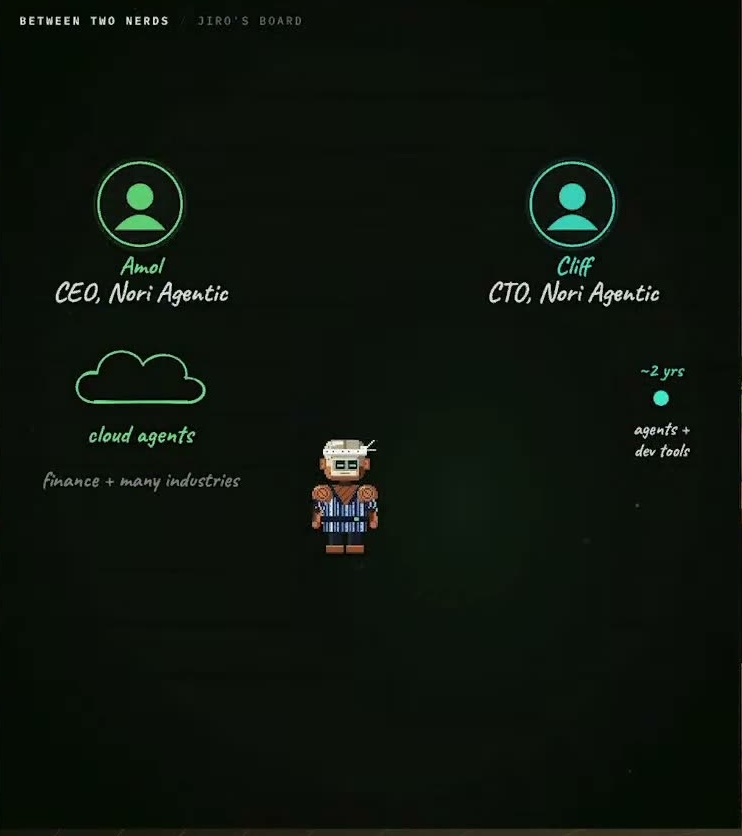
我是 Cliff,Nori Agentic 的 CTO。近两年来,我们一直在做开发工具、AI 智能体,以及这种产品形态。在此之前,我从事数据工程工作,为一家初创对冲基金构建新的数据平台。再之前,我做的是资深软件工程师。贯穿这些经历的一条主线是数据工程、开发工具、一定程度上的云端推理,以及一些 Web 应用。其实挺有意思的。这场演讲几乎就是为你量身打造的。我算是那个格格不入的人。我做机器学习出身,做 AI 和 ML 已经12 年了,但对金融一窍不通。你熟悉金融领域的所有东西。所以这场对话挺有意思,对吧?因为现场可能有两类截然不同的听众。一类是金融从业者,可能对 AI 一无所知;另一类是 AI 工程师,可能对金融一无所知。
I'm Cliff. I'm the CTO at Nori Agentic. We've been working on dev tooling, AI agents, this form factor for almost two years now. And before that, I was working on data engineering and building out a new data platform for a startup hedge fund. And before that, staff software engineering. And there's kind of a through line in all those things with data engineering, dev tools, some amount of cloud inference, some amount of web apps. Yeah, it's kind of funny, actually. This is almost like a perfect talk for you. Like, I'm sort of the odd person out. My background's in ML, so I've been doing the AI ML thing for 12 years, but I don't know anything about finance. You know all the finance stuff. So it's kind of an interesting conversation, right? Because we have two potentially very different audiences in the room. You have the finance folks who maybe don't know anything about AI, and you have the AI engineer folks who maybe don't know anything about finance.
所以或许我们应该先解释一些术语,比如什么是云端智能体,什么是证券主数据,然后再深入讨论这些东西如何
So maybe it makes sense to even just get started with some definitions like, what is a cloud agent and what is a SEC master before we can even dive into how these things
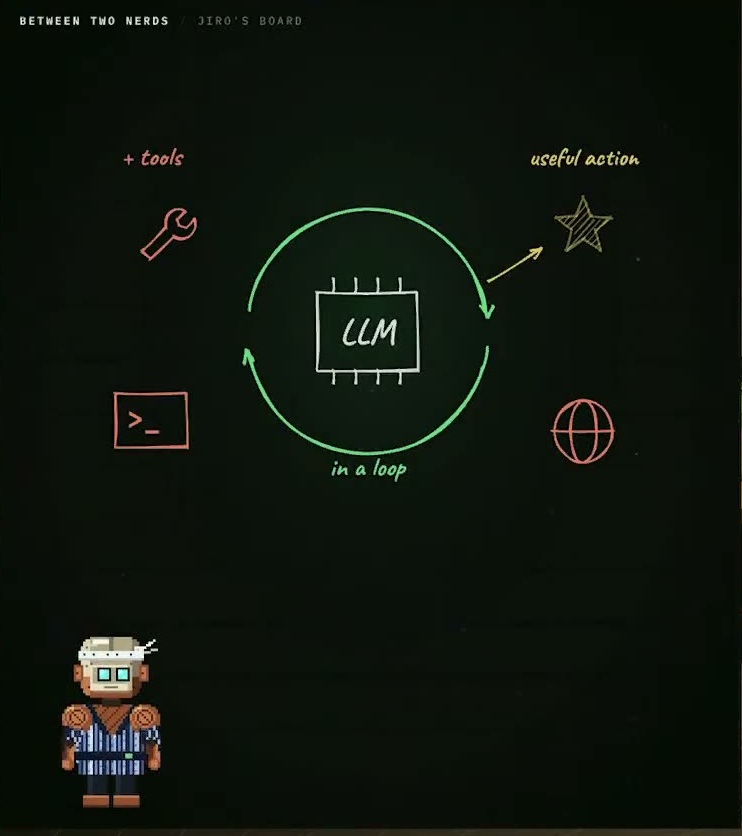
结合起来。好。云端智能体最简洁的定义,我认为就是一个智能体:启动一个 LLM 或模型,让它在循环中运行,并赋予它使用工具的权限。这样它就能采取某些
fit together. Yes. So cloud agent, the most succinct definition, I think, for just agent to start an LLM or a model that you run in a loop and give access to tools. And so it can take some
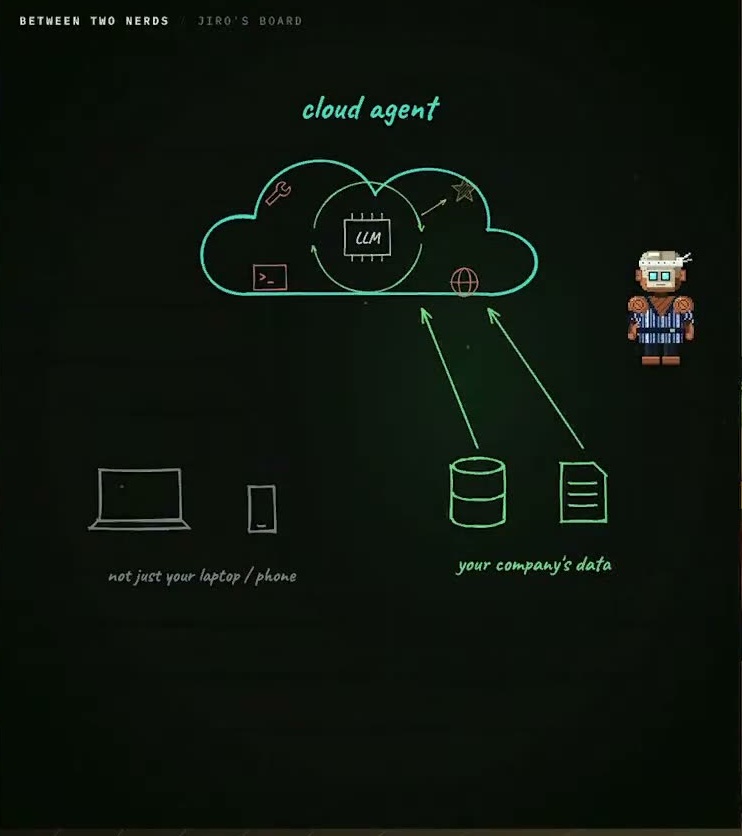
你希望有用的行动。具体来说,云端智能体就是把这一整套形态,通常是循环调用模型的代码,放进某个云端进程中,并让它访问笔记本电脑、手机或其他地方所没有的工具。这样,整个实体——这个希望有用的基础能力——就在云端运行,并依据你公司的数据和流程,或满足你自己的需求来采取行动。而且现在很多重要数据都存放在云端。所以从某种意义上说,云端确实是运行这一切非常自然的地方。对,我觉得这和历史发展有一定关系,比如我们看到本地智能体兴起的过程。对。
action that you hopefully find useful. Specifically cloud agents, you take that whole form factor, usually the code that is calling the model in a loop and you put it in some cloud process and you give it access to tools that don't exist on your laptop or your phone or wherever else. And now that whole entity, the hopeful, useful primitive, runs in the cloud, hopefully taking action with either your company's data and processes or your own needs. And I mean, so much of the important data now lives in the cloud. So like in some sense, it actually is like a very natural home for all of that to even run. Yeah, I think it's there's a certain historicity of, I think, when we saw local agents take off. Right.
去年 Claude Code 出现时就是这样。对。更早之前,还有一些早期的智能体基础能力。对。我觉得它先在本地出现,几乎只是历史发展中的一个偶然。嗯。至少一开始是这样。从长远来看,真正的边缘设备还需要更长时间才能创造价值。这就是云端智能体:在云上运行的智能体,你基本上可以通过各种不同平台异步地让它做事,并与它交互。那 SecMaster 是什么?好。这里可能值得多花些时间,因为我觉得这个概念难得多。我觉得,对不在金融领域的一般人来说,理解证券主数据比反过来更难。金融从业者听说过智能体的可能性要大得多。对,而软件工程师听说过证券主数据。
With the Claude Code moment last year. Right. And before that, with earlier agent primitives. Right. I think it's almost like a quirk of history that it became local first. Yeah. Just to start. In the long run, we're going to see it take a lot longer for actual on-edge devices to deliver value. So that's cloud agents, agents that run in the cloud that you can basically do things with asynchronously and talk through across a bunch of different platforms. What about a Secmaster? Yes. Now, we probably want to spend more time here because I think that this is a lot harder. It's harder for the average, I think, person who is not in finance to understand what a a sec master is compared to the other way around. And I think that people in finance have heard a lot more about agents than the other way. Yeah. And software engineers have heard about a stack
是啊。几年前我刚进入这个领域、想把数据工程专业知识用于帮助一家初创对冲基金开始交易时,我确实也这么觉得。所以我想,先从交易说起。
master. Yeah. I certainly felt that way several years ago, kind of jumping into that field to bring data engineering expertise to help a startup hedge fund begin trading. So I mean,
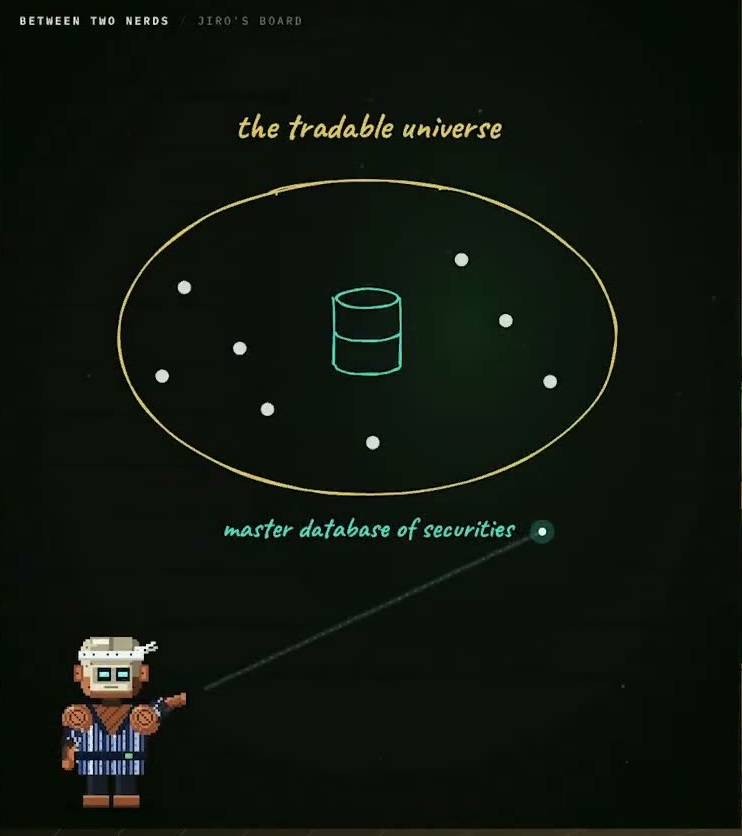
理论上,你会有一个可交易资产的范围,它们是你作为资产管理公司的核心业务。资产管理公司有很多种类型,我们现在不必细讲。但要让业务运作,你需要一份主数据库,收录这个可交易范围内的所有证券。对。它基本上就是
training, I think is the place to start. So you have in theory, a tradable universe of assets that are core to your business as an asset manager, many different types of asset managers. We don't even need to go there right now. But for your business to operate, you need some master database of all the securities that are in that tradable universe. Yeah. And so it's basically just like
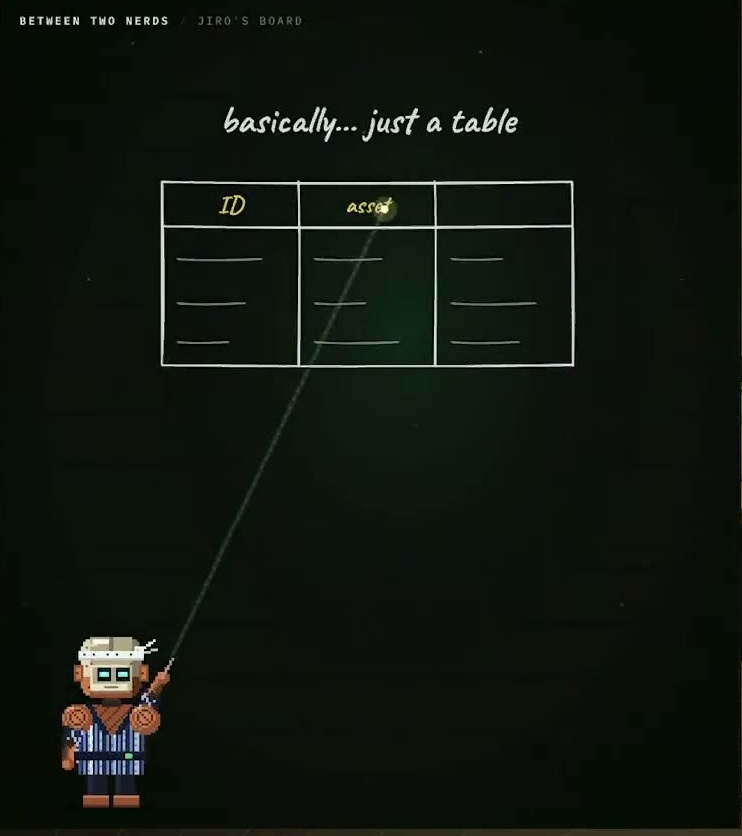
一张表。工程师可以把它想成一张存放在Snowflake、Databricks 或类似平台上的表。但实际上,它是非常、非常重要的一项运营基础能力。对,而且我觉得,如果只是照本宣科地定义标识符、资产和金融工具,再解释它们之间的区别,比如金融工具中有些会被证券化,而且还有不同的资产类别,那听起来似乎就差不多讲完了。对。但实际情况呢?真正着手构建它、深入这个基础组件之后,会发现里面有大量复杂性,也有很多意料之外的复杂性。一旦有了集中式表示,所有下游流程都会容易很多。
a table. Like for the engineering side, you can kind of think of this as a table that lives in Snowflake or Databricks or something like that. But in practice, it's actually like a really, really important operational primitive. Yeah. And I think it's, if you just give the rote definition of identifiers and assets and instruments, and you start to explain the difference between, okay, you have instruments and some of them are securitized and there will be different asset classes. And okay, that seems like most of it. Yeah. And actually? Actually, building the thing, going inside the primitive, there's a lot of complexity, a lot of accidental complexity. And once you get a centralized representation, it makes all the downstream processes very, very easy.
这就是几乎每家资产管理公司都有证券主数据的原因。对。但要把所有这些数据整合起来,
And that's why almost every asset manager has one. Yeah. But actually munging all that data together
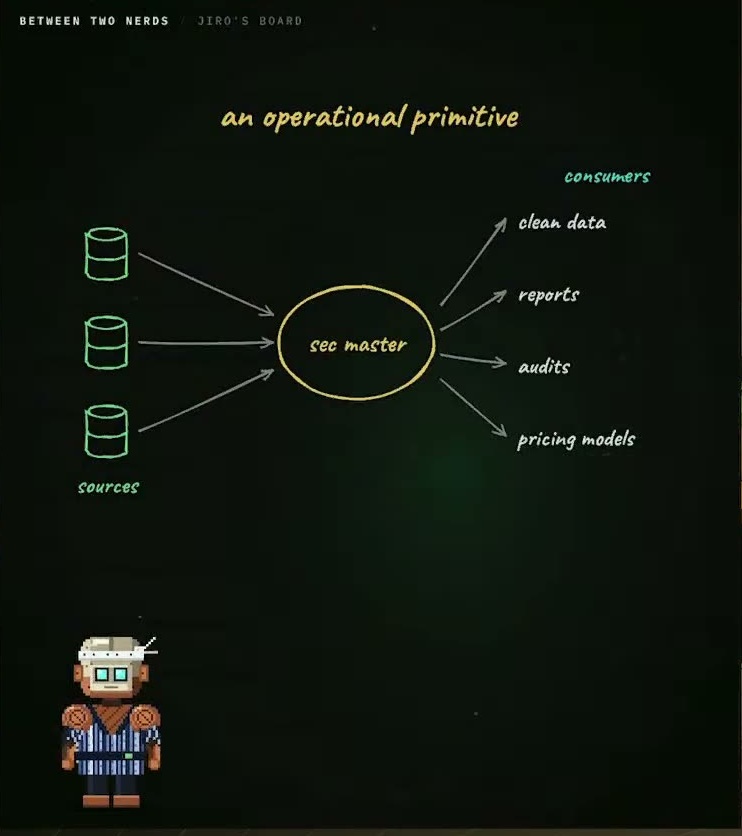
每当遇到新的资产类别、新的 ID 格式或新的上游数据源时,你就会有新的需求,需要在证券主数据中抽象处理。我倾向于把它看作一种运营基础能力:你有大量数据、各种不同的数据源,也有各种不同的数据使用方。如果中间没有一个系统确保正确的数据流向正确的位置,就无法以分布式方式保证数据干净、报告正确、审计无误、定价模型正确。这一切基本上都依赖于一套良好、干净的证券主数据。对。
And every time you bump into a new asset class or a new ID format, a new upstream source of data, you actually have new needs that you need to abstract inside the security master. I mean, I tend to think of it almost like an operational primitive where you just have all of this data, all these different data sources and all these different data consumers. And if you don't have something in the middle that basically ensures that the right data is getting to the right places, it's impossible to otherwise guarantee in a distributed way that you're going to have clean data, that you're going to be able to report the right things, that your audits are correct, that your pricing models are correct. Like all of that stuff essentially is downstream of having a good, clean sec master. Yeah.
对于你要进行的大多数分析,证券主数据几乎会出现在每个联接的左侧。对。它会成为许多分析工作的起点。对。而它支撑着每家资产管理公司规模最大的某些流程。是啊。涉及的内容可能从报告要求,到查看历史业绩,再到了解你的……抱歉,这其实是监管要求。你确实必须留存某种记录,说明自己持有哪些资产。对,没错。对。我觉得,对软件工程师来说,我们很容易忽略某个抽象层封装起来的那些意料之外的复杂性。当然。
So the sec master for most analysis that you're going to run, it's going to be the left side of almost every join. Yeah. It's going to be the starting point for a lot of analysis that you do. Yeah. And that drives some of the biggest processes at any asset manager. Right. And that could be everything from your reporting requirements to looking at historical performance to understanding your... I'm sorry, this is just regulatory. Like you literally have to have some sort of a record of what assets you have. Yeah, exactly. Yeah. I think it's very easy as software engineers for us to jump over some of the accidental complexity that gets encapsulated within an abstraction. Sure.
所以我一直在想一个类比,方便我们向团队里的其他工程师解释,也方便跟客户交流:
and so the comparison i've been thinking about when we've explained this to other engineers on
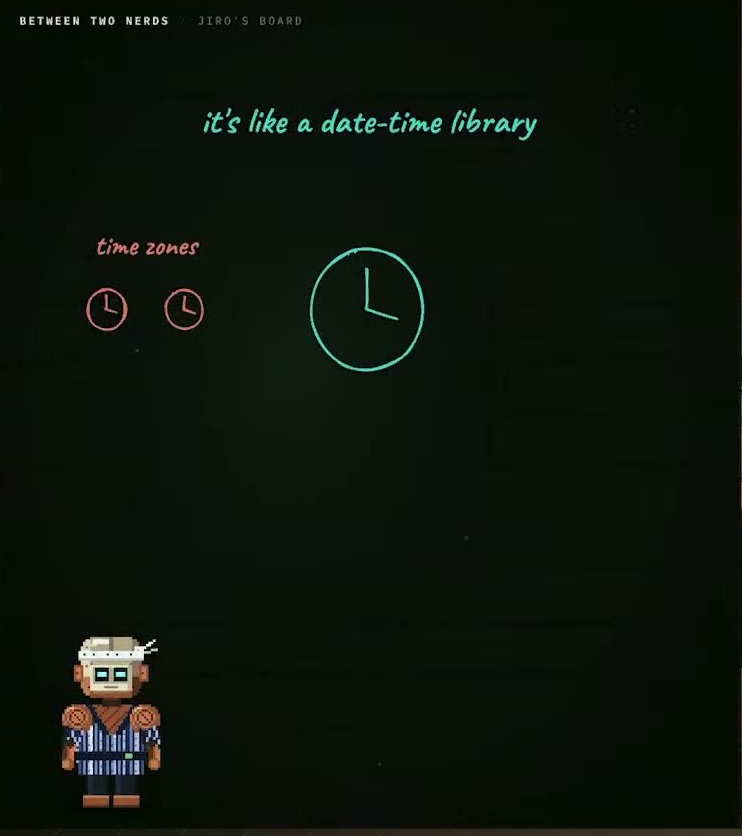
日期时间库。对,这确实很容易让工程师觉得“哦,不过就是个日期时间库嘛,记录时间而已,能有多难?”然后你会发现时区这个问题,而且人们记录事情的方式各不相同,各种麻烦都有。对,从本地化,到不同人如何理解同一种表示方式,再到在不同时区之间转换时间,以及夏令时在不同国家生效的时间点也不同。这只是对隐藏在证券主数据边界之内的各种意外复杂性做一个最简短的概览。我觉得,为了让大家理解,最容易的切入点是公开交易的股票。
our team and talking with our customers it's like date time libraries yeah it's very it's very easy for engineers to think oh it's a daytime library yeah you're just tracking the time how hard could it be and then you realize like time zones are a thing and like people track things differently and it's all sorts of pain yeah everything from the localization to how people see the same representation to actually moving something between different time zones and uh daylight savings actually hits at different points in different countries. So just like the briefest snapshot of all the accidental complexity that you hide inside the perimeter of the Secmaster, I think the easiest place to start, just so people grasp this, is publicly traded equities.
对。比如 Google 或 Apple 的股票。你去交易所买 Google 之类的股票。对。而这已经是最容易处理的资产类别了。
Yeah. Like a Google or an Apple stock or something like that. You go to the exchange, you buy Google or something like that. Yeah. And this is by far the easiest asset class to even handle.
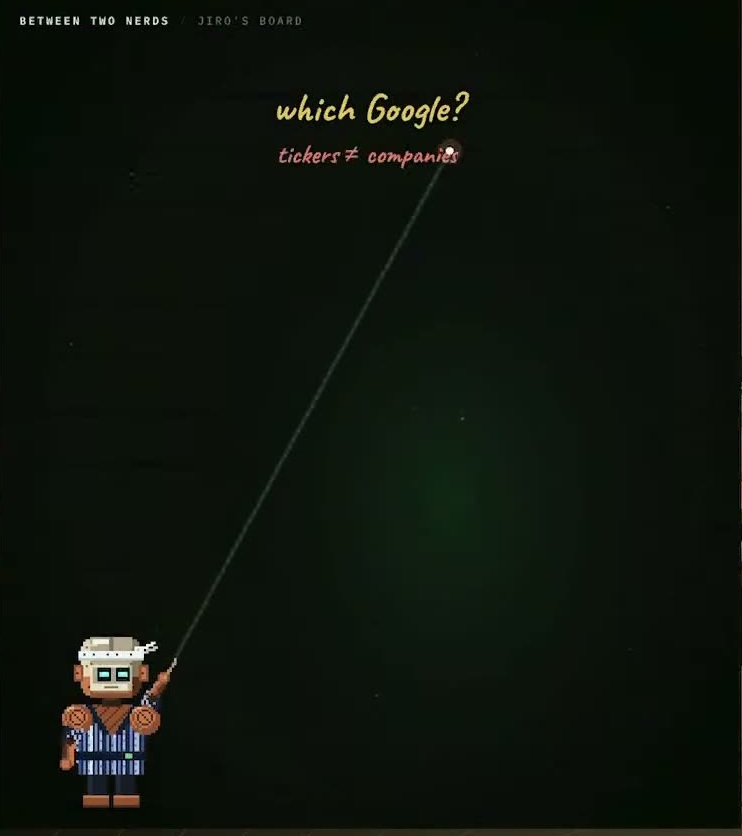
你刚才已经提到第一个特殊情况:Google。股票代码和公司之间甚至不是一一对应的。对,你说 Google 是什么意思?你是要买 Alphabet 的股票吗?还是要买 Google 股票?实际上这是两种完全不同的东西。对,而且还有 Google A 类股和 B 类股。它们在不同交易所上市,在不同国家也各不相同。所以股票代码并不唯一。股票代码和实际实体之间也不是一一对应的。对。
And already you just mentioned one of the first quirks, which is Google. that's not even one-to-one between tickers and company. Yeah, what do you mean by Google? Like, are you buying Alphabet stock? Are you buying Google stock? There's actually two completely different things. Yeah, and there's Google Class A and B. And they are different on different exchanges, and they're different in different countries. So tickers aren't unique. They're not one-to-one with the actual entities. Right.
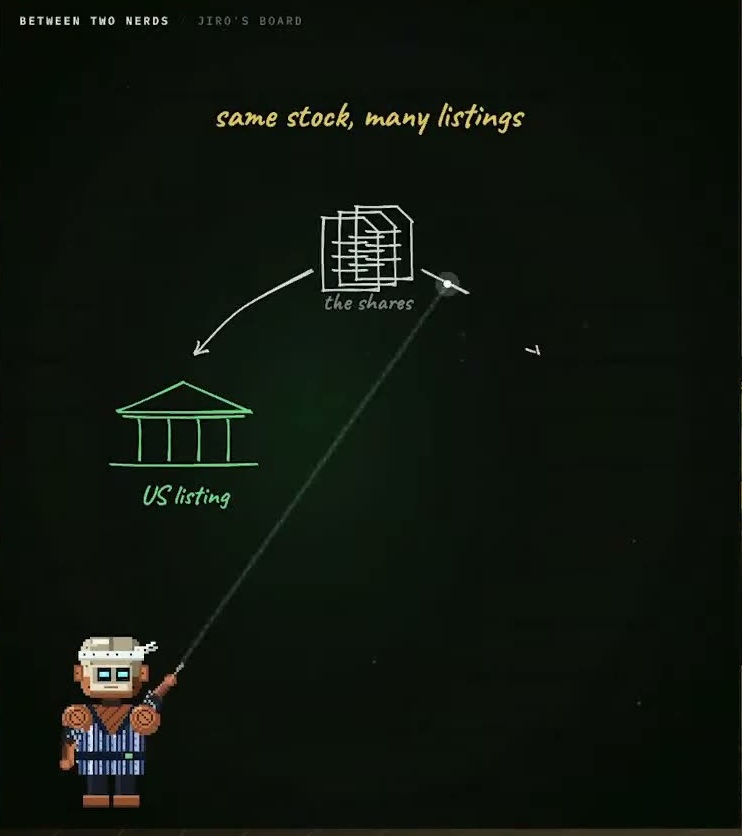
而且在不同交易所,同一只股票可能会在不同交易所上市,比如也可能在欧盟的另一个交易所上市。对。同一批底层股份可能会有不同的上市记录。所以你面对的基本上是一团错综复杂的数据,很难理清。你基本上得有一组人,专门从事这项相当耗费人力的工作,把所有数据维护干净。对,所以很多工作是要设计证券主数据的架构,适配业务所在的地区或业务会投资的特定资产类别。我觉得,尤其在公开交易领域,数据的大部分结构往往来自数据遇到不同集中化力量的时刻。最大的两个例子是监管约束,以及实际进行交易的交易所。
And then on different exchanges, you can actually have the same stock listed across potentially a different exchange in the EU. Right. You might have actually different listings of the same underlying shares. So you got this rat's nest of data, basically, and it's really, really hard to unentangle. And you have to basically have a team of people who are doing this pretty labor-intensive role of keeping this all clean. Yeah. And so a lot of it's kind of architecting how the SecMasters work for the area or particular asset classes that your business will be investing in. I think that, especially in the publicly traded world, oftentimes most of the structure to the data comes from the moments where that data encounters different centralizing forces. So the two biggest examples are the regulatory constraints and the actual exchanges where it's traded.
对。也就是销售点和交易所。这两者会形成公开交易领域中你关心的大多数标识符。对。
Right. So kind of point of sale, point of exchange. And those two have the effect of creating most of the identifiers that you care about in the publicly traded world. Right.
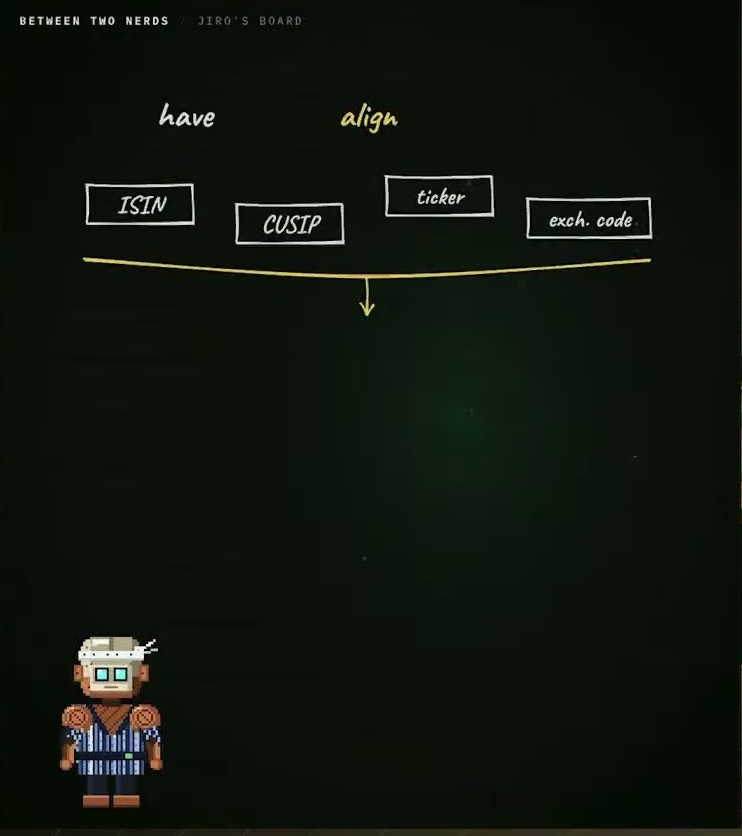
如果你关注这些资产,就必须确保拥有这些标识符。还要确保它们相互对应。并确保公司某处记录了这些标识符,因为任何人要对这些资产进行任何操作,都必须引用这些标识符。对。一开始可能比较容易,因为你只处理某个特定资产类别。你只需要应对不同集中化结构的一种交汇。你甚至可以说:“所有东西都用 Bloomberg 的 ID,就不用操心了。”对,比如 Bloomberg 的 IDBB Globals。它就像是你从 Bloomberg 获取的源数据中的一列。因为以前有一个缩写,它们有时也叫 FIGGY。叫 FIGGY?
So if those are the assets that you're interested in, you have to make sure that you have those identifiers. You have to make sure they're aligned. You have to make sure you have them somewhere recorded in your company, because anytime anybody wants to do anything with those assets, they have to reference them back to those things. Yeah. And at first it can be relatively easy because you're dealing with a particular asset class. You're dealing with one intersection of different centralizing structures. You can just be like, I'm just going to use Bloomberg's IDs for everything and not worry about it. Yeah, so you have Bloomberg's IDBB Globals. It's like a column in the source data that you're going to get from them. And these are called FIGGYs sometimes because of a previous acronym. It's called FIGGY?
F-I-G-G-Y?对,是 Financial Instrument Global Identifier(全球金融工具标识符)的缩写。
F-I-G-G-Y? Yeah, it's like Financial Instrument Global Identifier.
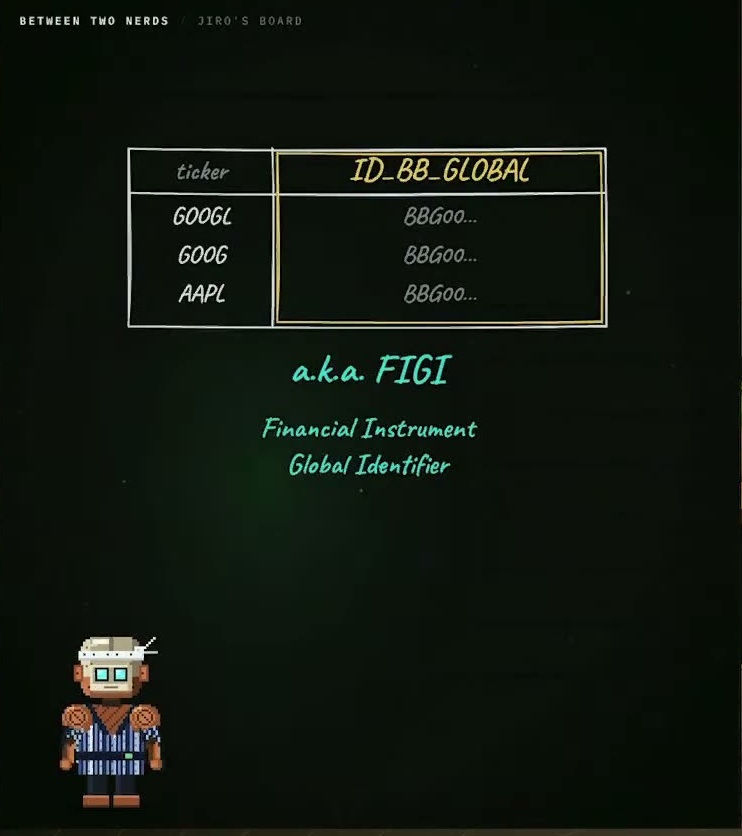
好。不过我不知道它是否正式改过名。当然,好吧,随便怎么叫。这比 IDBB Global 好说一点。所以用它就能解决你的很多问题。对。但业务稍微做大一些,就会开始变得有点混乱。复杂性再多一点之后就会如此。对。或者你处理的东西不在 Bloomberg 的资产范围内。我觉得有一点很有意思:过去三年,资产管理公司持有的这类资产大幅增长,它们并不是标准化、全球化的公开交易实体,对吧?某种意义上,Google 和 Apple 都相当容易理解,但现在很多人开始投资数据中心和 GPU 集群。
Okay. But I don't know if it's officially renamed. Sure, yeah, sure, whatever. It's a little bit easier to say than IDBB Global. And so from that, that's going to answer a lot of your problems. Yeah. At the moment you get a little bit bigger, then it starts to get a little bit messy. Once there's a little bit more complexity. Yeah. or you're not dealing with things that are understood in the Bloomberg universe of assets. And so actually one of the things I think is really interesting is the last three years, I think, has seen a massive growth for asset managers in assets that are not of this sort of like standardized, globalized public entities, right? Like Google and Apple in some sense are pretty well understood, but so many people are now investing in like data centers and like clusters of GPUs.
如果你只是从某人手里买下一座数据中心,或买某个数据中心的股份,它并不在流动性高的市场交易,所以你得用其他方式跟踪。对。这不是我的专业领域,但数据中心很有意思,因为我觉得它涉及多个不同领域的私募、非公开交易工具。
And if you're just like buying a data center from somebody or buying like shares of a data center, that's not something that trades on a liquid market. And so you have to like track that in some other way. Yeah. So, I mean, this is not my area of expertise, but the data centers are
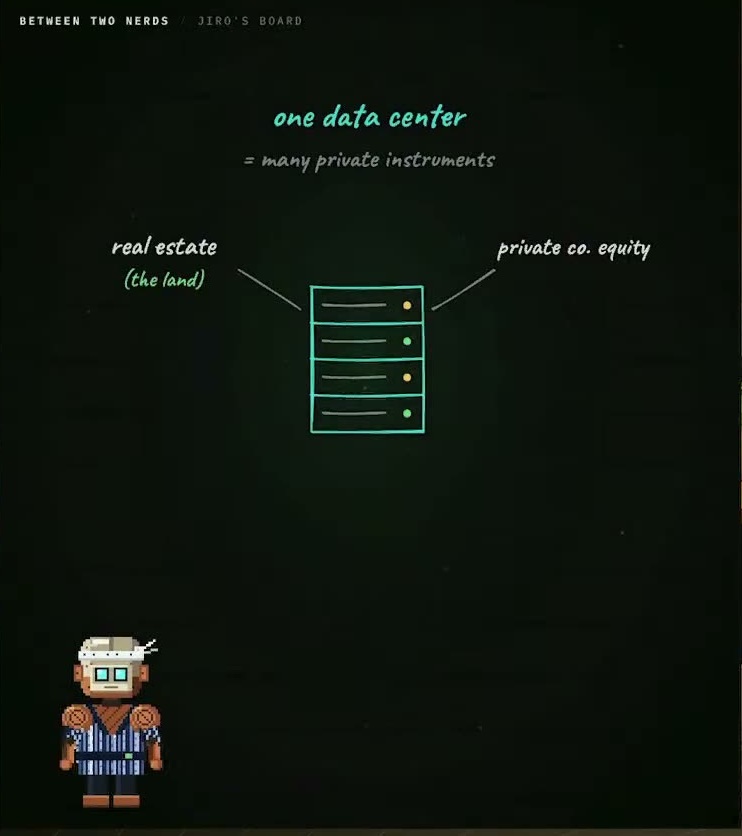
对,是非公开交易工具。你可能会涉及房地产,比如数据中心要建在哪里?具体土地在哪里?对。然后可能有一家私人持有的公司会发行股权,也许它由一家上市公司持有。也可能发行了一些上市债券,为其中一部分融资;或者有私人
a very interesting one because I think it touches on multiple different areas of private, privately traded instruments. Right. So you might have actual real estate that's involved in where do we build this data center? The actual land. Yeah. And then from there, there might be a privately owned company that does issue equity. Maybe it's held by a publicly traded company. Maybe there's some publicly traded bonds issued to fund some part of this, or maybe there's private
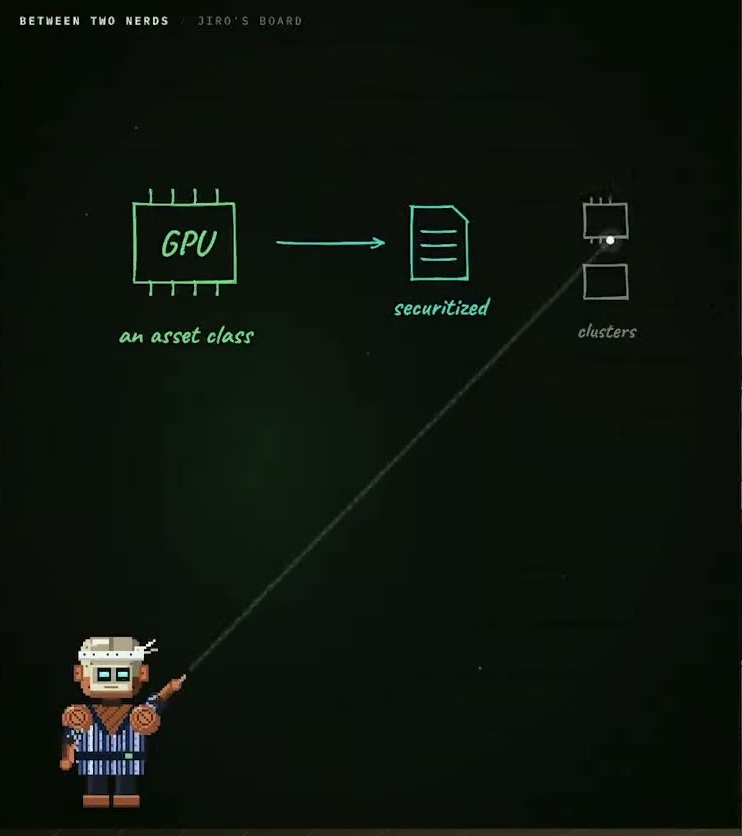
信贷用于建设融资。我的意思是,GPU 本身越来越像一种资产类别。对,而且现在确实有人尝试把 GPU 证券化。GPU 集群。对,当然。另一个很有意思的私募资产小众领域是飞机。当然。所以有个原因是,入门成本对于航空业务来说比较低,因为……哦,是低。低。入门成本之所以这么低,是因为它拿飞机本身作为抵押物,当你损失这些飞机时。哦,有意思。飞机可能就没了。对。这就引出了大多数私募资产。这其实是一个很有用的区分。大多数私募资产并没有很强的可互换性。对,没错。
credit that's taken on to fund the construction. I mean, increasingly the GPUs itself feel like an asset class. Yeah. And there actually are efforts right now to securitize GPUs. GPU clusters. Yeah, sure. Well, I mean, because another private asset that's a very interesting niche is airplanes. Sure. So one reason why the entry costs for the airline business are low is because... Oh, low. Low. The entry costs are so low is because it holds collateral against itself when you're losing these planes. Oh, interesting. You could lose the plane. Yeah. So it's going to get us to most private assets. This is actually a helpful distinction. Most private assets are not very fungible. Yeah, sure.
对,对,这算是这个问题的一项背景,我们稍后会再回来讨论。其中有些私募资产其实……可互换性有些奇怪地高。有些奇怪地可互换,比如飞机或 GPU。对。或许值得继续深入具体情况:让证券主数据实现智能体化是什么意思?我觉得可以用一个具体例子来说明。我们正在和纽约市一家大型资产管理公司密切合作,这是身在纽约的一项优势。我们来聊聊他们遇到了哪些问题,以及他们如何用智能体解决这些问题。对,很多问题都来自刚才谈到的私募资产这个区别。
Yeah, yeah, That's kind of a homework of the problem that we're going to come back to. There are some of these private assets that actually are... Are weirdly fungible. Weirdly fungible, like airplanes or GPUs. Yeah. So it might be worth even diving into then the specifics, right? So what does it mean to agentify a securities master? And I think it could be helpful to even ground this in a particular example, which is, you know, we're working very closely with one of these big asset managers in New York City, one of the benefits of being in New York, New York local. Like, let's talk through a little bit of like what problems that they are running into. And then how are they using agents to solve that problem? Yeah, so a lot of this is that last distinction we hit on for private assets.
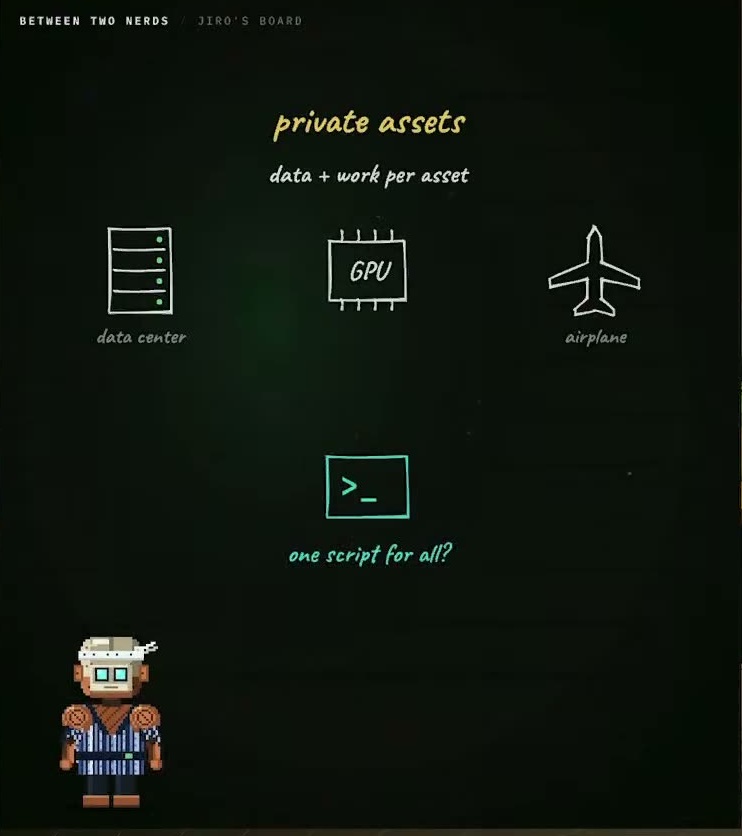
这里第一个重要区别是,与每项资产相关的数据量和工作量,会随着资产数量线性增长,因为每项资产都不一样。所以,每项私募资产都各不相同,你没法轻易写一套软件来统一处理一组私募资产。对,通常确实如此。
And the first important distinction here is that the amount of data and the amount of work related to each asset, it scales linearly with a number of assets because they're unique. So each private asset, it's not like you can easily write software that will handle a group of these private assets because each one is different. Yeah, oftentimes.
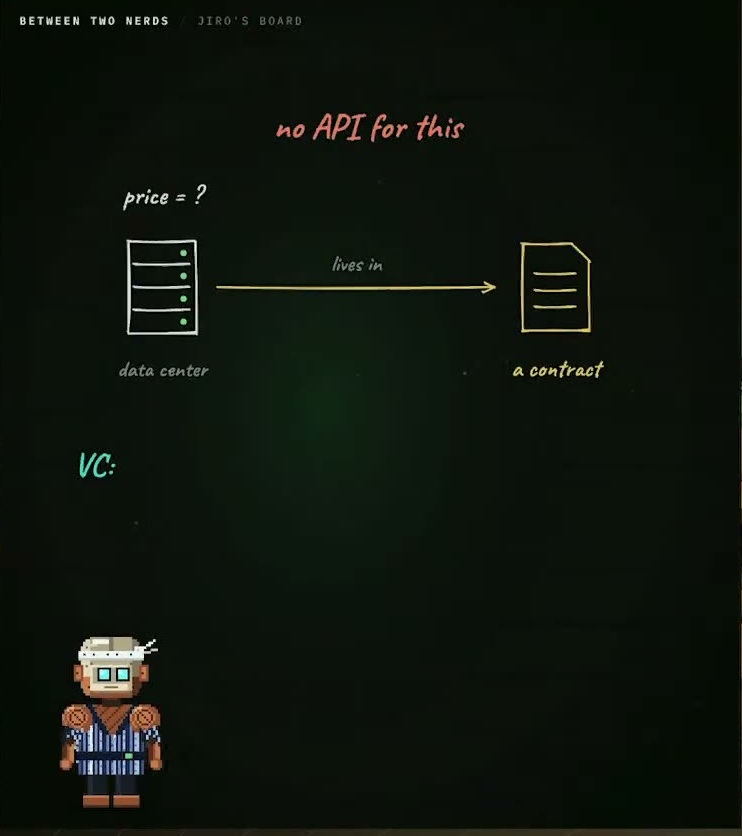
你不能调用某个 API,然后说:“告诉我这座数据中心的价格。”价格可能藏在某份合同里。对。如果你从事风险投资这类业务,不同资产的数量本身就与投入的时间线性相关,那么你开出的不同支票数量,已经和花在这些潜在投资上的人工时数密切相关。这完全是手工活。非常依赖人工。也许这还算可扩展,因为源数据的数量本来就与人工时数成正比,下游影响也会带来成比例的人工成本。但当你开始处理房地产、私募信贷,以及各种资产打包方式时,数据规模又会以一种全新的方式增长。于是复杂性就会这样呈指数级上升。
There's no API that you can hit to be like, give me the price of this data center. The price lives in a contract somewhere. Yeah. And if you're part of a business like a VC where the number of these different assets already scales linear to the amount of time put in, so the number of different checks that you write is already very related to the number of different person hours spent with those potential investments. It's extremely manual. It's very manual. And it might be, you know, that might be scalable because it's already, you know, the source data is proportional to the person hours and then the downstream effects then cost proportional person hours. But then once you start looking at everything from real estate to private credit and the different ways that these assets can be packaged, that ends up being its own whole new way that the scale of the data increases. So you have this like, you have this like, you know, exponentially increasing complexity.
这会带来什么影响?我们来具体看看这个用例。我们正在和这家资产管理公司合作。他们想做哪些事情?智能体又能在哪些地方发挥作用?对。他们现在已经在建立一套新的证券主数据流程。是的。他们既有内部数据源,也有外部数据源。对。
How does that then impact? Like, let's dive into this kind of specific use case. So we're working with this asset manager. Like, what are the things that they are trying to do? And then where do agents come in? Yeah. So they're already seeing a process where they've created a new sec master. Yep. And they have both internal and external sources. Yep.
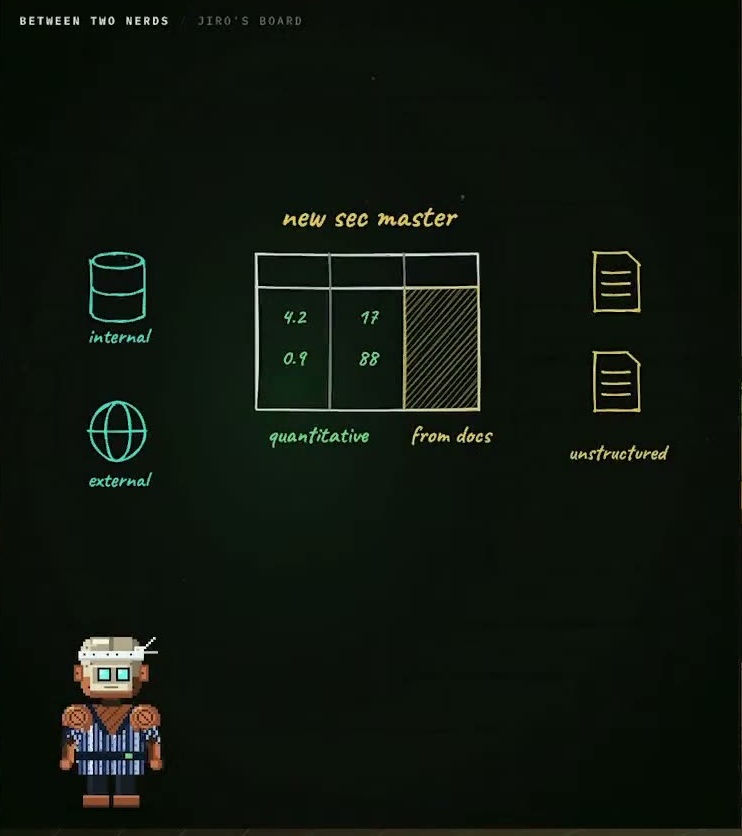
其中很多是定量数据,但也有一些与不同文档及其他非结构化数据源有关。他们有数据管道负责映射这些数据。
Many of these are quantitative, but some of them are actually related to different documents and other unstructured sources of data. And they have data pipelines that are mapping that.
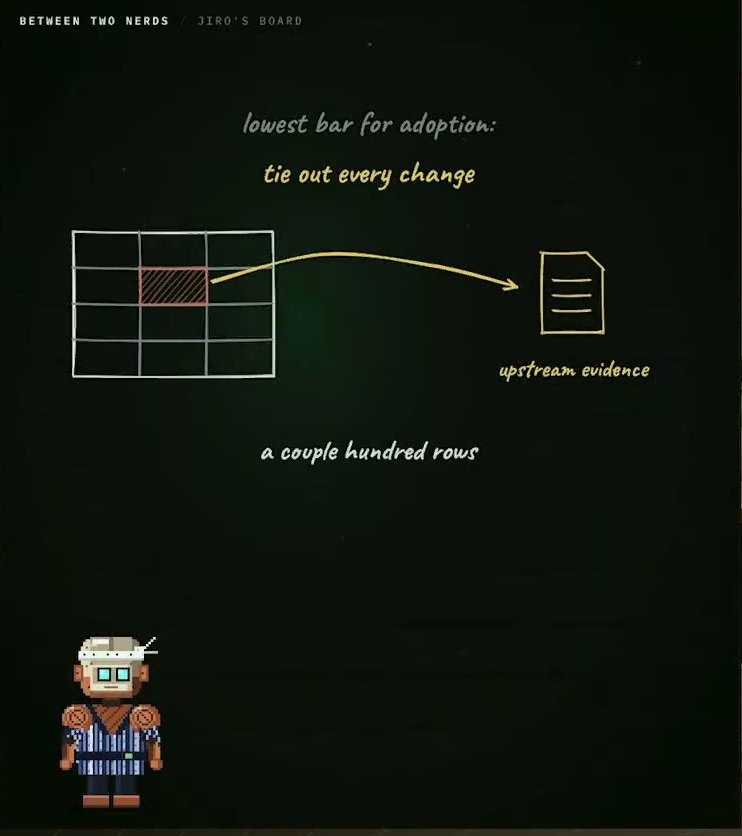
最容易落地的一项改进,就是准确地把单项变更追溯到上游证据。对,对。即使只有几百列或几百行,列数还更少,这仍然是一项劳动密集型工作。而他们管理的资产远不止几百项。对,对,对,对。我用通俗的说法解释一下,好吗?每当某项资产,也就是表格中的某一行发生变化,就会有人接到通知,然后去查明为什么会发生这项变更。对。
And just the lowest barrier for adoption is accurately being able to tie out individual changes to upstream pieces of evidence. Yeah, yeah. And that, just for a couple hundred columns or a couple hundred rows with even fewer than that columns, is already a very labor-intensive process. And they manage a lot more than a couple hundred assets. Yeah, yeah, yeah, yeah. So just to give a kind of layman's view of this, right? Like anytime an asset, anytime one of these rows in this table changes, there's a guy, like somebody who gets called up, who basically has to then go and figure out why that change happened. Right.
是的。基本上,你得能查看表格中的任意单元格,并追溯产生它的数据血缘。不是每一行。是每一个单元格。每一个单元格。对。对。所以是每一行、每一列。对。而且……这极其耗费人力。
Yeah. So basically be able to look at any cell in the table and look at the lineage for what produced that. Not every row. It's every cell. Every cell. Yeah. Yeah. So every row slash column. Yeah. And. So extremely labor.
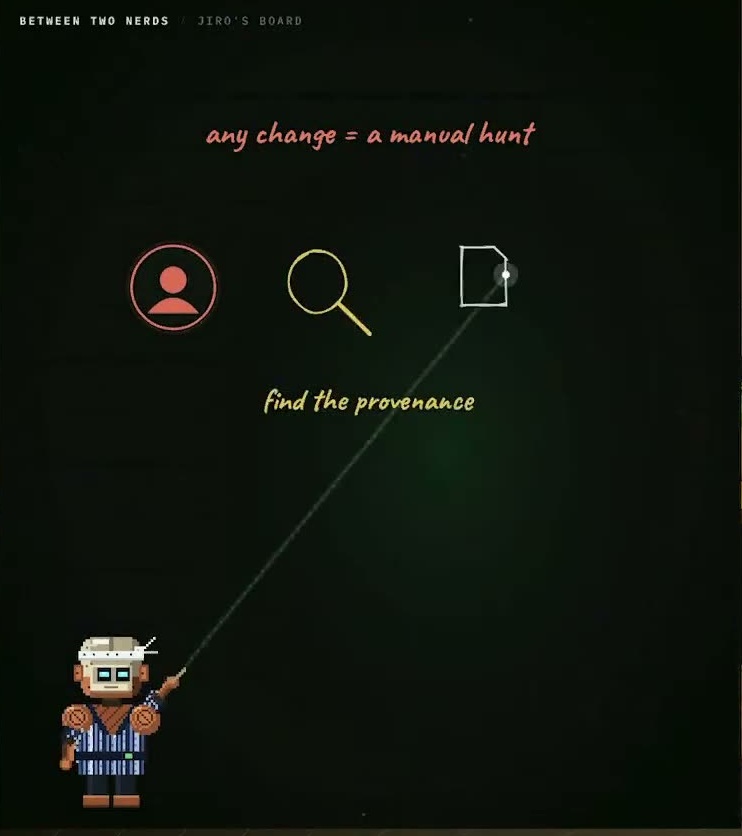
任何行或列发生变更时,基本上都得有人去查找这项数据的来源。而且我得强调,软件和金融两者交汇所带来的困难,绝不能低估。当然。因为负责的人不可能同时完全理解所有 Python 数据处理和数据流,不管是 Snowflake 里运行的笔记本,还是自建的系统。我们有自己的 Lakehouse,也运行自己的 Apache Spark 作业。
Like anytime anything changes for any of these columns and rows, there's a person who basically has to go and find the provenance for that data. And yeah, I can't undersell the trickiness raised by the intersection of both software and finance here. Sure. Because that person is not going to both be able to perfectly understand all the Python data munching and data flows, whether that's like some notebooks that run in Snowflake all the way down to like the build your own. We have our own lake house and we're running our own Apache Spark jobs.
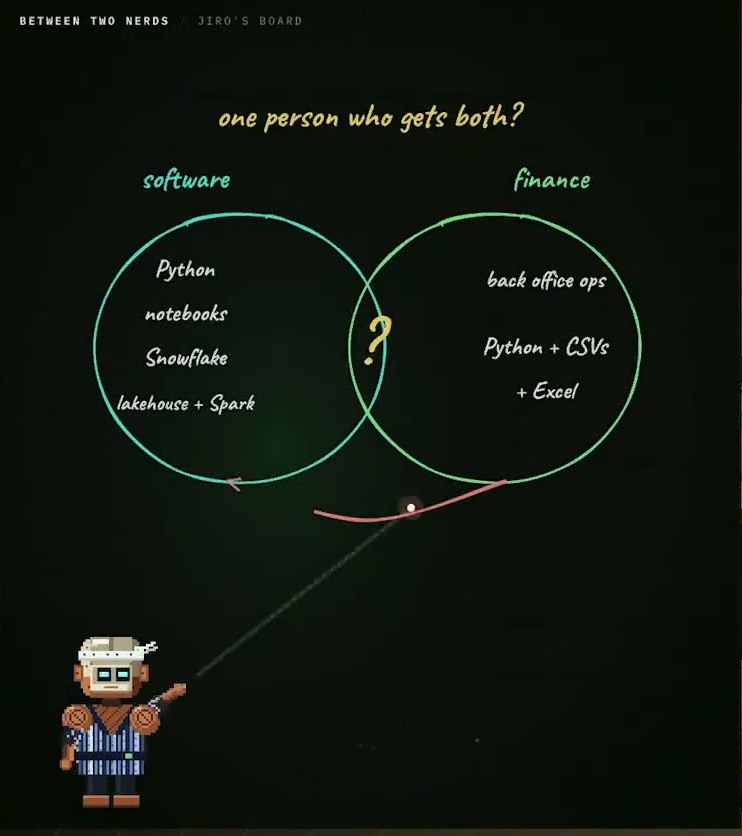
如果这个人是金融专家,曾在不同资产管理公司的后台做过大量运营工作……他们可能就不具备这方面的软件工程背景。其实很多人很擅长在自己的机器上用 Python 解决问题,比如处理不同的 CSV、核对数据或导出 Excel 文件。但要查看代码仓库并理解其中内容……
If they are a finance expert, someone who's conducted a lot of operational work in back office for different managers... They probably don't have that software engineering system. A lot of those people are really savvy, actually, with how they can use Python to solve problems on their machine with different CSVs or tie-outs or exports from Excel. But being able to look at the repo and understand...
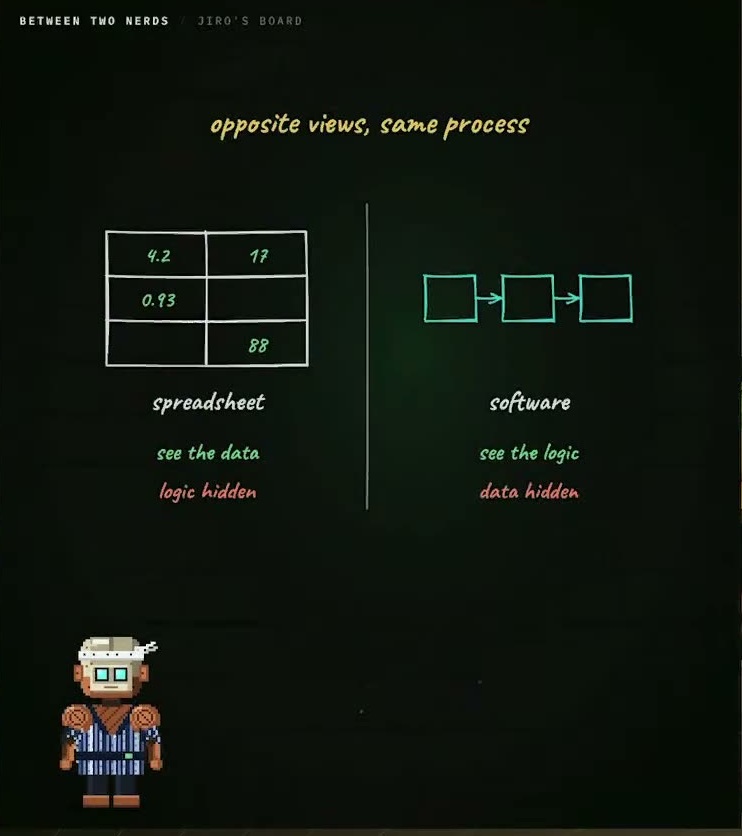
很有意思,电子表格和软件就像是同一流程的两种相反视角。对。用电子表格时,你能看到数据,却看不到逻辑。而在软件中,查看各种数据管道时,你能看到流程和逻辑,却看不到数据。对。这是完全不同的呈现方式。反过来,负责实现数据管道的软件工程师,又缺乏金融知识。他们不知道某个单元格中的数据错误会是什么样,也不知道它会如何影响需要查看准确数据的投资专业人士,对。对。对。所以现在的流程是:每当单元格发生变化,特别是私募数据,你根本没办法调用 API 查询。
It's interesting, spreadsheets and software are kind of opposite views of the same process. space. Yeah. Where it's like with a spreadsheet, you see the data and you don't see the logic. And then with a software, you know, all these data pipelines, you see the process and the logic, but you don't see the data. Yeah. And so there's completely different representations. And on the flip side of it, you have the software engineer who has implemented the data pipelines and they've, but they don't have the financial knowledge. They don't know what it looks like for something to be incorrect in this particular cell that's now causing problems for an investment professional who needs to look at data and have it be correct. Right. Right. Right. So, so you have this process that right now, anytime a cell changes, and for private data, it's not even like you can go hit an API.
你得真的派人去翻 Google Drive,或者查某人的电子邮件,找出合同 PDF,
You literally have a guy going through a Google Drive or going through somebody's emails to find a PDF of a contract
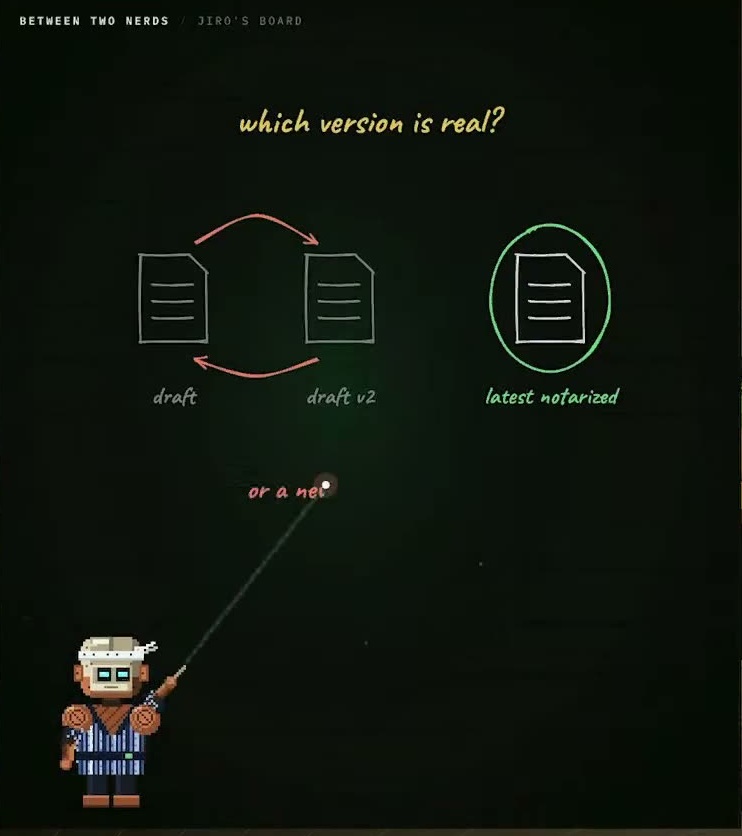
以确认数据是否正确。对。这是不是最新版本?这是合同最新的公证版本吗?而不是来回传阅的某个草稿?我需要的实际信息是否包含在这里,还是之后又有更新?所以就这些问题而言,云端智能体显然可以解决这个问题。对,或者说至少可以缓解问题。‘解决’这个词有点说得太满了。这就引出了问题最有意思的部分:为什么这件事很难?我们作为软件工程师和专业人士,每天都能看到智能体解决意外复杂问题。所以我觉得有必要深入看看,从技术和业务两方面来说,为什么这很难。
to make sure that the data is correct. Yeah. Is this the most up-to-date version? Is this the latest notarized version of the contract and not some draft that was sent back and forth? Is the actual information I need here or is there a more recent update? And so I just feel like in those terms, right, it's just so obvious that cloud agents would solve this problem. yeah yeah or maybe you know ameliorate the problem yeah solve is a tough word yeah so i think this kind of gets to like the most interesting part of the problem which is why is this hard yeah we as software engineers as software professionals we see agents solving accidental complexity every single day yes so i think it's helpful to just deep dive why is this hard both from a technical
对。你刚才提到有人得去查资料。能够判断什么是好、什么是正确,这更多是业务问题。有时它也会变成搜索问题,比如你怎么知道找到的资料够不够?证据是否齐全?这些很难证明。不同公司、不同情境下,情况都不一样。对。甚至不同资产也各不相同。没错。而且我觉得,这个具体项目之所以很适合,是因为他们已经认真考虑过
perspective and a business perspective yeah and to your point about there's someone who needs to go look for this, right? Being able to know what good looks like, what correct looks like, that's more of a business question. Or it can also be a search problem where, you know, when have you seen enough? When do you have all of the evidence? It's tough to prove. It's going to be different from different companies in different situations. Yeah. For different assets, even. Exactly. And yeah, I mean, one of the reasons why this particular instance, this particular project is a good fit is because they've already actually thought very
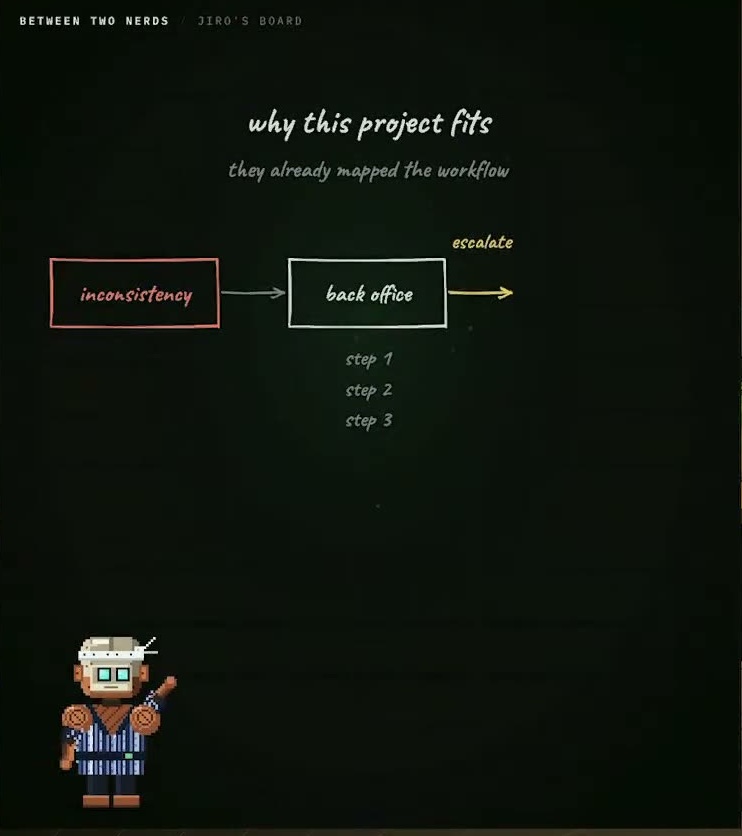
工作流程应该是什么样的,如何核对数据中的不一致或任何变更,以及后台职能人员应该逐步检查哪些内容,又应该在何时把发现的不一致升级给数据负责人或金融负责人。证券主数据团队已经有这样的流程。
hard about what does that workflow look like? What does it look like to reconcile inconsistencies or any changes with the data? What would they want that back office function to actually look at step by step? And when would they want them to escalate an inconsistency they're seeing up to a data owner or to a financial? Sec masters already have this sort of process in place.
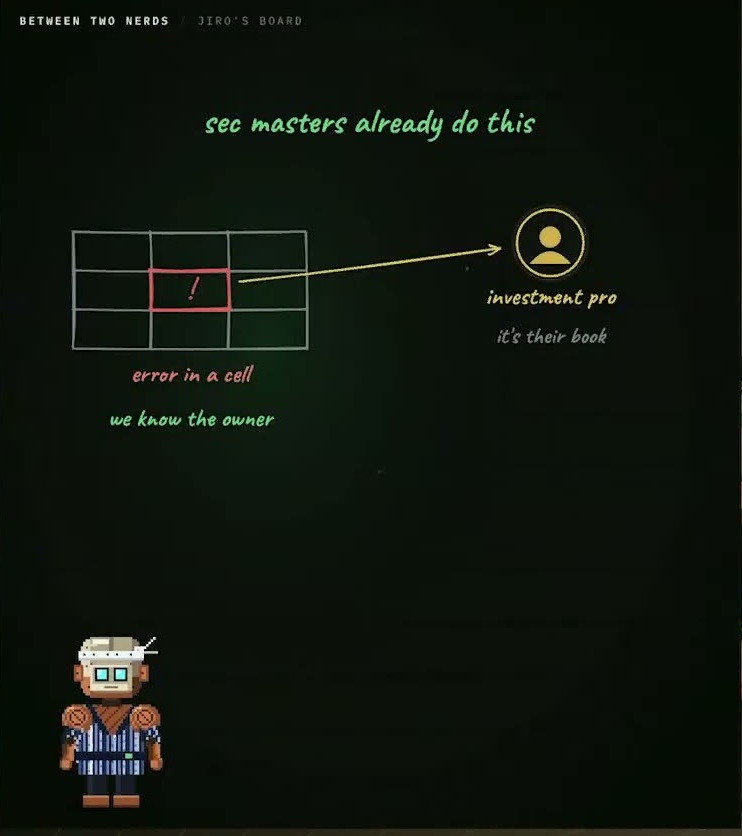
如果某处出错,他们知道某个单元格有问题,也知道谁会是这个单元格的负责人?对,可能是某位投资专业人士,他的账簿或投资与这个具体数字有关。也可能是,我们就去找 Jerry。当然,因为他当初负责和对方沟通,接收他们发来的初始数据提取文件。对。
If there's an error somewhere, they already know, okay, there's an error in the cell. We know who is going to be owner of that cell? Yeah, it could be everything from there is an investment professional whose book or whose investments are related to this particular number. It could be actually, you know, when this particular data source doesn't look correct, we talked to Jerry. Sure. Because he was the one who talked to them on the initial extracts of data that they sent over. Yep.
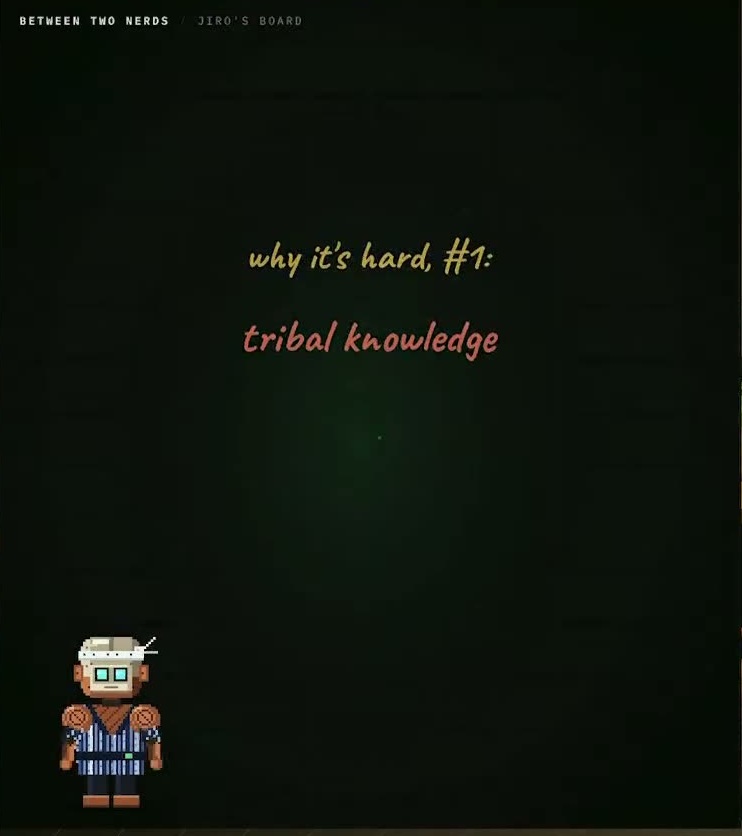
所以我觉得,这就是这件事难做的第一个原因。这是一种知识。对,有些知识既没有写进代码或电子表格,也没有体现在任务背后的许多目的里。公司里对任务本身往往有详细记录,但任务背后的目的通常没有。这些目的存在于承担不同职能的那些人心中。我觉得这也引出了第二个难点。要真正帮助他们,就得构建辅助技术。
So this, I think, is like the first of the problems of why this is hard. It's like a type of knowledge, yeah. Yeah, there's knowledge that's not encoded in either the code or the spreadsheets or a lot of the purpose behind the tasks. The tasks are very encoded at your company, but the purpose behind those tasks is often not. And that lives with all of the people who are making up those different functions. Which I think also gets to the second part of why this is difficult. In order to properly assist them, you need to make assistive technologies.
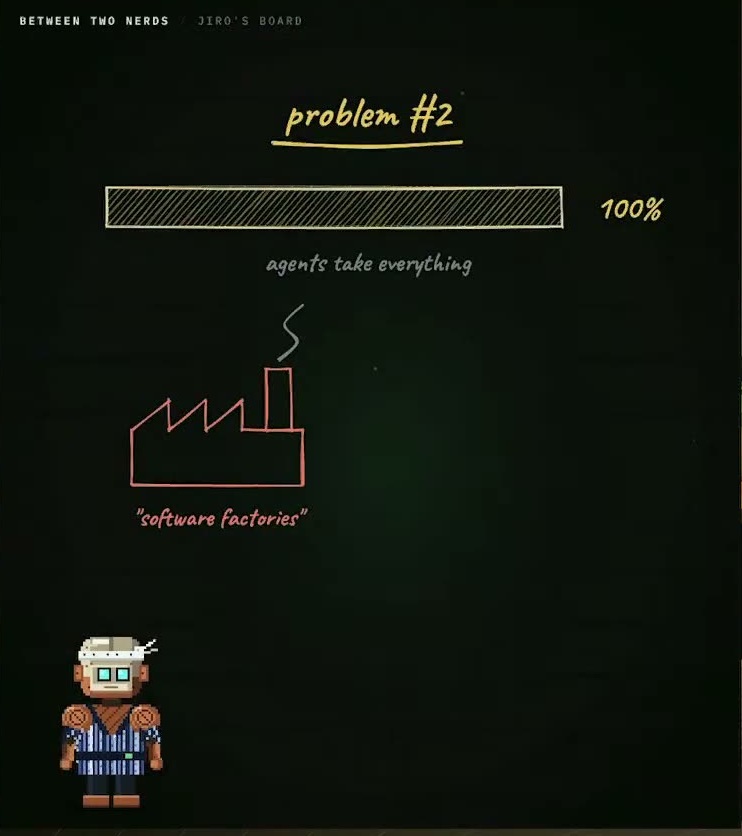
过去一年,尤其是在软件市场,这种失败模式很常见,很多人都希望智能体能把所有事情 100% 自动完成。于是他们建立所谓的“软件工厂”,结果非常僵化。他们搭建某种流程,比如“我给这个智能体打个标签,它就会在 EC2 上运行”,却完全没考虑要是需要人工介入怎么办,要是需要智能体做点别的怎么办。如果你需要回应,必须有
And this is a common failure pattern we've seen, especially on the software side of the market for the past year or There's so many people who want the agents to take everything to 100%. And so they create these software factories, quote unquote, that are really inflexible. you know they they spin up some process where it's like oh i tagged this agent and it'll like run in s in uh ec2 and then there's no thought put into well what if you need to intervene what if you need the agent to be able to do something else but if you need to respond there's got to be
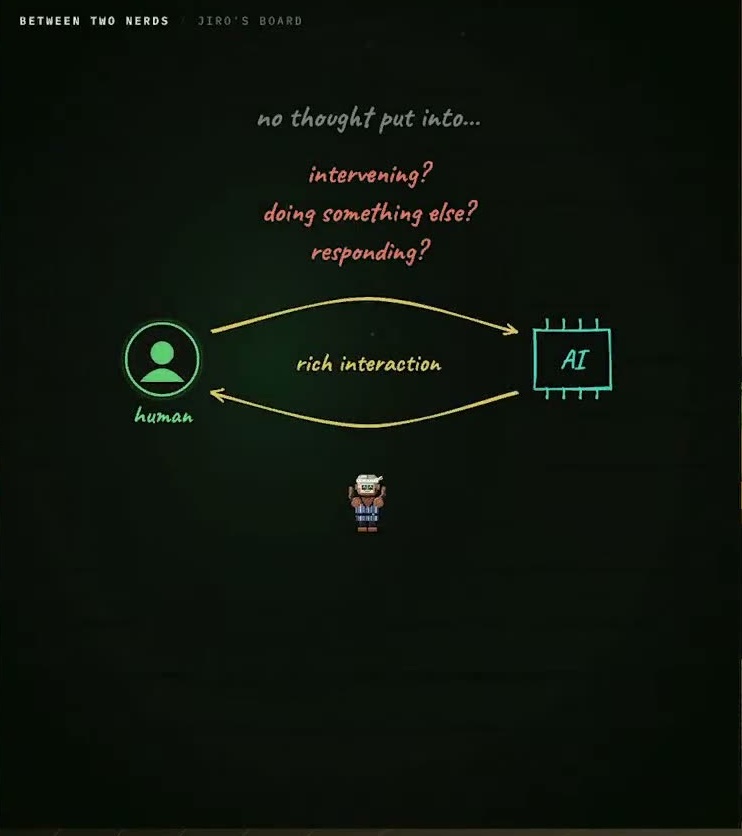
非常丰富的人机交互模式。如果你的想法是“我就让它自主运行,试着 100% 完成全部工作”,那你肯定会失败。因为实际工作有很深的层次,哪怕只是为了确保有人承担责任,有时也需要人来按下合并按钮。
this like very rich human interaction pattern and if your thought process is i'm just going to have this thing run autonomously and try and do the whole thing to 100 well you're going to fail because there's actually like so much depth that like a human needs to even if it's just accountability. Sometimes you need a human just to be able to hit the merge button.
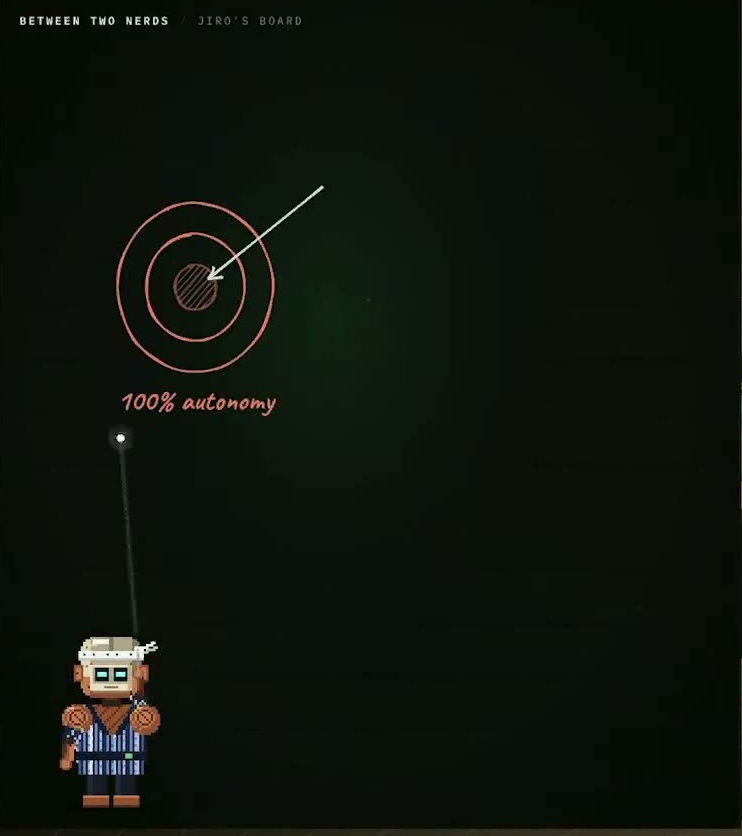
对。有意思的是,大家都在追求那个目标,可这恰恰忽略了智能体最大的优势之一:它们灵活可变,而且能够被纠正。我觉得这发生在任务执行过程中。很大一部分原因在于——这也是云端智能体的一个特点——很多人认为云端智能体不过是一个端点,调用一下就能启动任务。但真正的云端智能体基础设施,应该让使用体验毫无缝隙。你应该能顺畅地在云端与它对话,就像它运行在你的电脑或手机上一样,或者就像你在和它通电话一样。这需要产品做到相当深入的程度,而大多数人不愿意投入精力去做,因为这很难。
Yeah. And it's kind of funny that people are shooting for that particular target when that's one of the biggest benefits of agents is their malleability and the ability to correct them. I mean, I think it's mid-task. I think a big part of it is, and this is kind of the thing about cloud agents. I think a lot of people think, oh, a cloud agent is just something that we can just have an endpoint and then kick off a task. But actually the real cloud agent infrastructure is when it feels seamless. It feels so seamless to be able to talk to it in the cloud as if it was running on your computer or on your phone or you were just talking to it over a voice call. And that's the level of depth and product area that most people just don't want to do because it's hard.
这样的东西很难构建。对,我知道,这就是第二个难点,也就是技术层面的难题。
It's hard to build that. Yeah, I know that's the second part that's difficult, which is from the technical side.