在等待前沿能力进步时追赶能力
Chasing capabilities while waiting for the frontier
原文由官网提供,中文由 GPT-6 Luna 翻译。相邻片段合并排版,正文与时间点保持对应。
已插入 11 张经核对的幻灯片或演示截图;点击图片可放大。图注链接为当前视频时间,左侧正文时间保留原转录版本,二者可能不同。
共 23 个阅读段落
大家好。我是来自 Ramp 的 Alex。在等待前沿能力进步的同时,如何持续追赶各种能力这是我今天要讲的话题。先简单介绍一下我自己。我大约三年前加入 Ramp,属于更广泛的应用 AI 团队,负责多个不同的产品界面和产品,将 LLM 和机器学习应用于产品,让优秀产品变得更好。
Hey, everyone. I'm Alex from Ramp. I'll be speaking about chasing capabilities while waiting for the frontier to advance. So a quick intro about myself. I joined Ramp around three years ago on the broader Applied AI team, working on a bunch of different surfaces and products, applying LLMs and ML to make a great product even better.
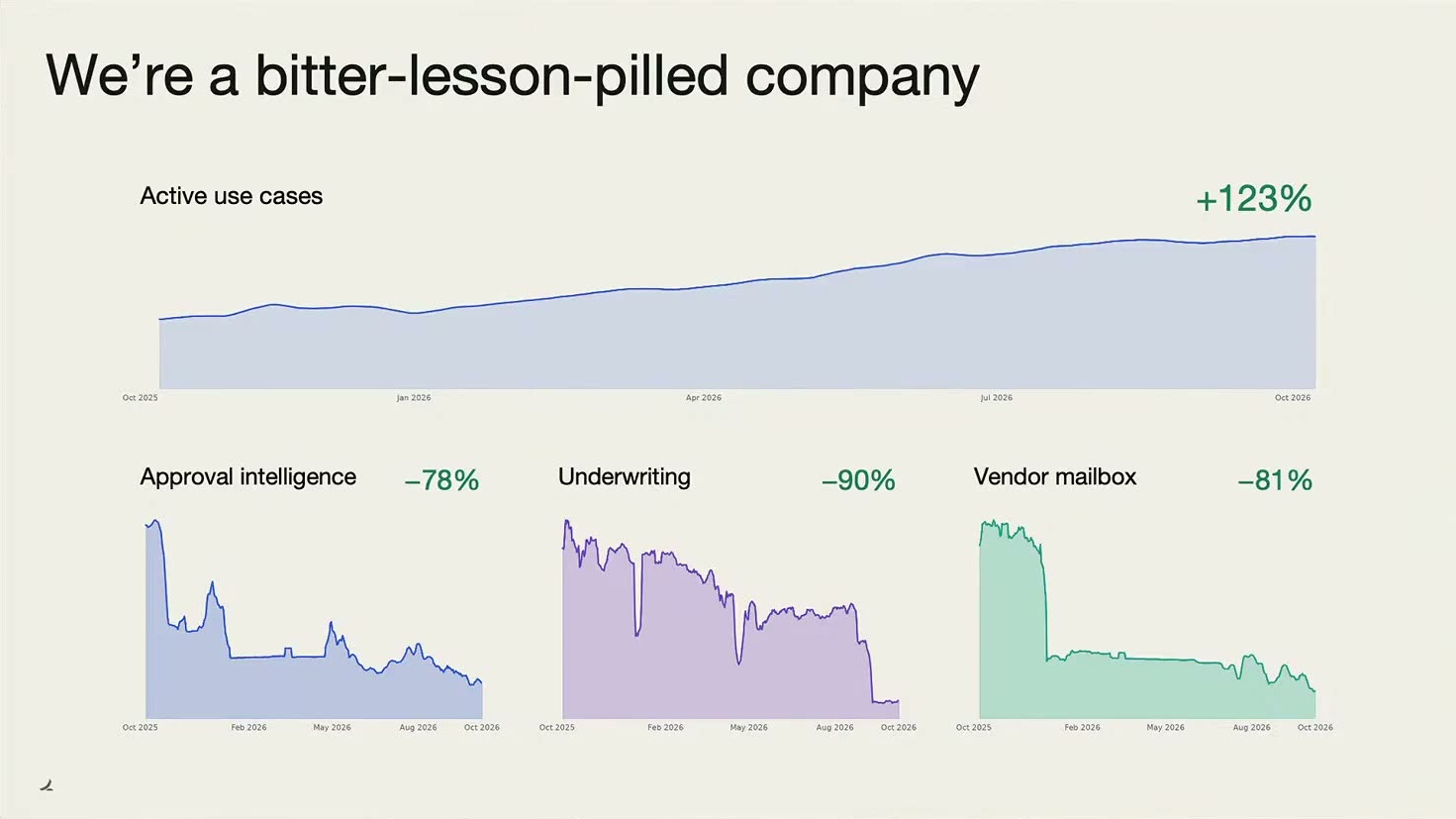
先说明一下我对 Ramp Labs 的介绍:Ramp 是一家深受“苦涩教训”影响、以构建为核心的公司。过去一年,使用 LLM 的用例数量增加了 123%。与此同时,我们很多顶级功能的 token 用量在增长,但从单位经济效益来看,成本实际上在下降,因为前沿模型一直在推出,而这些模型变得更便宜、更快、更好。因此,我们能够以低得多的成本提供同等水平的准确度。这就是一种深受“苦涩教训”影响的模式。
and to caveat my presentation on ramp labs ramp is an extremely bitter lesson build company over the last year the number of use cases that use lms has increased 123 percent while at the same time a lot of our top features are growing in token spend but on a unit economic basis they're actually becoming cheaper because there are frontier models that are being released all the time now, and these models are cheaper, faster, and better. And so we're able to provide the same level of accuracy at a much lower cost. And so this is a really bitter lesson-pilled pattern.

鉴于这些情况,我有时会被问到一个问题:为什么不干脆等一等?为什么要在 Ramp 这样的公司里设立应用研究职能?毕竟它是一家应用层公司,对吧?
And so given all this, a question that I sometimes get, why not just wait? Why have an applied research function inside of a company like RAMP, an application layer company, right?
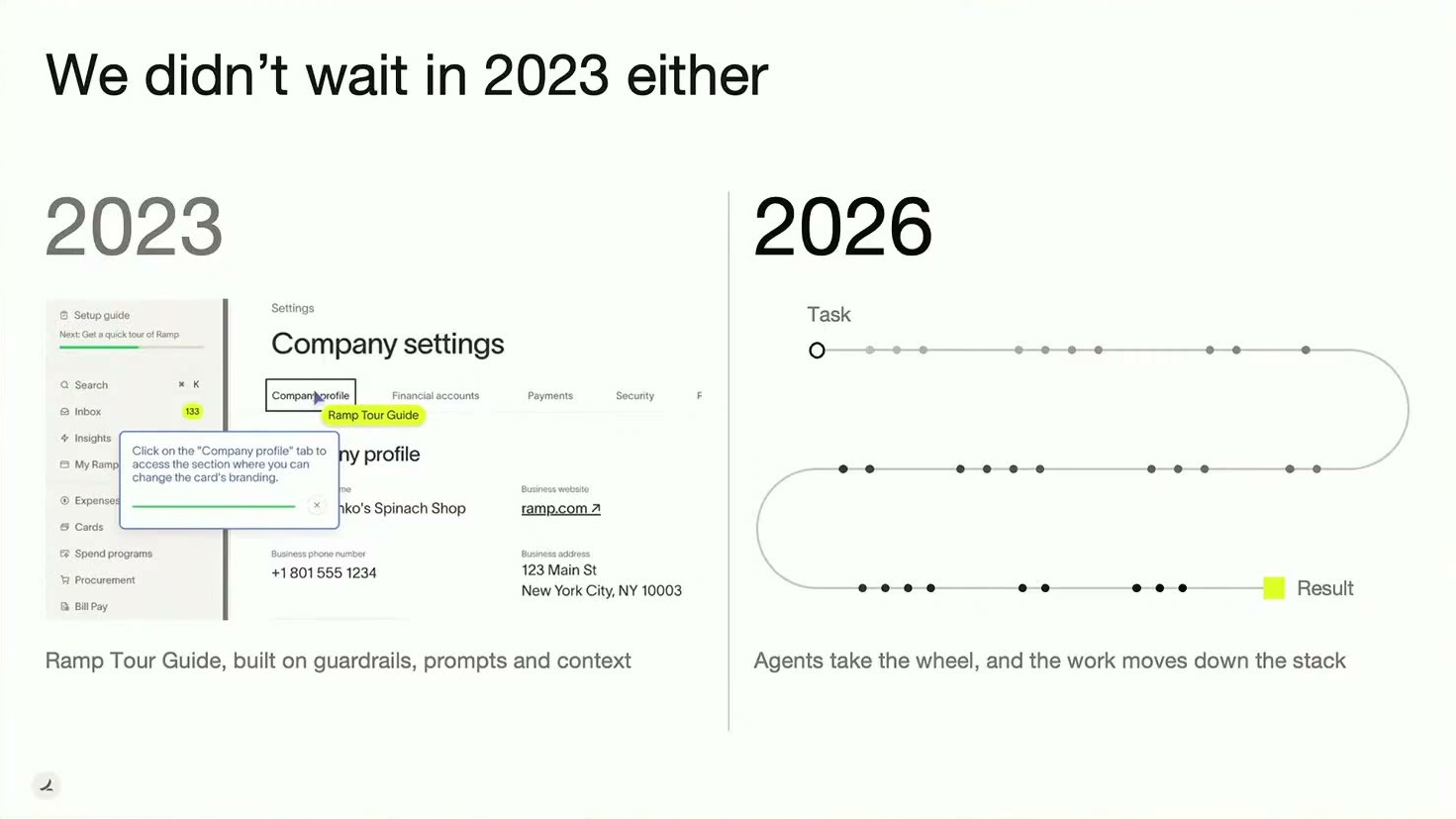
要回答这个问题,我想和 2023 年作个类比。回到 2023 年,你可以接触到类似 GPT-4 的模型,而创建一个智能体需要做很多工作。你必须设置非常非常严格的防护规则。模型还没有经过强化学习训练来学会回退。它们没有思考 token。因此,一旦走错方向,它就只会一味往前冲,也意识不到自己犯了错。你得反复打磨每个提示,甚至有时只换一个同义词,就会改变智能体的行为,因为模型还没有经过适当的强化学习训练,无法泛化理解用户意图。
And to answer that, I would like to draw a parallel to 2023. Back in 2023, you had access to kind of like GPT-4, and creating an agent was a lot of work. You would have to create very, very strict guardrails. Models weren't RL'd to backtrack. They didn't have thinking tokens. And so if it went in the wrong direction, it would just kind of charge ahead and not realize that it made mistakes. You had to sweat over all of the prompts to the point where some synonyms could change the behavior of your agent because they weren't RL'd properly on generalizing to the user's intent.
你必须尽可能缩小并精简上下文,因为给智能体太多上下文只会让它困惑。即便在那时,我们仍决定:我们必须把这些东西发布出去。我们不能等 GPT-4.5 或 GPT-5 面世。我们现在就得服务金融专业人士。所以我们推出了 Ramp Tour Guide 等许多智能体,尽管这并不是容易的事。快进到 2026 年,现在构建智能体容易多了。模型进步很大,你可以给它们 MCP,并让它们访问几乎任何上下文。
You had to reduce and scope down the context as much as possible because giving too much context to the agent would just confuse it. And even back then, we decided, well, we need to ship these things. We can't wait for GPT 4.5 or GPT 5 to come out. We need to serve our financial professionals now. And we should, things like RAM Tour Guide and many other agents, even though it was not the easy thing to do. And fast forward now to 2026, building an agent is a lot easier. The models have gotten so much better that you can kind of give them MCPs and access to kind of any context.
它们能够非常出色地理解在给定任务下需要做什么。但我仍然相信,我们可以再深入一层,为用户打造更好的体验。只是现在需要多付出一点努力。
And they do a very, very good job of understanding what they need to do given a task. But I still believe that we can dig a layer down and create even better experiences for our users. just it requires a bit more effort now.
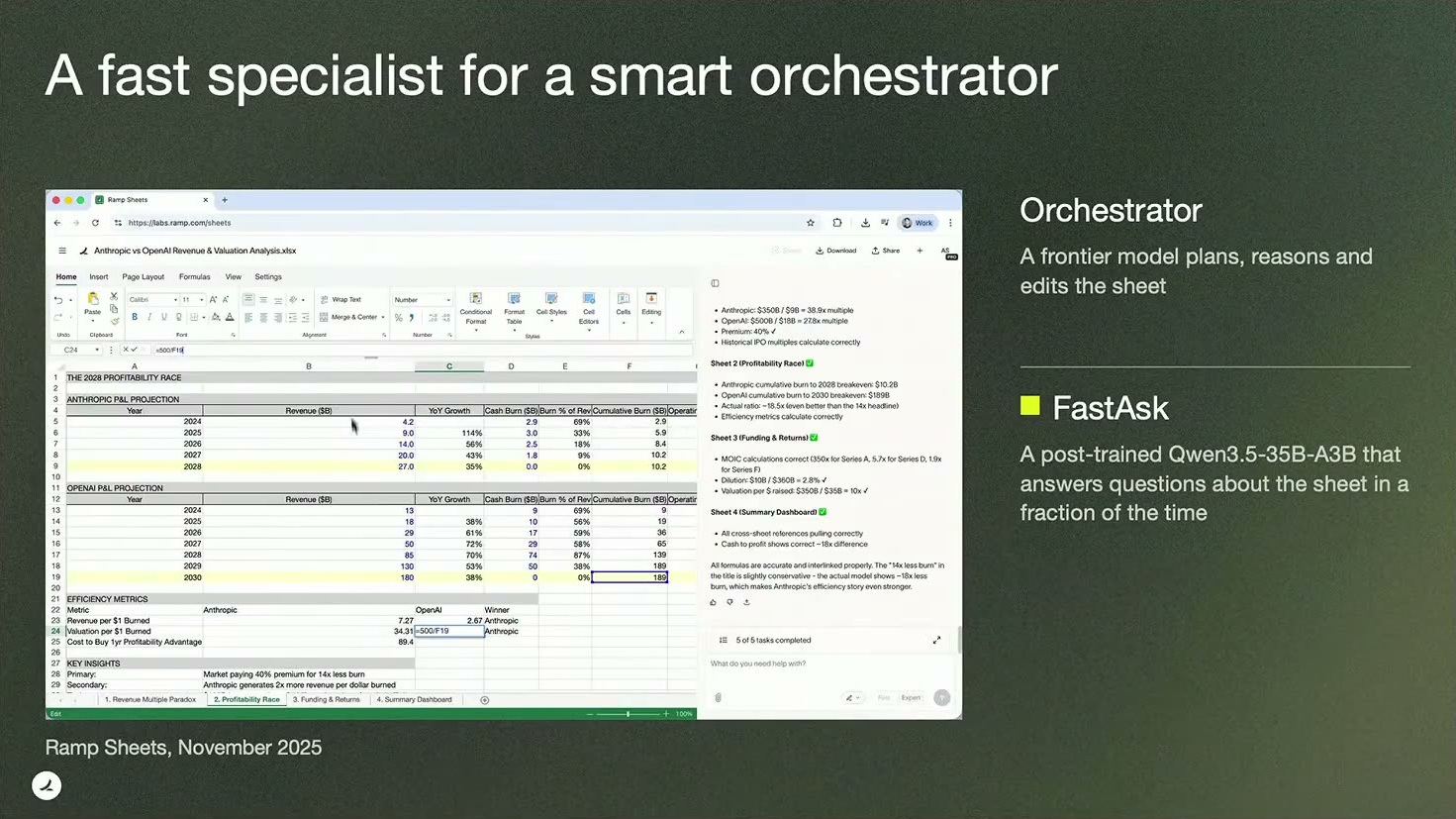
接下来介绍 Ramp Labs 的一些工作:三个将研究应用到 Ramp 本身的具体案例,首先是创建一个专用模型。去年 11 月,我们推出了 Ramp Sheets,这是很早期的电子表格智能体之一。当时两家前沿实验室还没有推出自己的电子表格智能体。我们在 11 月的发布取得了很好的效果。许多优秀公司的用户注册并开始使用。我们发现,这其实是一个通用型电子表格处理智能体,而 Ramp 的许多员工,无论是在公司内部,还是在我们的客户中,会计和财务专业人士每天大部分时间都在电子表格里度过。
So to present this, some of our work from Ramp Labs, three specific cases of how we've applied research into Ramp itself, starting with creating a specialist model. So in November of last year, we launched Ramp Sheets, which was one of the really early spreadsheet agents. This was before the two frontier labs had launched their versions of spreadsheet agents. And we had a very good launch in November. A bunch of users from great companies had signed up and started using it. And we realized that, well, this is a very general purpose spreadsheet handling agent. and a lot of the work that people do on RAMP, both inside of the company, but also all of our customers, accounting, and finance professionals, are spending most of their days inside of spreadsheets.
因此,我们可以把 Ramp Sheets 背后的智能体运行框架和核心能力加入 Ramp 内部的许多其他产品界面。在构建这些功能时,我们意识到可以应用 Ramp Labs 的一些研究,让它们做得更好。于是我们坐下来开始研究:模型在哪些方面表现不够好?当时用的是 Opus 4.6。摩擦最大的一处是:当你把很多电子表格放进 Ramp Sheets,要求它构建 DCF或模拟某个财务情景时,它会花很多时间先制定计划,然后研究所有它能访问的表格,试图充分了解其中的情况和整体格局。
So we can kind of take the harness and the brains behind RAMP sheets and add it into a bunch of other surfaces within RAMP. And as we were building this out, we realized, well, we can probably apply some research from RAMP Labs to make this even better. And we sat down and we started looking, where do models fall short on this? And back then, this was like Opus 4.6. And the place that had the most friction was when you would drop in a lot of spreadsheets into RAM sheets and you would ask it to build a DCF or model some financial scenario. It would spend a lot of time creating a plan at first and then researching all of the sheets that it had access to, to try to get a good understanding and the lay of the land.
Opus 4.6 是一个很棒的模型,但速度相当慢,思考 token 的成本也很高。于是我们退一步思考,决定训练一个检索模型,或者说一个财务问答模型,同时仍由这些前沿模型担任编排器,然后把任务交给这个速度快得多的模型,让它执行财务问答,为规划智能体提供支持。
And Opus 4.6 is a great model, but it was pretty slow, and the thinking tokens are also pretty expensive. And so we took a step back and decided to train a retrieval model, or kind of like a financial question-answering model that would, while still keeping these frontier models as orchestrators, would then be handed off to this much faster model that would do financial question-answering for that planning agent.
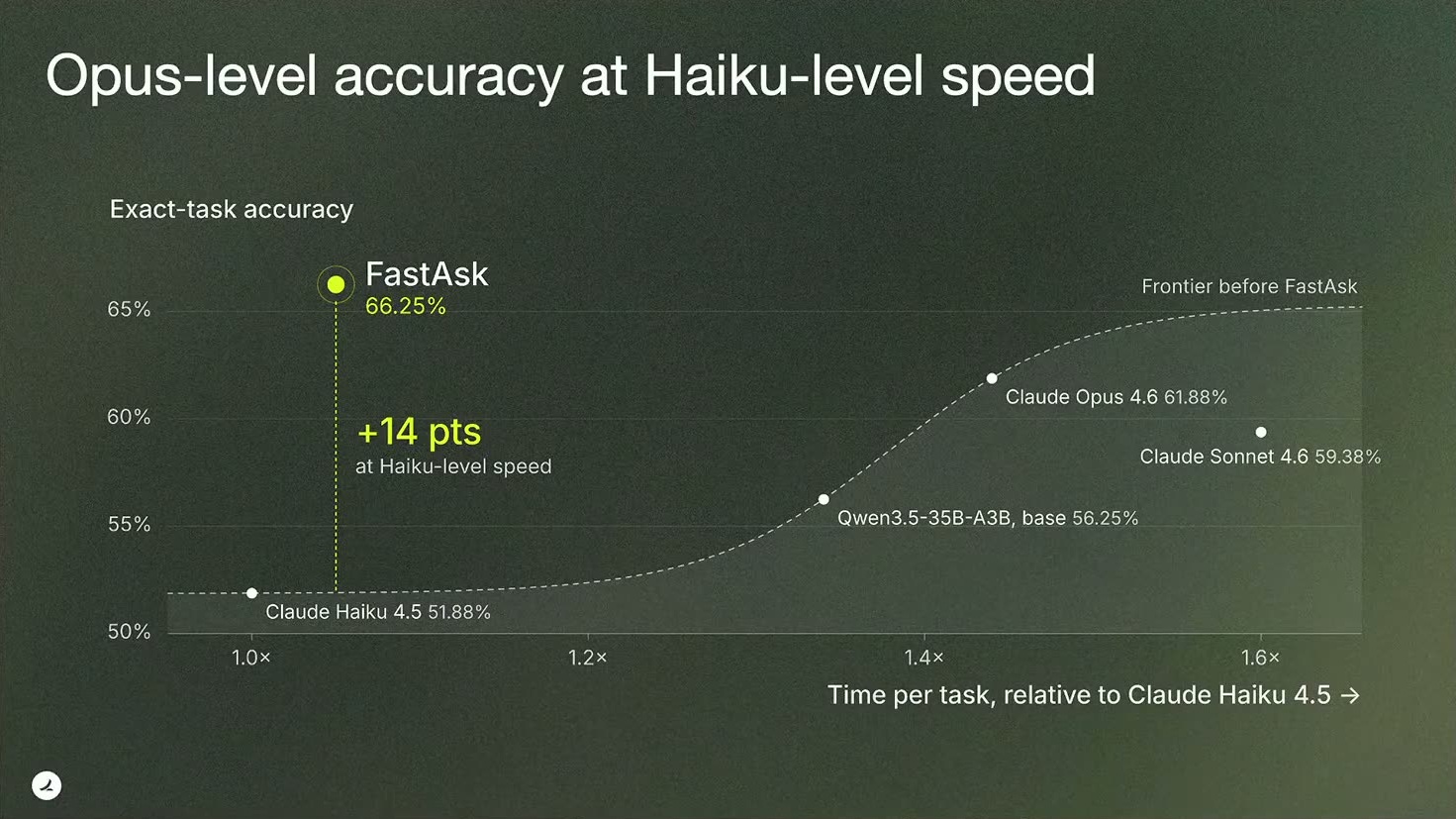
我们与 Prime Intellect 合作,对一个 350 亿参数的 Qwen 3.5 模型进行后训练。它的特定任务准确率超过了当时的前沿模型 Opus 4.6,同时服务延迟达到了 Haiku 级别。这是一个速度快得多、但仍然足够聪明的模型,可以与能力很强的前沿编排模型协同使用。这是我们非常成功的后训练案例,并且作为 Ramp Labs 工作的一部分实际部署到了生产环境。
And so we partnered with the company Prime Intellect to post-train a Qwen 3.5, 35 billion model. And we actually got above Opus 4.6, which was the frontier back then, exact task accuracy, while also being able to serve it at Haiku level latencies. So a much faster but just a smart model that could then be used in tandem with the really smart frontier orchestrator. And so this was a very successful example of post-training that we had actually sent to prod as part of our Ramp Labs effort.
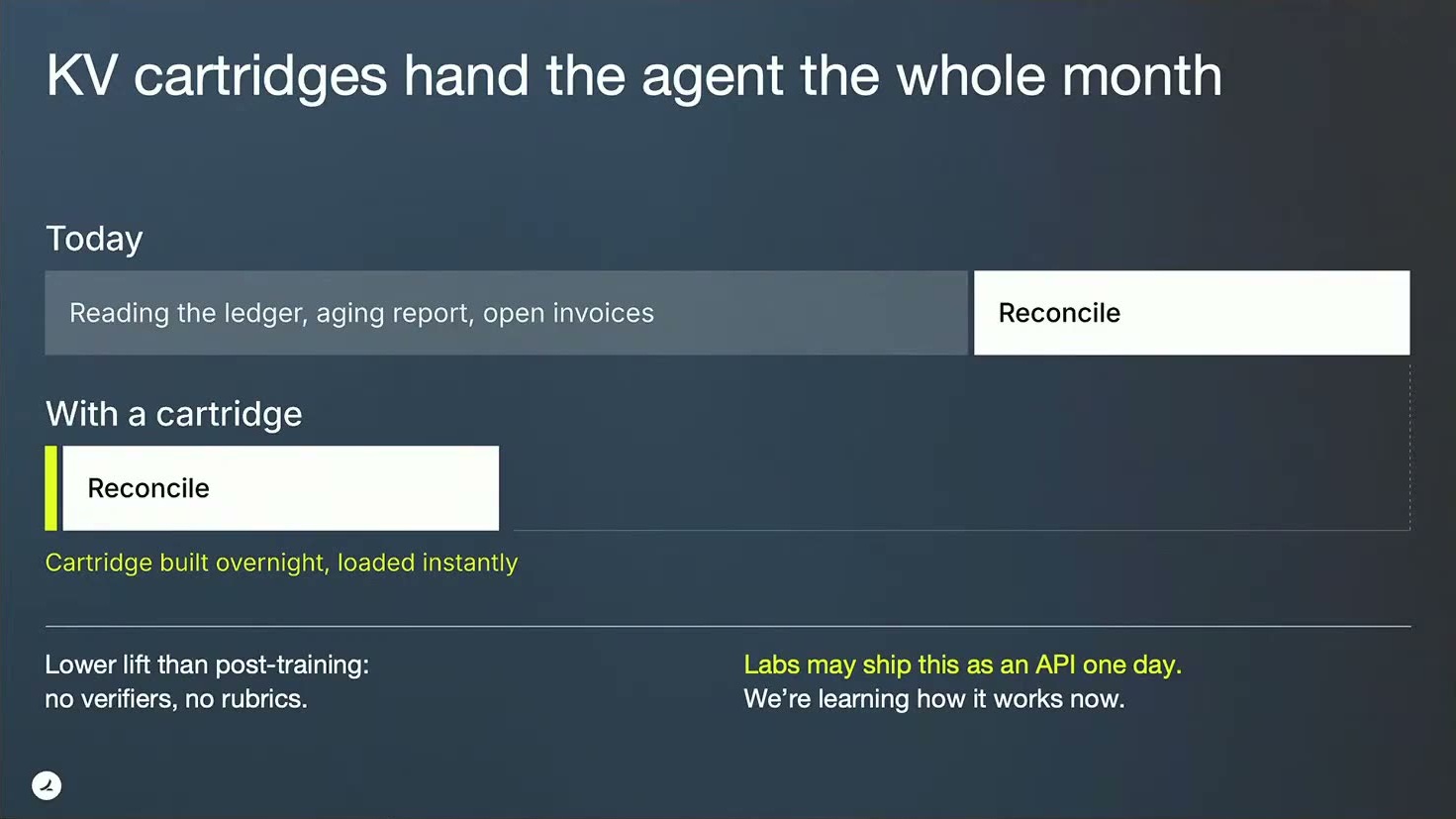
我们至今仍在探索的第二项重要工作是 KV cache技巧,尤其是 cartridges。这是一类很有意思的技术,能够在线下把大量上下文压缩进 KV cache,最多可容纳多出 20 到 30 倍的上下文,再为智能体提供服务。以 Ramp Sheets 为例,有很多任务是可以预知迟早会发生的,比如月末结账。一个月结束后,到了下个月的第一天,财务专业人士会开始对账并结账,涉及分类账、账龄报告以及他们需要检索的文件。
The second big thing that we are actually exploring up to this day is KVCache tricks and particularly cartridges are a really interesting family of techniques where you're able to compress a lot of context up to 20 to 30 times more context into the kv cache offline and serve it for your agent and so if you compare it to the ramp sheets example for example there's a lot of tasks that you know are going to happen at some point right like month end close a month finishes and on the first of the next month a financial professional will go and try to reconcile and close their books you know kind of the ledger the aging report and the documents
因此可以提前把这些内容准备成上下文,但智能体仍需自主检索,并对这些材料形成良好的整体理解。通过 cartridges,我们可以压缩所有这些工作,并在财务专业人士每月第一天开始工作之前,前一晚就先完成准备。等他们打开智能体时,它就确切知道自己要做什么,因为所有上下文都已通过 cartridges 准备好。cartridges 的后训练工作量也低得多,因为它们进行自我博弈的方式更容易泛化。这类技术的一个限制是,与后训练相比,实验室或许会在某个时候把它作为 API 功能推出,作为其探索持续学习的一部分。
that they will need to be retrieving and so you could prepare them as context but the agent will still need to agentically retrieve and create a good picture and understanding of them with cartridges we're able to compress all of that work and build one overnight before the the financial professional starts their work on the first of the month and once they open up the the agent it knows exactly what it needs to do because it has all of the context already built in cartridges are also a much lower lift in post training because the way that they do self play is kind of a lot more generalizable the caveat with stuff like this is that compared to post training this is something that the labs might ship at some point in their API's in their foray into continuous learning.
即使他们真的通过 API 推出这一功能,我们也会很高兴,因为我们正在公司内部积累很多这方面的实战经验,并不断学习如何最好地应用这些技术。所以即使它作为 API 推出,我们也可以从第一天起就迅速上手,知道如何使用它们。
Even if they were to do it in the API, we would actually be happy because we are developing a lot of this tribal knowledge inside of the company and just learning how best to apply these techniques. So even if it does ship as an API, we can just hit the ground running on day one, knowing how to use them.
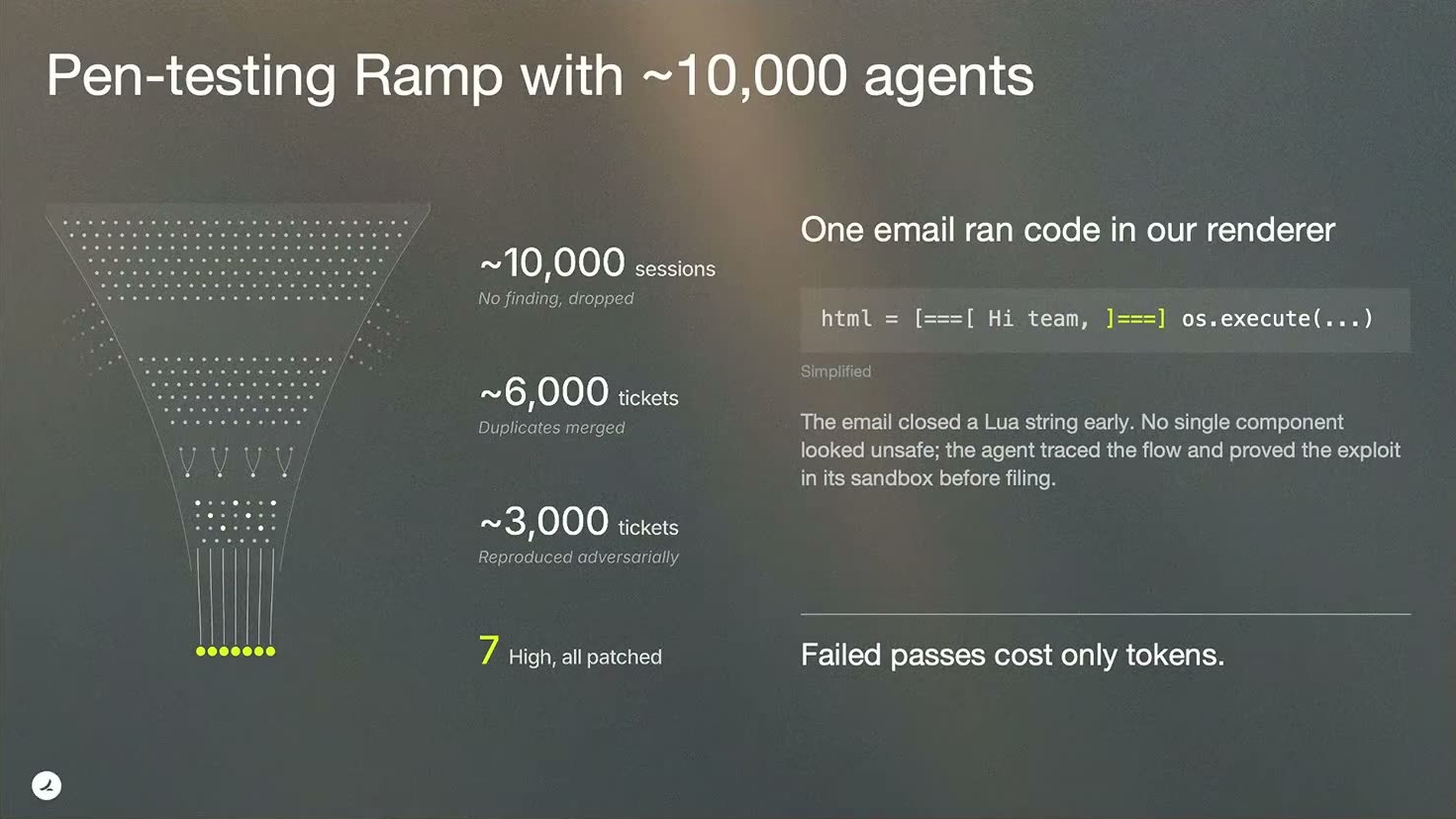
最后,第三个已应用研究并正在部署到生产环境的案例,是我们在智能体式 MapReduce以及智能体群集方面的工作。更具体地说,我们在 Ramp Labs 博客上发表了一篇文章,介绍我们如何使用 10,000 个并行智能体对整个 Ramp 进行渗透测试。在 Ramp,我们有一个云端智能体 Ramp Inspect,它帮助搭建这类宏大项目所需的基础设施和连接组件,让这样的项目成为可能。我们成功启动了 10,000 个并行智能体,然后把这项工作分解并分配出去,尝试发现任何漏洞,并用智能体自动归并它们创建的工单。
And finally, the third example of applied research that we are sending to prod is our work on agentic map reduce and kind of agentic swarms. So more concretely, we published an article on the Ramp Labs blog on how we used 10,000 parallel agents to pentest all of Ramp. So at Ramp, we have a cloud agent called Ramp Inspect, which helps out with setting up all of the infrastructure and plumbing for something as ambitious as this. and we were able to spin up 10,000 parallel agents and then kind of map this work out, try to find any vulnerabilities, and then also agentically reduce on the tickets that they would create.
我们用 LLM 对工单去重,再用 LLM 以对抗方式尝试复现,确保漏洞确实存在且影响重大。最终,我们发现了 7 个严重程度最高的漏洞,并且全部修复了。有意思的是,文章中描述的一个漏洞是 Lua脚本注入,可以通过电子邮件发送。这个技术栈中没有任何单个组件本身不安全,但这群智能体必须把多个组件以及对多个组件的理解串联起来,才能端到端地发现问题。
So deduplicate them with LLMs and then try to reproduce them adversarially with LLMs to try to make sure that the vulnerabilities are real and important. At the end of all of this, we have actually found seven highest severity vulnerabilities that we all patched. Interestingly, one of the vulnerabilities that we described in that article is a Lua script injection that you could send over via email. And no single component of that stack was unsafe, and the kind of swarm had to patch together multiple components and understanding of multiple components end-to-end in order to be able to figure this out.
另一个好处是,所有工作都是自动运行的。不需要占用任何人的时间。只要启动即可;唯一会失败并被过滤掉的,就是 token 成本。除了构建支持这类智能体群集的基础设施,
And the other nice thing with this is that this is all running automatically. You don't need to spend anyone's time. is just use started and the only thing that failed passes that get filtered out is the cost of the tokens. The other thing that's interesting outside of just building out all of the infrastructure to
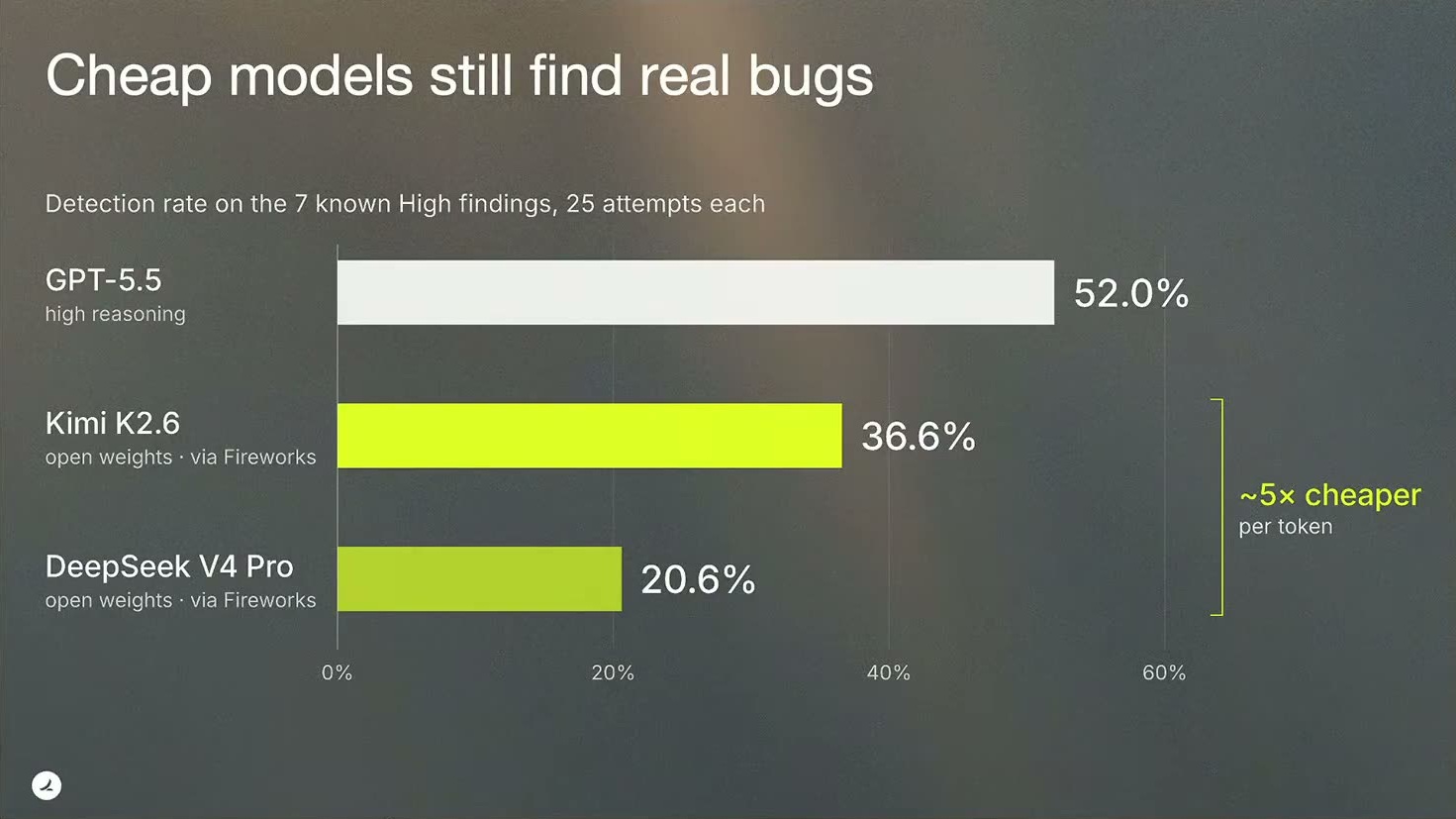
我们还研究如何在群集中最好地使用模型。我们在同一篇文章中分享的一项有趣发现是,可以使用开放权重模型,成本最高可比前沿推理模型低 5 倍,而采用群集架构后,检测率不会因此低 5 倍。所以你可以多花一些钱购买这些更便宜的 token,检测率仍几乎一样好。
support these swarms is that we do research into how to best use models as part of these swarms. One of the interesting insights from that same article that we published is that you can actually use open weight models that are up to five times cheaper compared to the frontier reasoning. Because you're setting it up as a swarm, the detection rate is not five times lower. So, you can kind of spend more on these cheaper tokens and have almost as good of a detection rate.
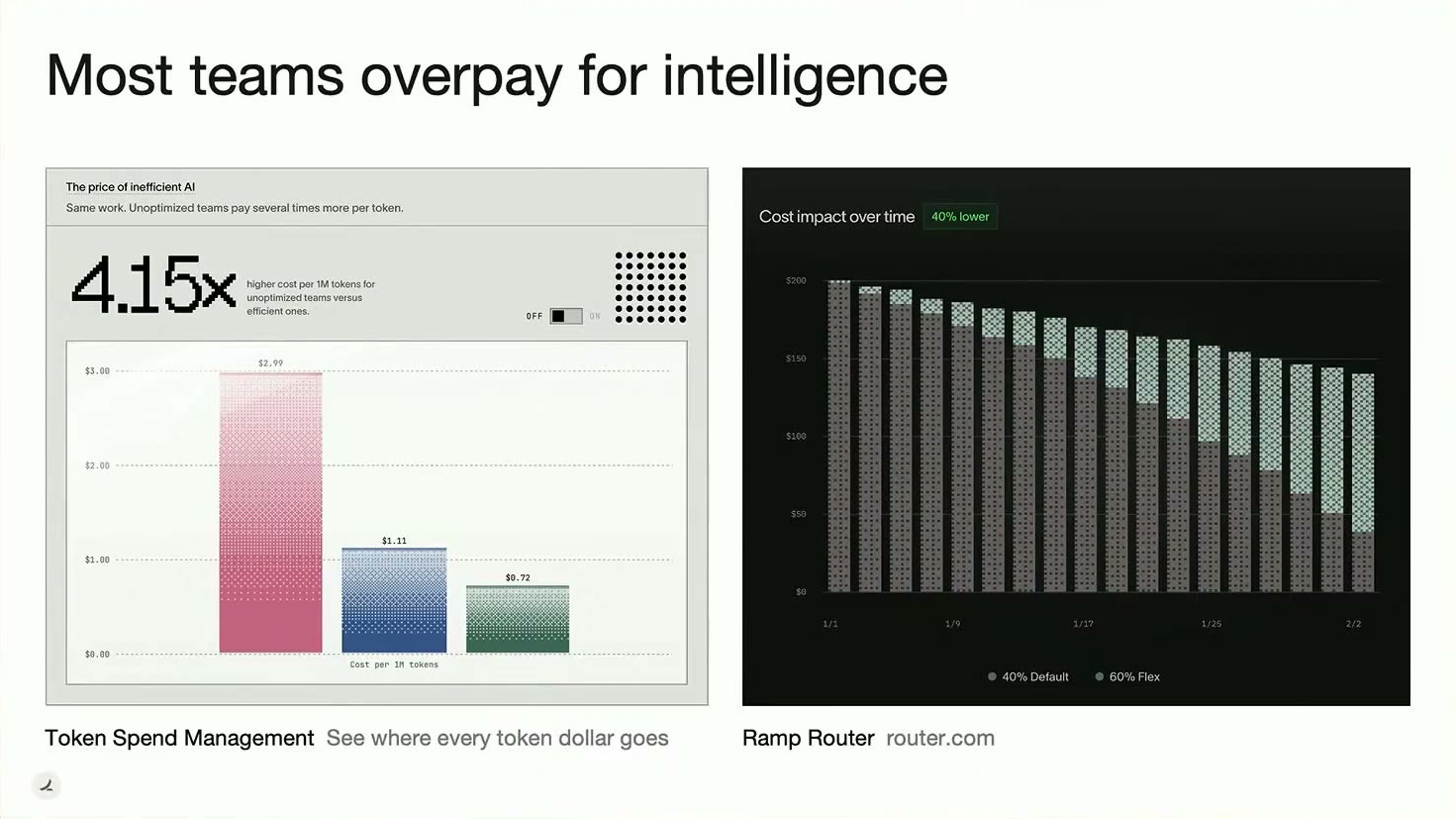
看完所有这些例子,你会发现它们大多有一个共同模式:试图节省时间和金钱。也就是降低延迟、节省时间,同时降低 token 成本、节省金钱。这其实正是 Ramp 的口号:为客户节省时间和金钱。我想介绍 Ramp 提供的两款产品,它们都受到了 Ramp Labs 研究的影响。第一款是 token 支出管理产品,它连接到你的多个 API 密钥,并帮助你清楚了解公司内部如何使用 LLM。不仅可以按 API 密钥或用户查看 token 支出,还可以进一步深入分析。
If you follow through all of these examples, you kind of notice a pattern of a lot of them is attempts at saving on time and saving on money. So reducing latency, which is time, and then reducing on token cost, which is money. That's actually RAMP's slogan, saving our customers time and money. And so I'd like to point to two products that we actually offer from RAMP that have been influenced by RAMP Labs' research. The first one is token spend management that connects to a bunch of your API keys and is able to give you a really good picture of how LMs are being used inside of your company. Not only token spend on an API key basis or a user basis, but digging deeper.
还可以分析会计分类,甚至通过分析支出找出可以申请的税收抵免。它还会更深入地分析:我们建立了一套分类体系,从上下文和语义层面分析 LLM 的使用情况,因此你可以理解 LLM 的用途,而不只是把使用情况归因到公司内部某个团队或个人。第二款是 Ramp Router,它也致力于改善智能体的延迟,其中有多种路由策略由我们与 Ramp Labs 合作开发,例如 NVIDIA Switchyard,以及将工作智能地灵活卸载到不同模型的策略,以改善延迟和每个 token 的成本。现在已经有多种路由策略可用,后续还会推出更多。如果你对这两款产品感兴趣,可以拍下网址或扫描那里的二维码。我给大家一点时间。
Accounting categories and even things like tax credits that you can get by analyzing the spend. It also goes deeper, and we create a taxonomy that contextually analyzes and semantically analyzes the LLM usage, so you can actually understand how LLMs are being used outside of just attributing it to a team or a person inside of your company. And then the second one is Ramp Router, which also leans into improving the latency of your agent, where we have a bunch of routing strategies that we work with Ramp Labs to develop, things like NVIDIA Switchyard, things like smart flex offloading of work to both improve latency and cost per tokens that you spend. And there's a bunch of different strategies already available for routing and even more coming out later. So if you're interested in any of these two products, you can take a photo of the URLs or scan the QR codes there. I'll give you a second.
太好了。
Awesome.
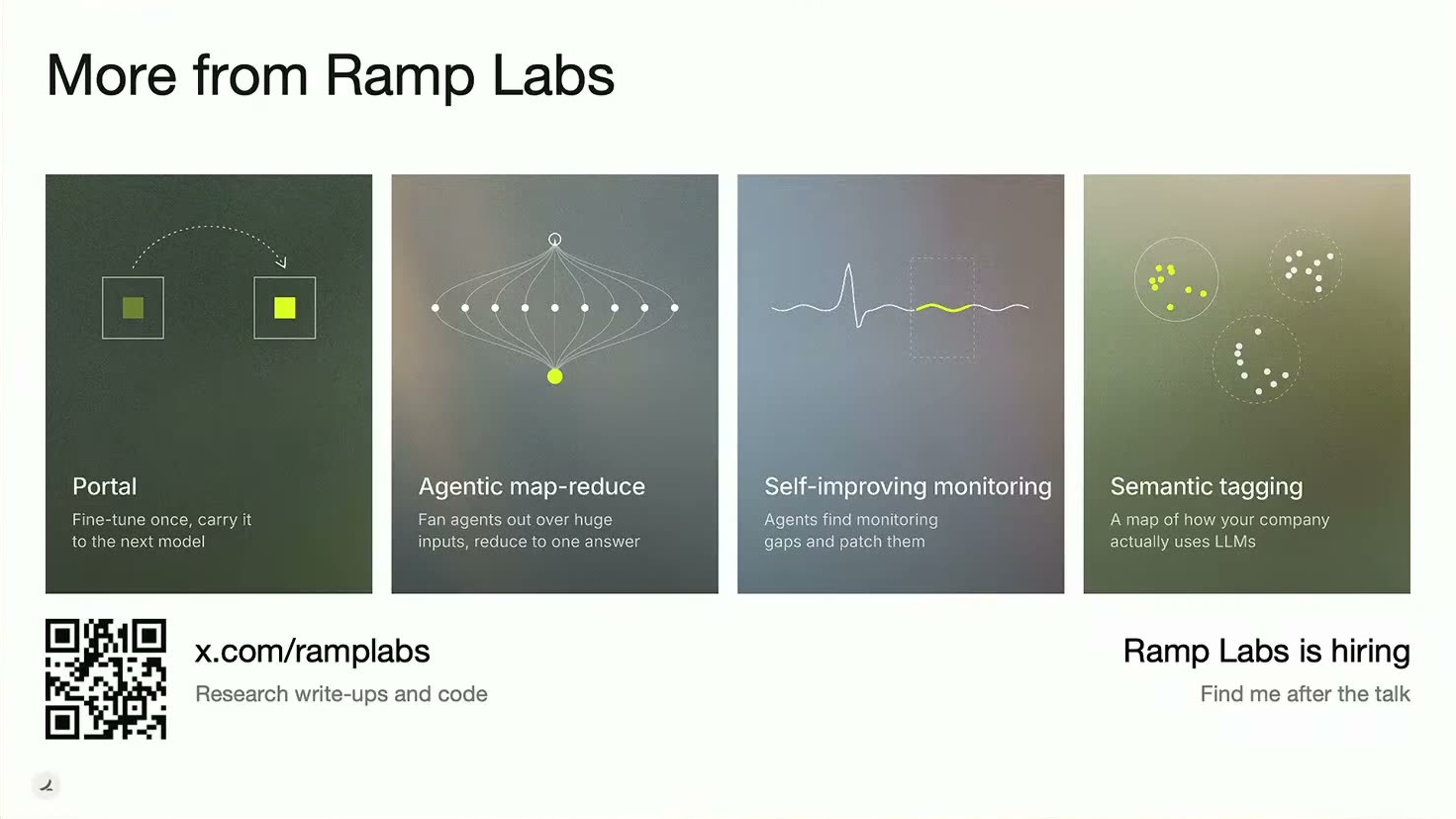
我也邀请大家看看 Ramp Labs 博客,我们在那里发表了许多很有意思的文章,这次演讲没来得及介绍。特别值得一提的是 PorTAL,我们找到了一种方法,可以把一次后训练中的学习迁移到另一次后训练中。例如,你可以在一个模型上做 LoRA 后训练,比如我刚才提到的 Qwen 3.5,然后把它迁移到更新版本的 Qwen,甚至迁移到不同的模型系列。这样你训练的是一种潜在表示,之后可以投射到不同模型上。
And then I'd also invite you to check out our RAMP Labs blog where we publish a bunch of really interesting articles that I haven't had the chance to cover as part of this presentation. Notably one of the really interesting ones is PorTAL where we figured out a way of transferring learnings from one post train to another. So you could do something like a LoRA post-train on one model, so like the Qwen 3.5 that I was describing, but then transfer it to newer versions of QAN or even across different families. So you're post-training this latent that then can be projected onto different models.
这就能分摊后训练所需的成本。博客上还有更多智能体式 MapReduce 文章,不只有我们做的渗透测试,还包括分析并创建 LLM 使用情况分类体系,这些工作已应用于 token 支出产品。还有自我改进监控,我们使用 LLM 在 Datadog 中自动创建监控器,覆盖许多产品界面,然后随着告警陆续出现,自动改进这些监控器,无需人工参与,从而打造极其稳健、韧性很强的软件。最后还有语义标注,这是一个很有意思的探索,我们对大量用户会话进行智能体式 MapReduce,可以标注数据并创建开放式分类体系,无需预先知道 LLM 使用情况会形成哪些类别,再建立一套分类体系,之后可以将其与公司内部的支出数据进行核对。
And that really amortizes the cost that you have to spend on post-training. More blog posts on agentic map-reduce, so not only the pen testing stuff that we did, but also things like analyzing and creating taxonomies of LLM usage, which is stuff that has gone into the token spend product. Things like self-improving monitoring, where we use LLMs to automatically create monitors with Datadog on a lot of our product surfaces, and then as alerts come in, improve those monitors automatically without a person in the loop to try to basically create super, super robust and resilient software. And finally, semantic tagging, which is this interesting foray into creating this egentic map reduce over a bunch of user sessions where we can annotate and create taxonomies that are open-ended, so not knowing ahead of time what are the clusters of LLM usage and trying to create a taxonomy that can then be reconciled against the spend inside of the companies.
如果你对这类研究感兴趣,可以去 x.com/ramp_labs 查看更多研究,这是我的 Twitter;如果你有其他问题,或者想聊聊应用研究方面的用例,也欢迎联系我。谢谢。
So if you're interested in this type of research, x.com slash ramp labs where you can go and check out more of our research and there's my Twitter if you have any other questions or want to talk about some use case as part of your applied research and that's it thank you