我们让理财规划师自己编写智能体
We Let Our Financial Planners Write the Agents
原文由官网提供,中文由 GPT-6 Luna 翻译。相邻片段合并排版,正文与时间点保持对应。
已插入 15 张经核对的幻灯片或演示截图;点击图片可放大。图注链接为当前视频时间,左侧正文时间保留原转录版本,二者可能不同。
共 18 个阅读段落
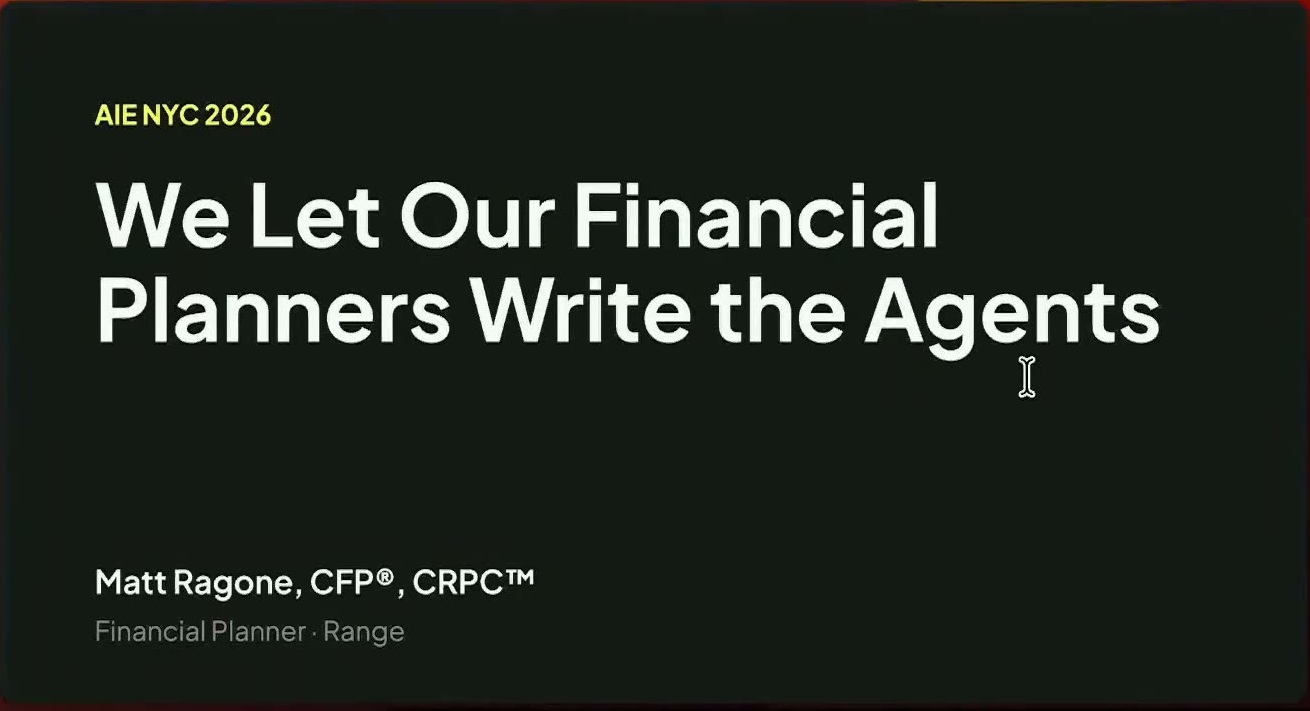
大家好,我是 Matt Ragone,是 Range 的一名理财规划师。我想向大家展示,我们的理财规划师是如何开始编写自己每天使用的智能体的。而且,我们这些理财规划师都不会写代码。这是我们的构建指南。我会逐步介绍我们是怎么做的,方便你带回自己的团队、公司,等等。
Hi everyone, I'm Matt Ragone and I'm a financial planner at Range. I want to show you how our financial planners ended up writing the agents that we use every day. And none of us, the financial planners for that matter, write code. This is the build guide. How we did it step by step so you can take it back to your own teams, companies, etc.
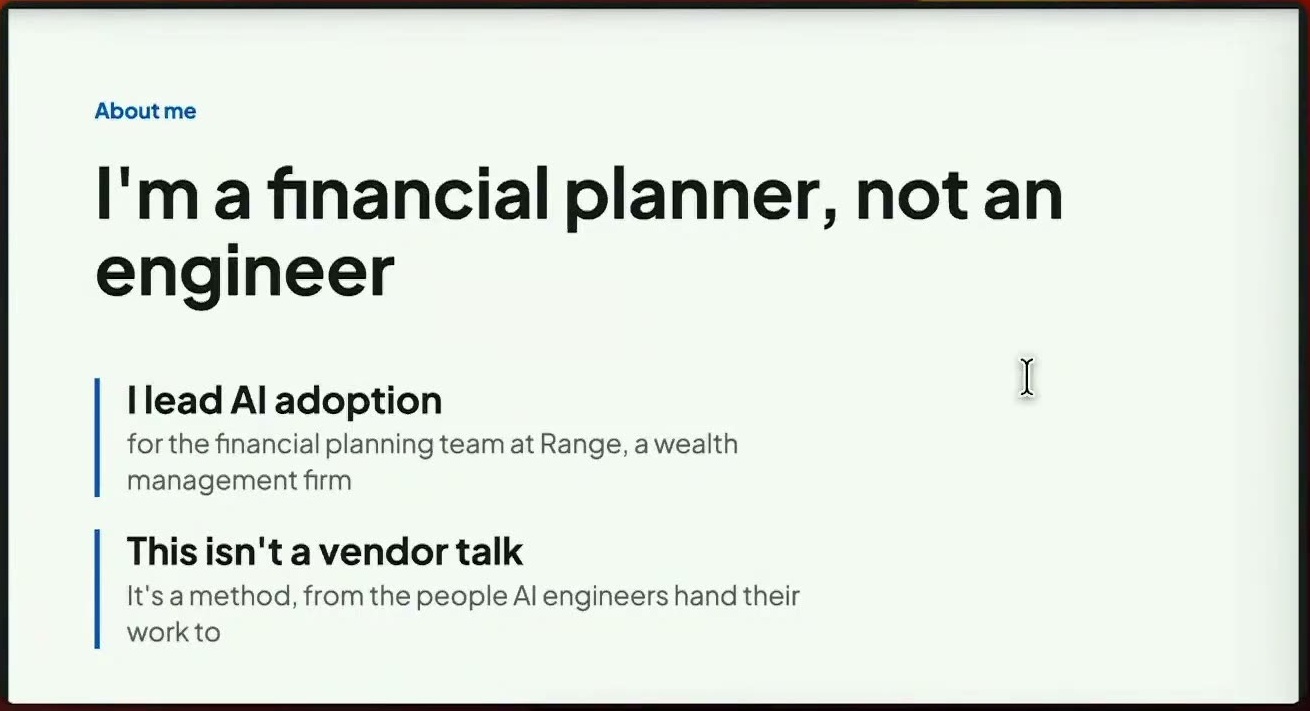
先简单介绍一下我自己,因为这会影响你如何理解这场演讲。我不是工程师。我是一名注册理财规划师。我每天都和客户讨论现金流、税务、保险、退休、遗产规划等等。我还负责 Range 规划团队的 AI 采用工作。Range 是一家一站式财富管理公司。你听到的大多数智能体演讲都来自平台的构建者。而这场演讲来自另一方,也就是平台的使用者。我们在受监管的行业工作,产出是给真实客户的财务建议,审核步骤不能省略。所以这不是供应商推销,而是一套方法,也是我们实际验证有效的方法。
So a quick bit about me because it matters for how you'll hear this talk. I'm not an engineer. I'm a certified financial planner. and I spend my days with clients talking about cash flow, taxes, insurance, retirement, estate, you name it. I also lead the AI adoption for the planning team at Range, which is an all-in-one wealth management company. Most agent talks you'll hear come from the people who built the platform. This talk comes from someone on the other side, the people you hand the platform to. We work in a regulated business. The output is financial advice to real clients. And the review step is not optional. So this isn't a vendor pitch. It's a method and it's what actually worked for us.
我们和所有人一样,最初把 AI 当作聊天机器人。我会写一条客户消息,贴进去,请它帮我写得更清楚或更友好一点。这确实有帮助。它偶尔能帮我省几分钟,但所有工作仍然要我手动完成。只是做得稍微快了一些。真正重要的变化是后来才出现的。
We started where everyone starts, AI as a chatbot. I'd write a client message, paste it in, and ask it to make it a little clearer or friendlier. And that was useful. It saved me a few minutes here and there, but I was still doing all of the work manually. I was just doing it a little bit faster. The change that actually mattered came later.
这是我们逐渐弄明白的事情。例如,理财规划师面临的限制从来不是打字速度。而是我们一次只能出现在一个地方。如果我正在和一位客户通话,就没法同时为另一位客户制定计划。打字更快解决不了这个问题。
Here's what we figured out. A planner's constraint was never typing speed, for example. It's that we can only be in one place at a time. If I'm on a call with a client, I'm not building someone else's plan. Writing faster doesn't fix that problem.
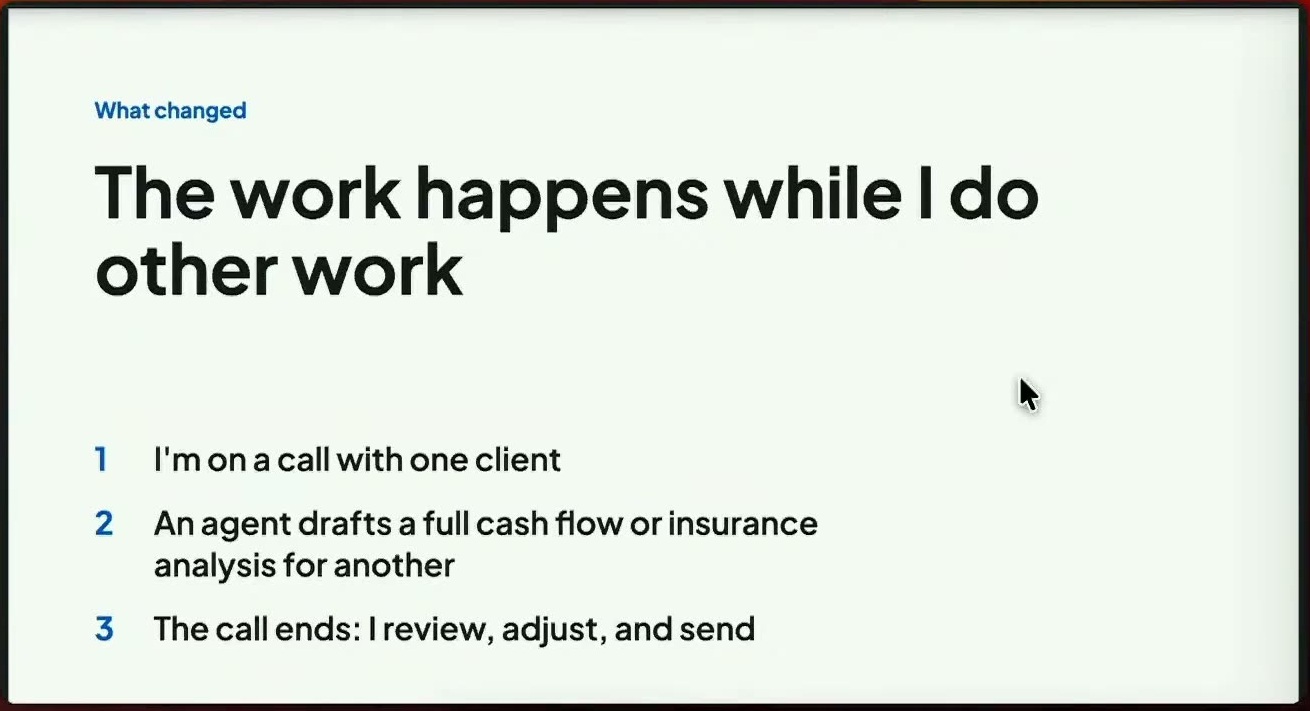
真正能解决问题的是我身在别处时也能进行的工作。现在的一天是这样的。我在和一位客户通话的同时,智能体正在为另一位客户起草完整的现金流分析或保险分析。通话结束后,我打开草稿,完整审核一遍,调整需要修改的内容,然后把建议发给客户。我想特别说明最后这一步。智能体不会发送任何内容。客户看到建议之前,理财规划师会逐条审核。变化在于,起草第一版不再需要我坐在电脑前亲自完成。
What fixes it is work that happens while I'm somewhere else. So here's what a day looks like now. I'm on a call with one client at the same time an agent is drafting a full cash flow analysis or an insurance analysis for a different client. When the call ends, I open that draft, I fully review it, adjust what needs to be adjusted, and send the client their recommendations. I want to be really clear about that last step. The agent doesn't send anything. A planner reviews every single recommendation before a client sees it. What changed is that the first draft no longer needs me sitting in front of it.
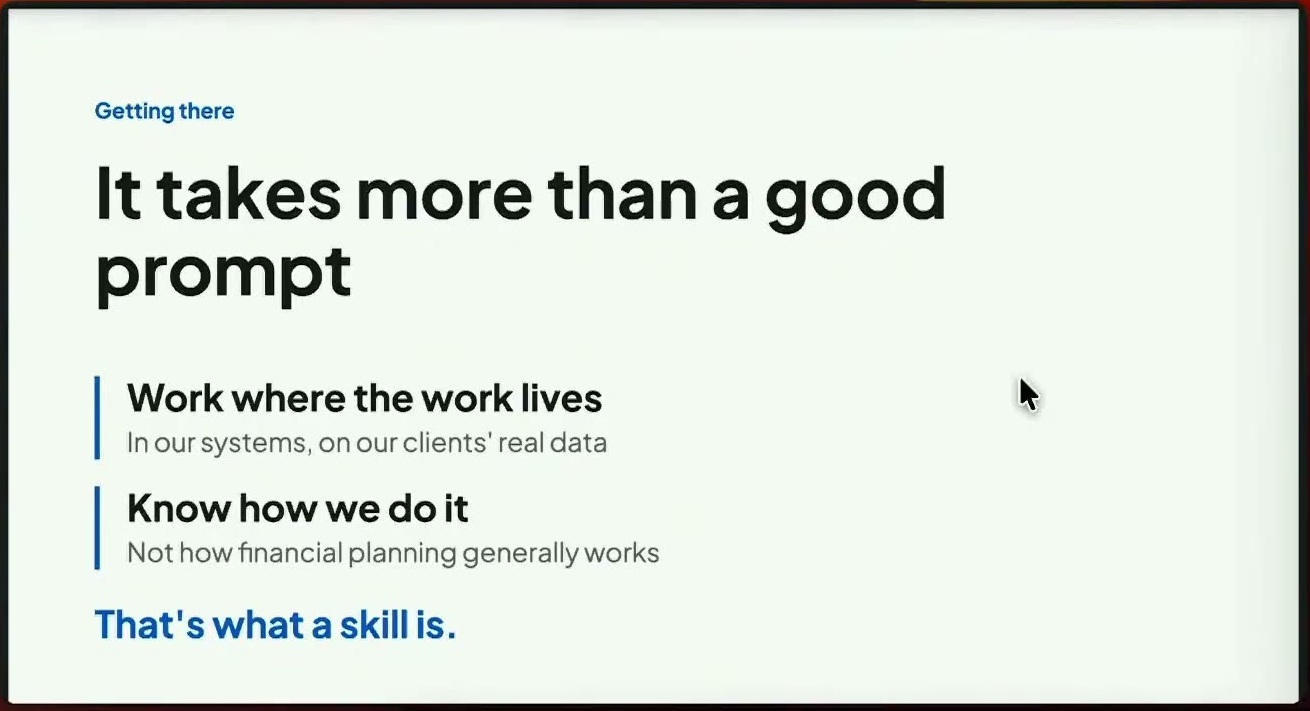
不过,要做到这一点,远不止写一个好提示那么简单。有两件事必须做到。第一,智能体必须在工作实际发生的地方工作,而不是在一个单独的聊天窗口里让我复制粘贴。第二,它必须知道我们是怎么做的,而不是只了解一般的理财规划方法。模型已经了解一般方法,但智能体必须知道 Range 的具体做法,我们先看什么,哪些情况总会标记,以及具体建议该怎么措辞。把这些结合起来,就是一项 skill。它是把我们公司完成某一项具体工作的方式写下来,让智能体可以照着执行。
Getting there took a lot more than a good prompt, however. Two things had to be true. First, the agent has to work where the work lives, not in a separate chat window I'm copying and pasting it into. Second, it has to know how we do it, not how financial planning works in general. The model already knows that, but the agent needs to know how range does it, what we look at first, what we always flag, how we phrase a specific recommendation. That combination is what a skill is. our firm's way of doing one specific piece of work written down so an agent can follow it.
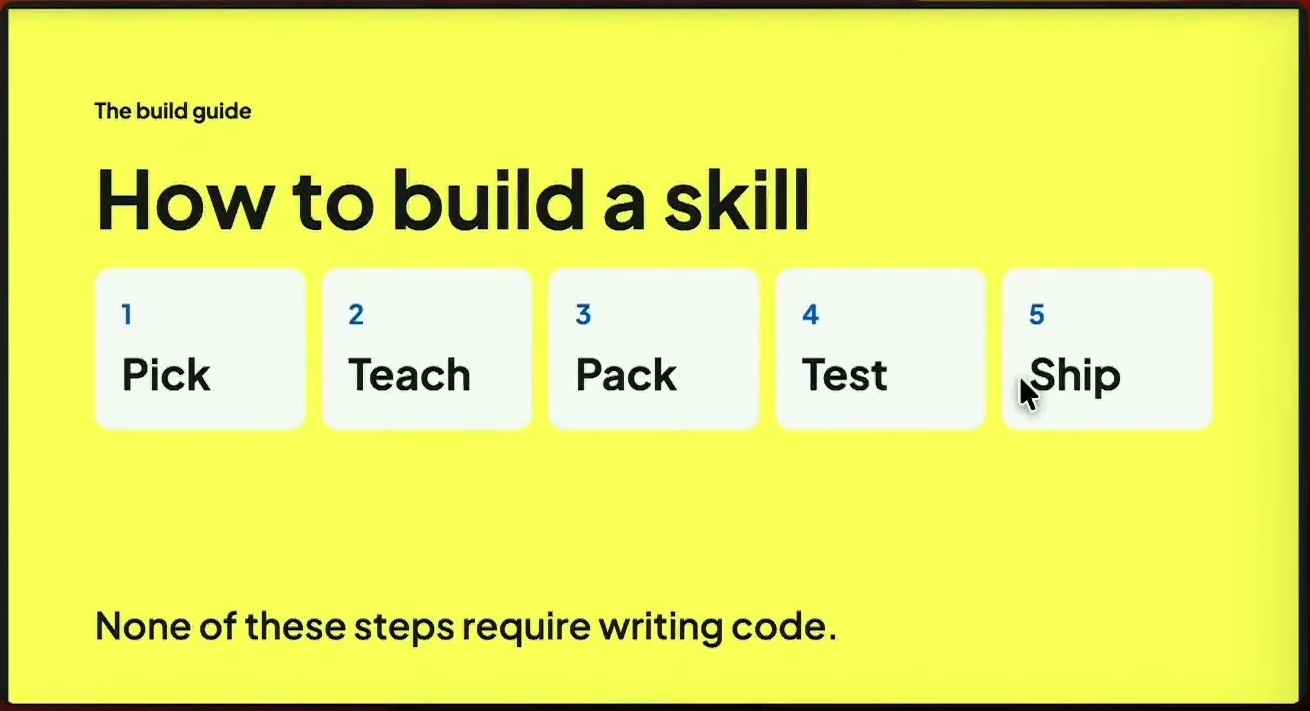
这场演讲的大部分内容都会讲如何构建一项 skill,共五步:选择、教学、封装、测试,然后发布。每一步都不需要写代码。但每一步都需要你非常了解这项工作,这正是为什么实际做这项工作的人也应该负责构建它。
The bulk of this talk is how you build one. Five steps. Pick, teach, pack, test, and then ship. None of them require writing code. Every one of them requires knowing the work really well, which is exactly why the people doing the work should also be the ones building it.
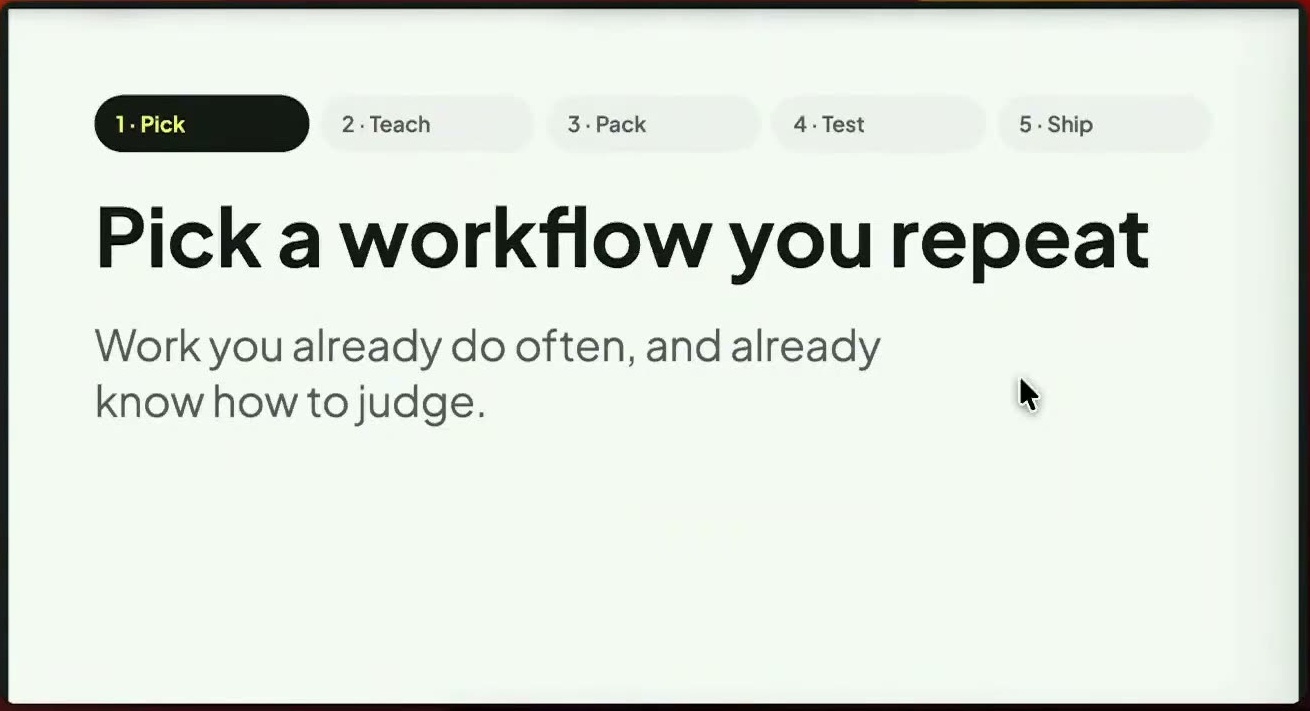
第一步,选择一个会反复做的工作流程。你一开始可能会想挑最炫的工作,也就是最耗时、最复杂的工作。别这么做。选一项你每周都会做、已经知道怎样才算做得好的工作,而且一眼就能看出草稿好坏。另外,我们建议从复杂度较低但需要大量手动操作的工作流程开始。对我们来说,这包括现金流分析和保险审查。至少在 Range,这些工作需要最多的手动操作。如果你不能快速判断产出好坏,就无法测试它,也无法信任它。
Step one, pick a workflow you repeat. Your initial instinct is to go for the flashiest work, whatever's taking the most amount of time and the most complex. Don't. Pick something you do every week where you already know what good looks like, where you can spot a bad draft at a glance. Additionally, we recommend choosing some of the least complex workflows to start, but some that require the most manual work. For us, that meant things like cash flow analysis and insurance reviews. Just for us here at Range, that required the most manual work. And if you can't judge the output quickly, you can't test it and you can't trust it.
因此要找两点:你经常做,而且知道如何判断好坏。
So look for two things. You do it often and you know how to judge it.
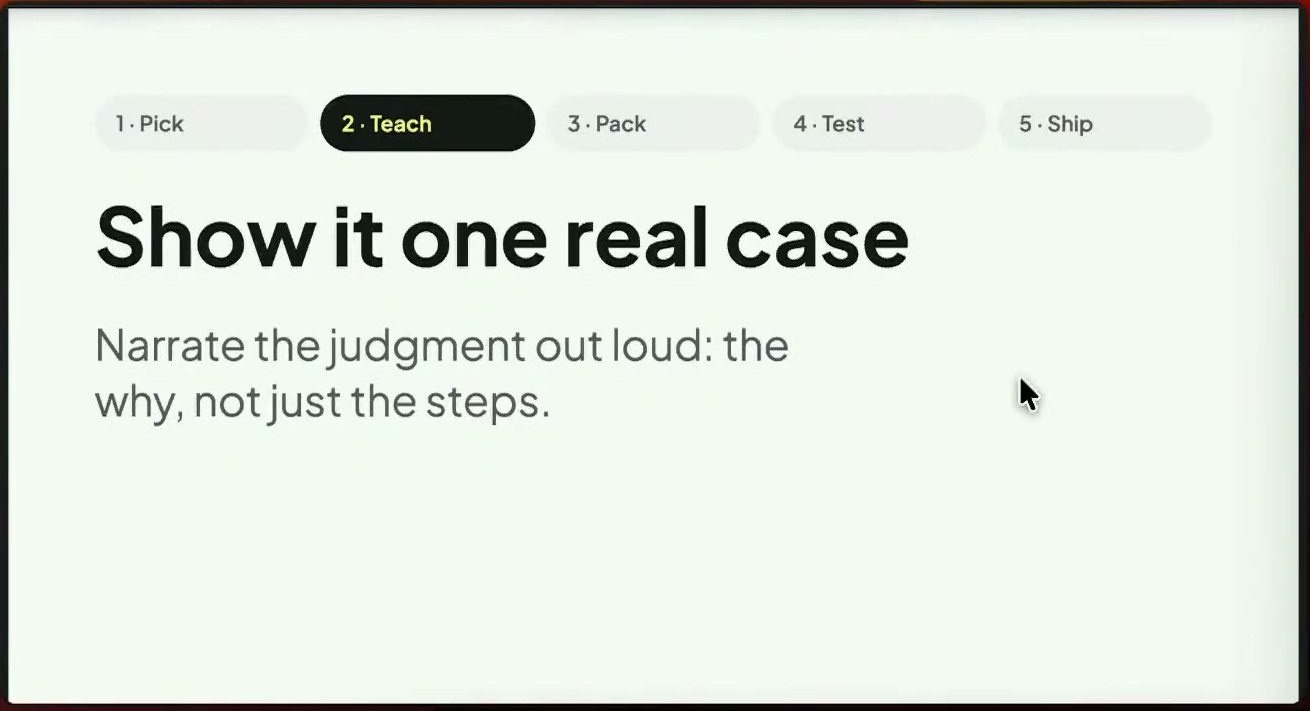
第二步,给它看几个你过去完成的真实案例。挑选几个真实客户案例,从头到尾讲解整个工作。讲解时,把你的判断过程说出来。不要只说“接下来我打开工资单”,还要说为什么要打开它。你在找什么信息。哪些情况会让你停下来提出问题。把判断过程讲出来是整个方法的关键。具体步骤很容易写下来。判断过程才会让它成为你们公司的做法,而不是泛泛的建议。
Step two, show it several real cases for previous plans you've delivered. Take several actual client cases and walk through the work start to finish. And as you do it, narrate your judgment out loud. Not just, next I open the pay stub, why you're opening it. What you're looking for. What would make you stop and ask a question. That narration is the whole game. The steps are easy to write down. the judgment is what makes it your firm's work instead of generic advice.
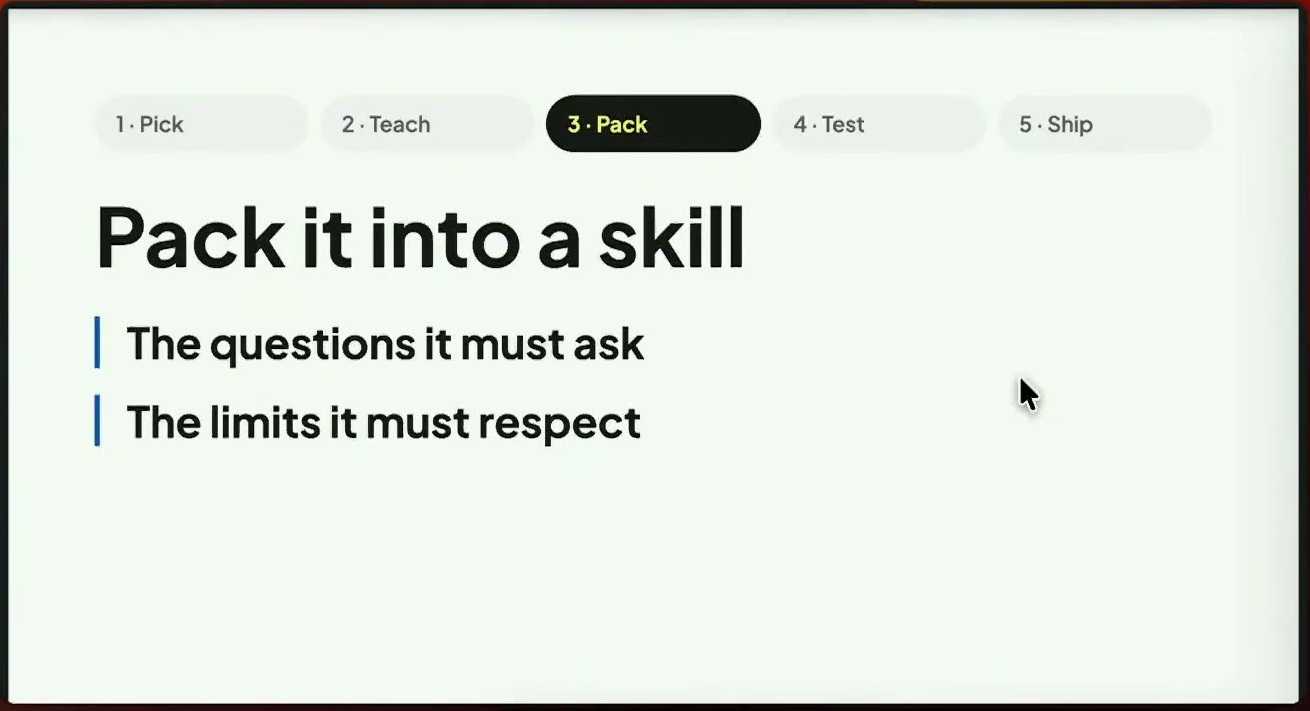
第三步,把它封装成一项 skill。Skill 不只是一串步骤,最重要的是两件事。它必须提出哪些问题。开始前,它需要了解什么?哪些信息应该向我确认,而不是自己猜?以及它必须遵守的限制:哪些事情绝不能自行处理。在我们的工作中,最重要的一条限制是:绝不能向客户发送任何内容。它只负责起草,然后由规划师决定是否发送,或者是否需要调整。如果你只写步骤,得到的东西就只会自行运行。如果你把问题写清楚、设定好限制,就能得到值得信任的东西。
Step three, pack it into a skill. A skill isn't just a list of steps. Two things matter most. The questions it must ask. Before it starts, what does it need to know? What should it confirm with me instead of simply guessing? And the limits it must respect. What it never does on its own. In our world, the big one is that it never sends anything to a client. It drafts, and then a planner decides if it gets sent or needs to be adjusted. If you only write the steps, you get something that simply just runs on its own. If you write the questions and set the limits, you can get something you can trust.
可以把 skill 想成一份食谱。Claude 学会如何执行这项 skill 后,就会按照你的流程照做。
Think of a skill as a recipe. Once Claude knows how to do the skill, it will repeat your process on command.
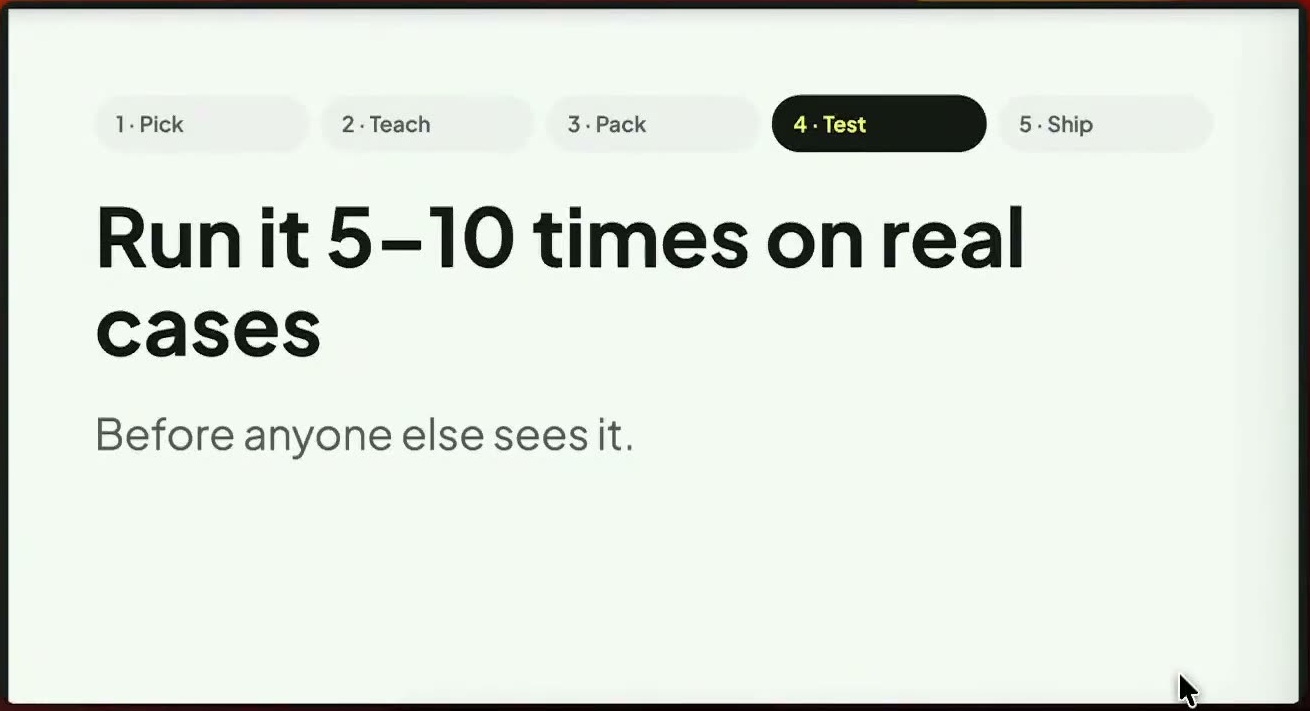
第四步,在让其他人看到之前,用真实案例运行 5 次或 10 次。这是每个人都想跳过的一步。每次运行都会让你发现 skill 还不知道的事情:一个边缘案例、它本该提出的问题,或者它看似很有把握却答错的地方。你需要修复问题、保存 skill,然后一次又一次地重新运行。运行 5 到 10 次听起来很多,但比把尚未完善的 skill 交给团队里的 15、20 甚至 100 人后再收拾残局轻松得多。
Step number four, run it five or 10 times on real cases before anyone else sees it. This is the step everyone wants to skip. Every run teaches you something the skill didn't know yet, an edge case, a question it should have asked, a spot where it sounded confident and was wrong. You need to fix it, save the skill, and run it again and again and again. 5-10 runs sounds like a lot, but it's a lot less work than cleaning up after you hand a half-baked skill to 15, 20, 100 people in your team.
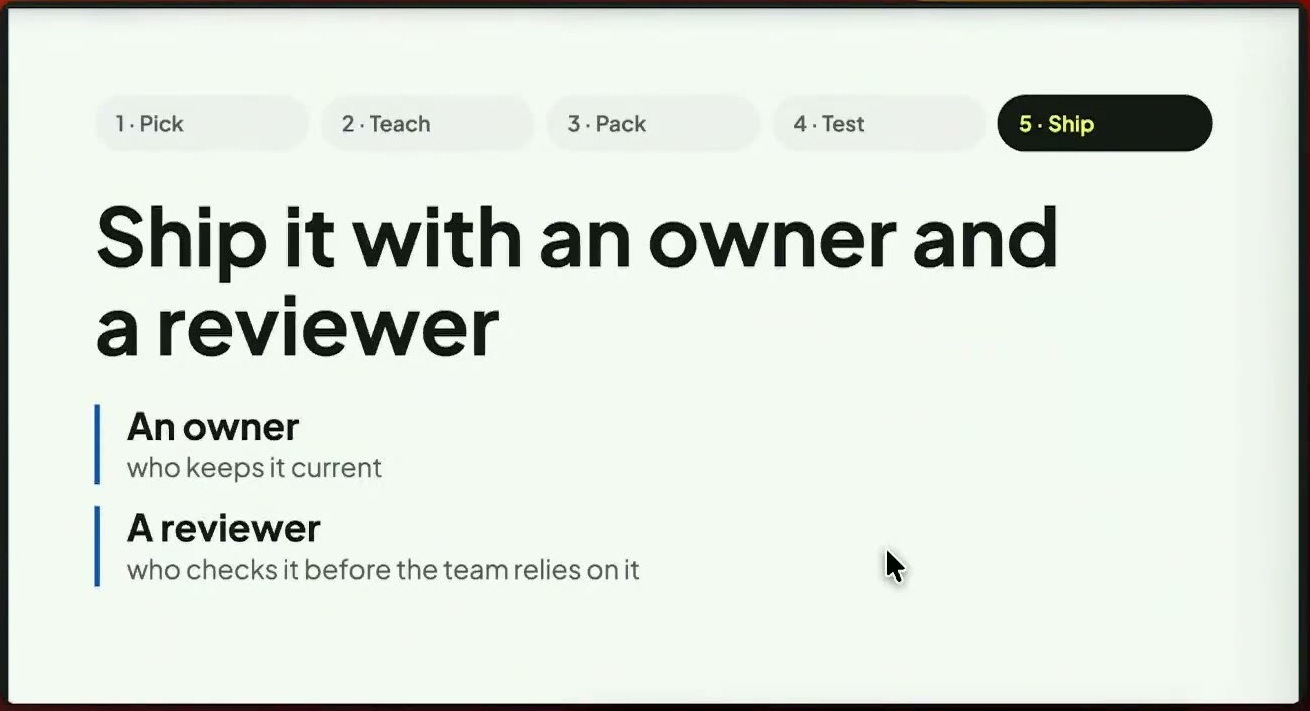
第 5 步,发布时指定负责人和审核人。负责人要让它保持最新。我们的流程会变,税务规则会变,3 月份还正确的 skill 到 12 月可能就错了。记住,团队依赖它之前,审核人要先检查,而且审核人必须是作者以外的人。就像理财计划一样,你不会给自己的工作打分。一旦别人开始依赖某项 skill,就必须有人对它负责。这就是个人巧妙捷径和团队可以持续构建的东西之间的区别。
Step 5. Ship it with an owner and a reviewer. The owner keeps it current. Our processes change, tax rules change, and a skill that was right in March can be wrong by December. Remember, the reviewer checks it before the team relies on it, and it's someone other than the author. Same as a plan. You don't grade your own work. Once other people depend on a skill, somebody has to be accountable for it. That's the difference between a clever personal shortcut and something a team can build on.
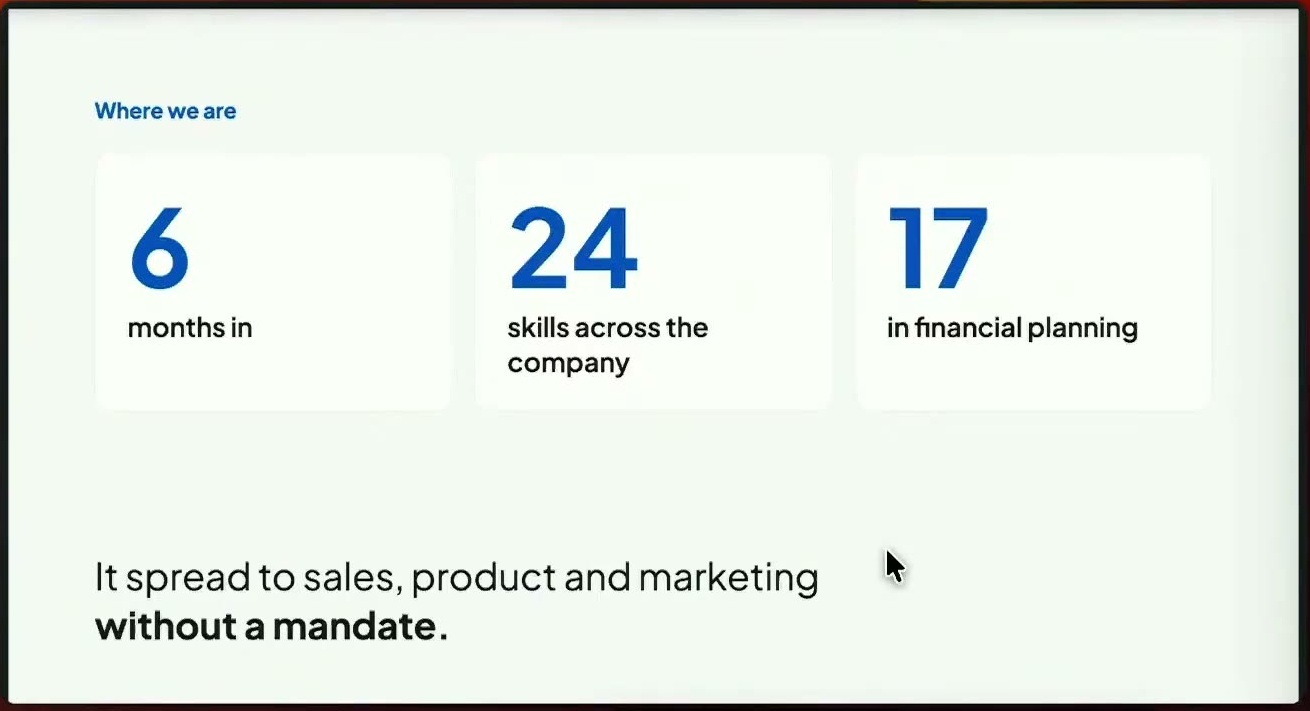
那么我们目前进展如何?六个月下来,我们在公司里共有 24 项 skill,其中 17 项由理财规划团队使用。还有一件事是我没想到的。它逐渐扩展到了销售、产品和市场团队,而且没有任何强制要求。没有人发过通知。大家看到规划师在做什么,就开始构建自己的智能体。这些 skill 全都由规划师、市场人员和销售人员编写并维护,而不是开发者或工程师。
So where are we at currently? Six months in, we have 24 skills across the company and 17 of them are in planning. And here's the part I didn't expect. It spread to sales, product, marketing, all without a mandate. Nobody sent a memo. People saw what the planners were doing and started building their own agents. Every one of those skills was written and is maintained by planners, marketers, and salespeople, not developers or engineers.
主题专家开始为自己的专业领域构建工具后,有几件事情发生了变化。这些 skill 变得具体得多。例如,最了解保险的人就应该构建保险 skill。最了解税务、税法和税收规定的人就应该构建税务 skill。审核也自然而然地跟了上来。我们本来就会互相审核彼此的计划,这就是规划工作的方式。所以现在我们也用同样的方式互相审核 skill。这是同一种习惯,只是审核对象换了。
A couple of things changed once subject matter experts started building for their own niche. The skills got a lot more specific. The person who knows insurance, for example, best builds the insurance skill. The person who best knows tax, tax code, tax law should be building the tax one. And a review came naturally. We already review each other's plans, and that's just how planning works. So now we review each other's skills in that same way. It's the same habit, just a new thing to review.
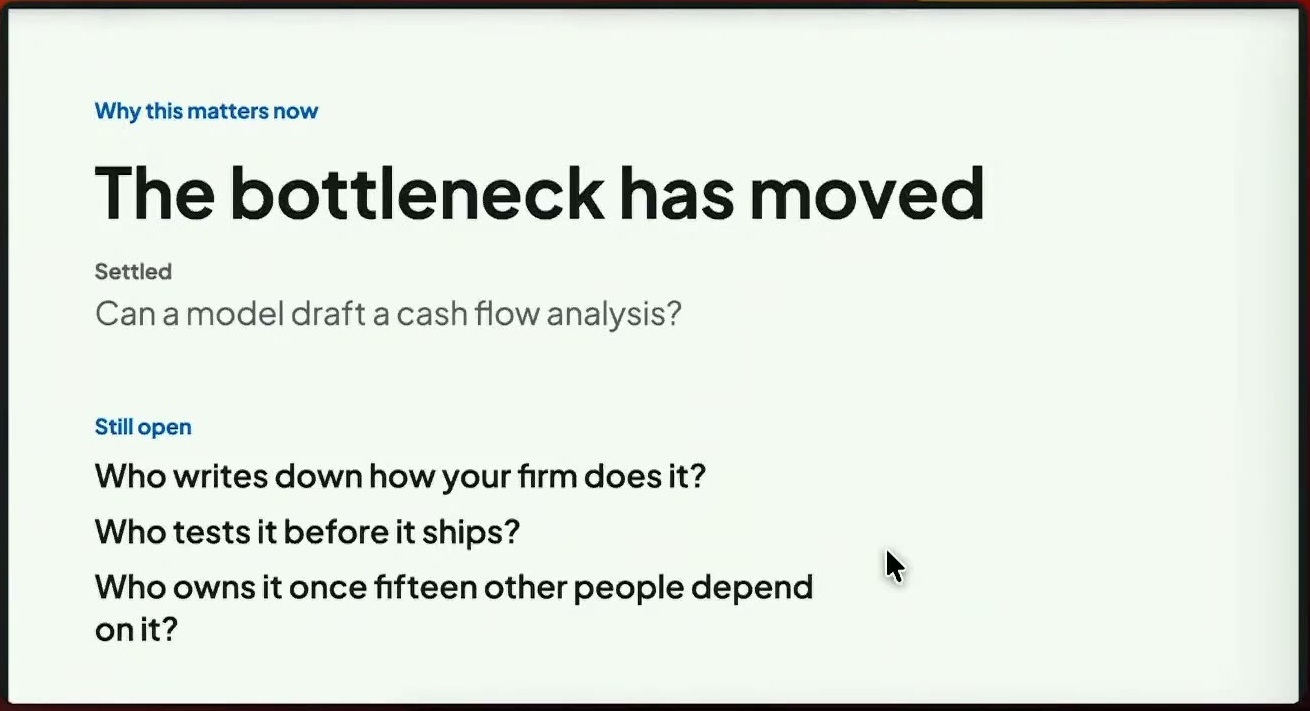
为什么这件事现在很重要?因为瓶颈已经转移了。模型能不能起草现金流分析,这个问题已经有答案了:它能。尚未解决的是:谁来写清楚你们公司的做法?发布前由谁测试?一旦有 15 个人依赖它,由谁负责?如果有人要求你把智能体推广到工程团队之外,你很快就会遇到这些确切的问题。目前这方面的实地数据不多,但这就是我们在 Range 的做法。演讲到此结束。非常感谢大家聆听。
So why does this matter right now? Because the bottleneck has moved. Whether a model can draft a cash flow analysis, that question's already been settled. It can. What's not settled, who writes down how your firm does it? Who tests it before it ships? Who owns it once 15 other people depend on it? If you're being asked to push agents out past the engineering org, you're about to hit these exact questions. There isn't much field data on this yet, but this is how we've done it here at Range. So that's it. Thank you so much for listening to this talk.
我是 Range 的 Matt Ragone,你可以通过 mattatrange.com 联系我。祝大家今天愉快。
I'm Matt Ragone from Range, and you can reach me at mattatrange.com. Have a great day.