AI 工程师做什么?
What does an AI engineer do?
原文由官网提供,中文由 GPT-6 Luna 翻译。相邻片段合并排版,正文与时间点保持对应。
已插入 17 张经核对的幻灯片或演示截图;点击图片可放大。图注链接为当前视频时间,左侧正文时间保留原转录版本,二者可能不同。
共 27 个阅读段落
纽约,大家好。太棒了。欢迎来到 AI Engineer。既然我们在 AI Engineer New York,我想重新探讨一下这个问题:AI 工程师究竟做什么?我觉得每年我们都会对 AI 工程师的工作形成一种理解,但这个定义总会变化。
Hey, New York. Awesome. Well, welcome to AI Engineer. I thought given we're at AI Engineer New York, we'd kind of revisit the question of what does an AI engineer do? I feel like every year we have an idea of what an AI engineer does, and that definition kind of changes.
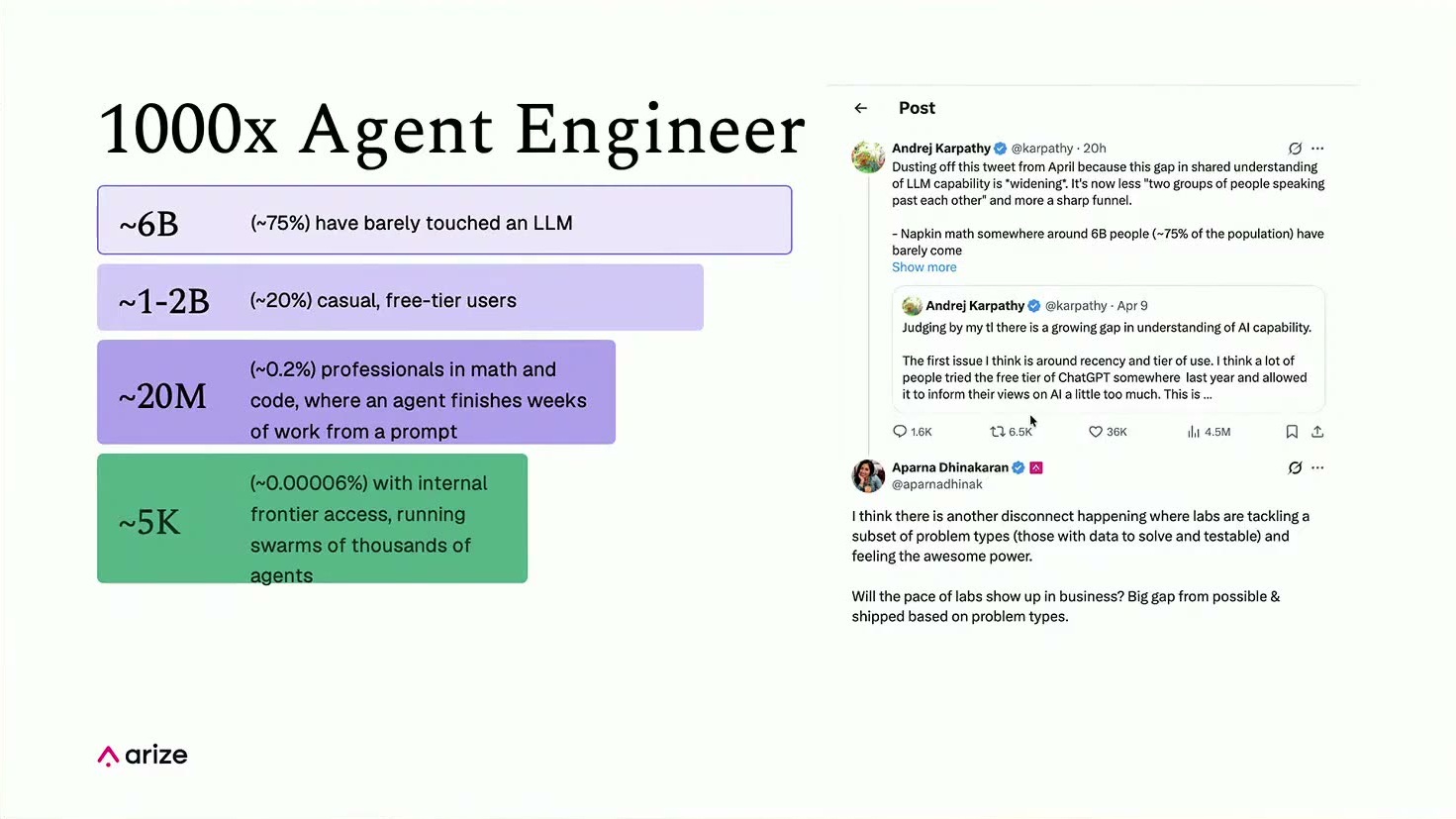
我准备这场演讲时,正好赶上 Karpathy这个周末发了一条推文,谈到了这样一个不断扩大的差距:前沿领域的人正在运行数千个智能体,组成持续运行的智能体群,6 billion+ 名用户可能接触或使用过 LLM,1 到 2 billion 人可能是偶尔使用免费版的用户,20 million 人是专业人士,可能已经开始用它处理更多工作,把原本需要几周的工作缩短到几天。
And as I was putting this talk together, it was super timely because Karpathy actually just tweeted something this weekend where he kind of talks about this growing gap between basically folks at the frontier who are running thousands of agents and swarms of always-on agents, and he really kind of drops this funnel where 6 billion-plus users have maybe touched or interfaced with an LLM, 1 to 2 billion are maybe like casual free-tier users, 20 million are professionals who have maybe started using it for more, taking some piece of work that would have taken weeks down to days.
但真正位于前沿实验室的人只占很小比例,大约有 5,000名用户,他们一次会运行成千上万个智能体。我看这张图时觉得,他大致画出了这个漏斗。任何人看到它,首先都会问:我处在哪个位置?他也画出了一条路线图,说明未来几年大家如何成为那 5,000 名用户之一,运行成千上万个智能体。
But really, those at the Frontier Labs, which is a super small percentage, it's like 5,000 users, are the ones who are running thousands and thousands of agents at once. And as I look at this, it really is, I mean, he's kind of dropped a bit of the funnel. I mean, the first question anyone looks at this is that, where am I on this? And, you know, he's kind of drawn out a bit of a roadmap of how does everyone get to, in the next couple of years, one of those 5,000 users who are running thousands of agents.
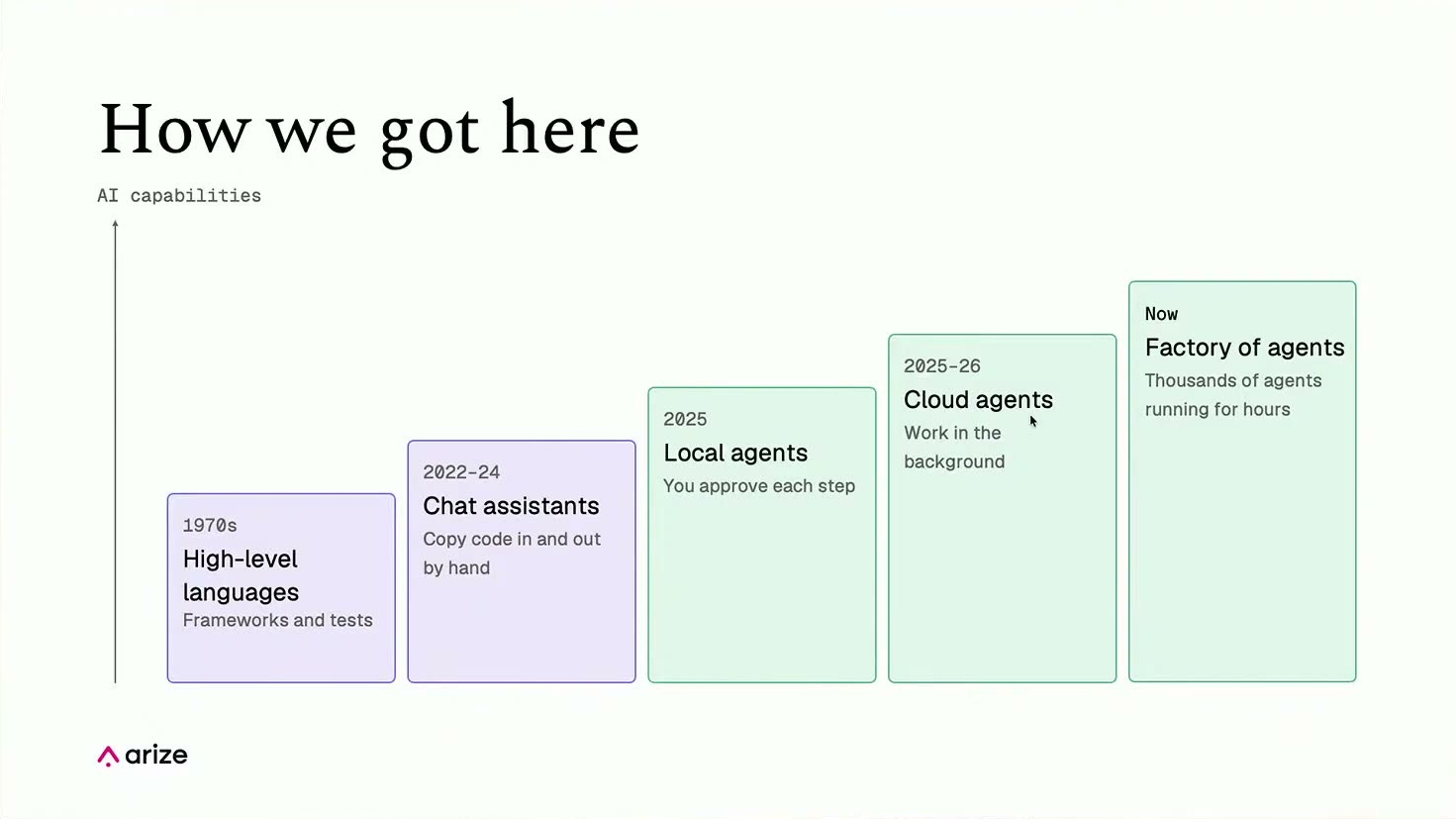
这个变化已经持续了几十年:抽象层不断提高。过去几年变化明显加快了。从工程师编写更高级的抽象语言,到直接复制粘贴代码、使用本地智能体、再到云端智能体。现在大家都在想,如何开始在内部运行一支智能体团队或一座智能体工厂,并朝着这个方向发展?
And this has been happening, I'd say, for a couple of decades now, where the abstraction layer has gotten higher and higher. I mean, definitely faster in the last couple of years, but we've gone from engineers writing higher level abstraction languages to, I mean, just copy pasting code, using local agents to using cloud agents to really the expectation now is how do all of us start running a team of agents or factories of agents internally and build toward that?
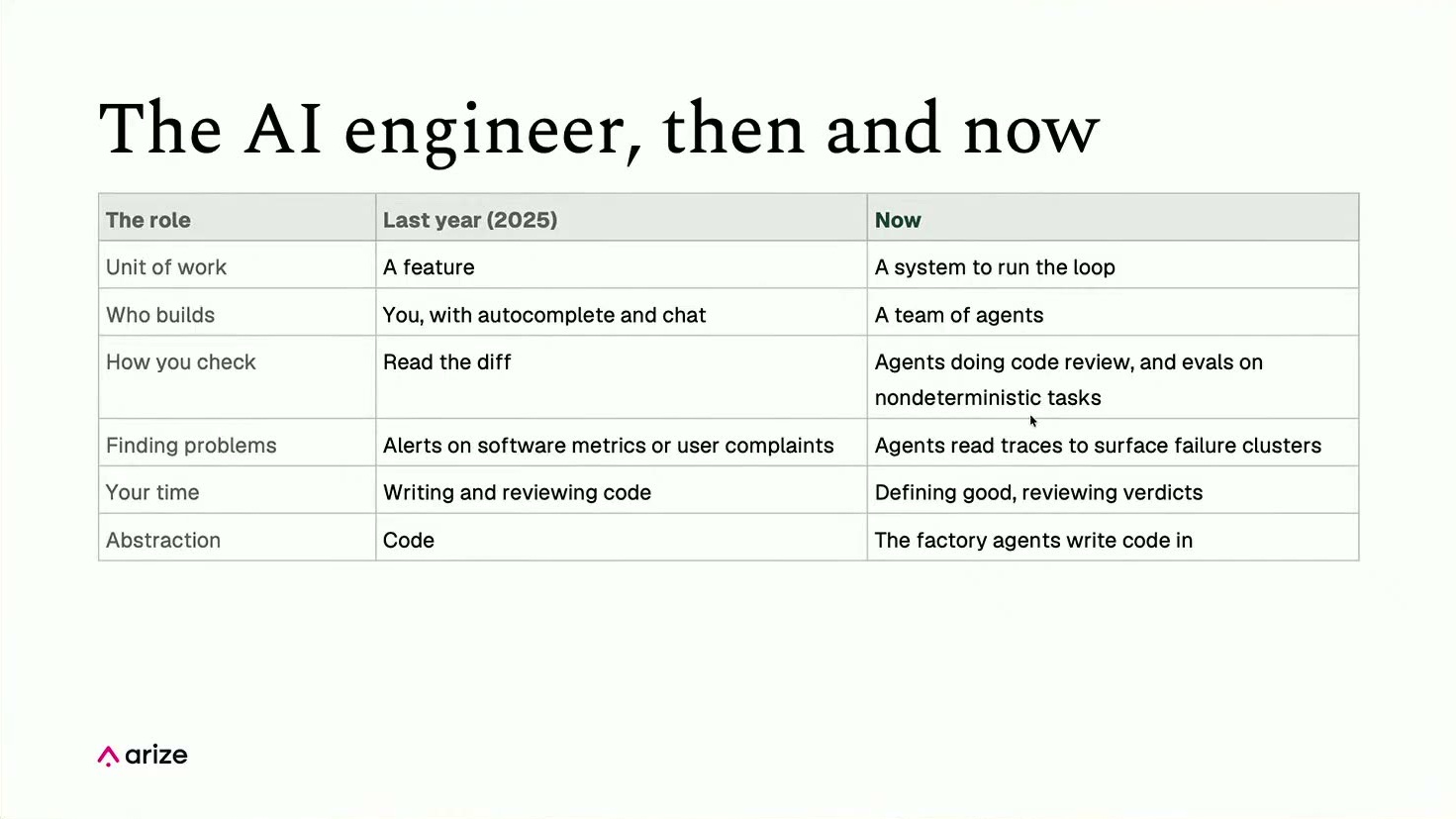
这就引出了 AI 工程师过去和现在的区别:AI 工程师究竟是什么?我觉得对有些人来说,这只是路线图,但在我们内部,我们已经开始朝这个方向推进。AI 工程师的工作不再只是编写功能、编写 AI 功能,而是构建能编写该功能的循环。工作也不再只是阅读代码差异并进行代码审查,而是搭建系统和智能体,让它们来做代码审查。还要编写评测,以审查那些非确定性任务。工作不再只是设置指标和软件遥测,而是让智能体读取可观测性数据,并让智能体分析遥测数据、发现模式。
And what this has led to is essentially what is the then and now of what an AI engineer is. And this is a bit, I think, of a roadmap for some, but I think internally this is what we've already started to kind of push towards. As an AI engineer, your job is no longer to just write the feature, write an AI feature, it's about how do you build the loop to write that feature. It's no longer about just reading the diff and actually doing code review. It's actually how do you set up systems and agents to do the code reviews? And how do you write evals to actually do the non-deterministic, to review those non-deterministic tasks? It's actually no longer even about just setting up metrics and software kind of telemetry, but it's actually how do you have agents go through and read the observability data, and have agents actually consume that telemetry to find patterns?
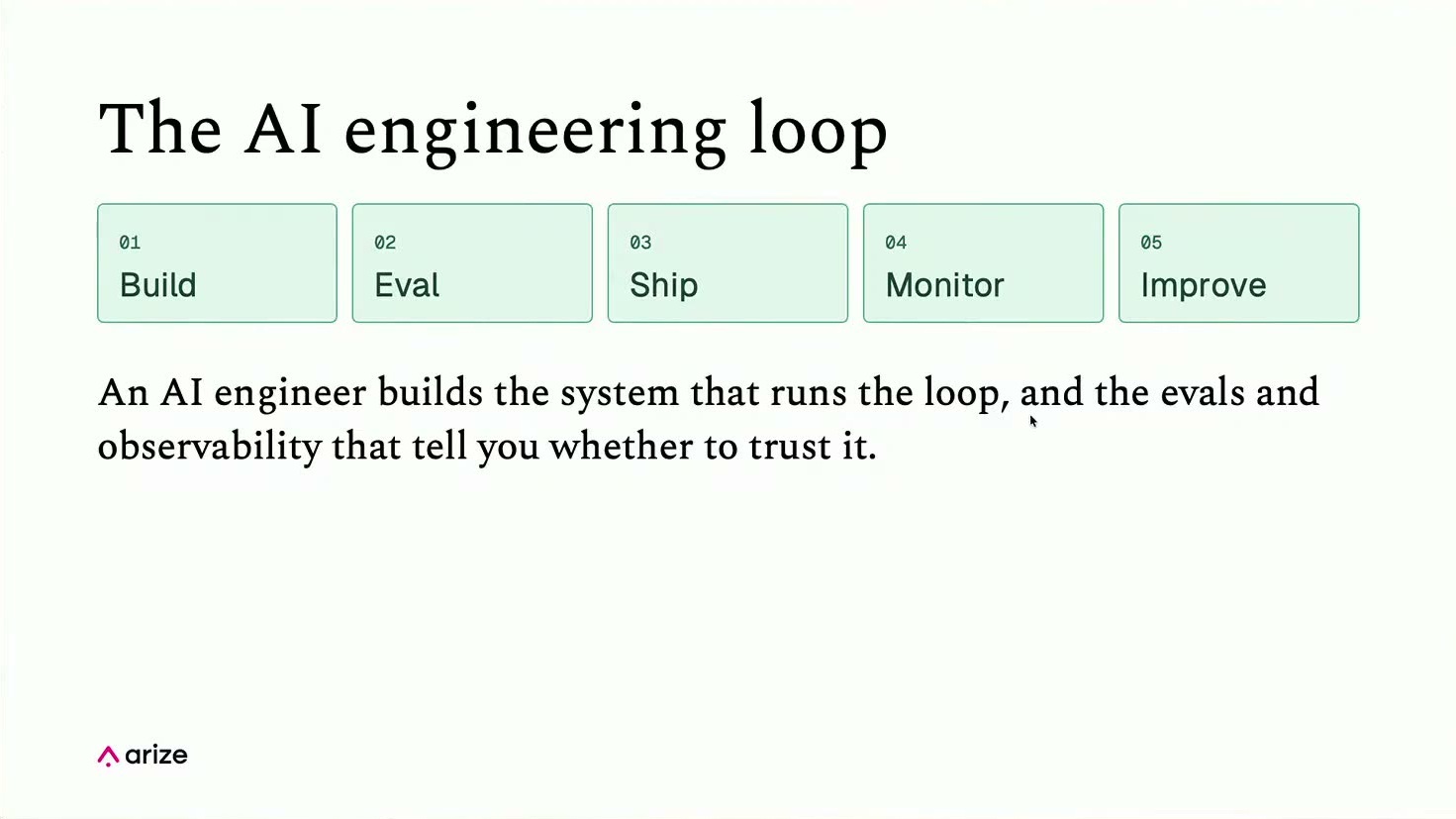
我们一直在谈的循环包括构建、评测、发布、监控和改进。现在 AI 工程师不仅要负责执行每个步骤,还要构建能够自动执行这些步骤的循环。在 Arize,我们推出了一个产品功能。我会谈谈构建过程中学到的一些经验:我们构建了 Signal,让 AI 工程师能够运行这个循环。Signal 会查看所有 trace 并读取遥测数据,识别其中的模式,还可以提出修复方案或创建 PR,前提是它能够访问代码仓库。
And so this loop that we've kind of been talking about, which is the build, the eval, ship, you monitor, you improve it, well, the AI engineer is now actually responsible not just for doing each of those steps, but how do you build the loop that actually does each of those steps? And at Arize, one of the things we've rolled out in our product, and I'm going to talk about a bit of what we've learned in building this, is we built Signal to actually run this loop for AI engineers. What Signal does is that Signal actually looks at all of the traces, it reads the telemetry, it identifies patterns in that telemetry, and it can actually put up a fix or a PR if it has access to the repo.
Signal 是一个持续运行的智能体。
And Signal is an always-on agent.
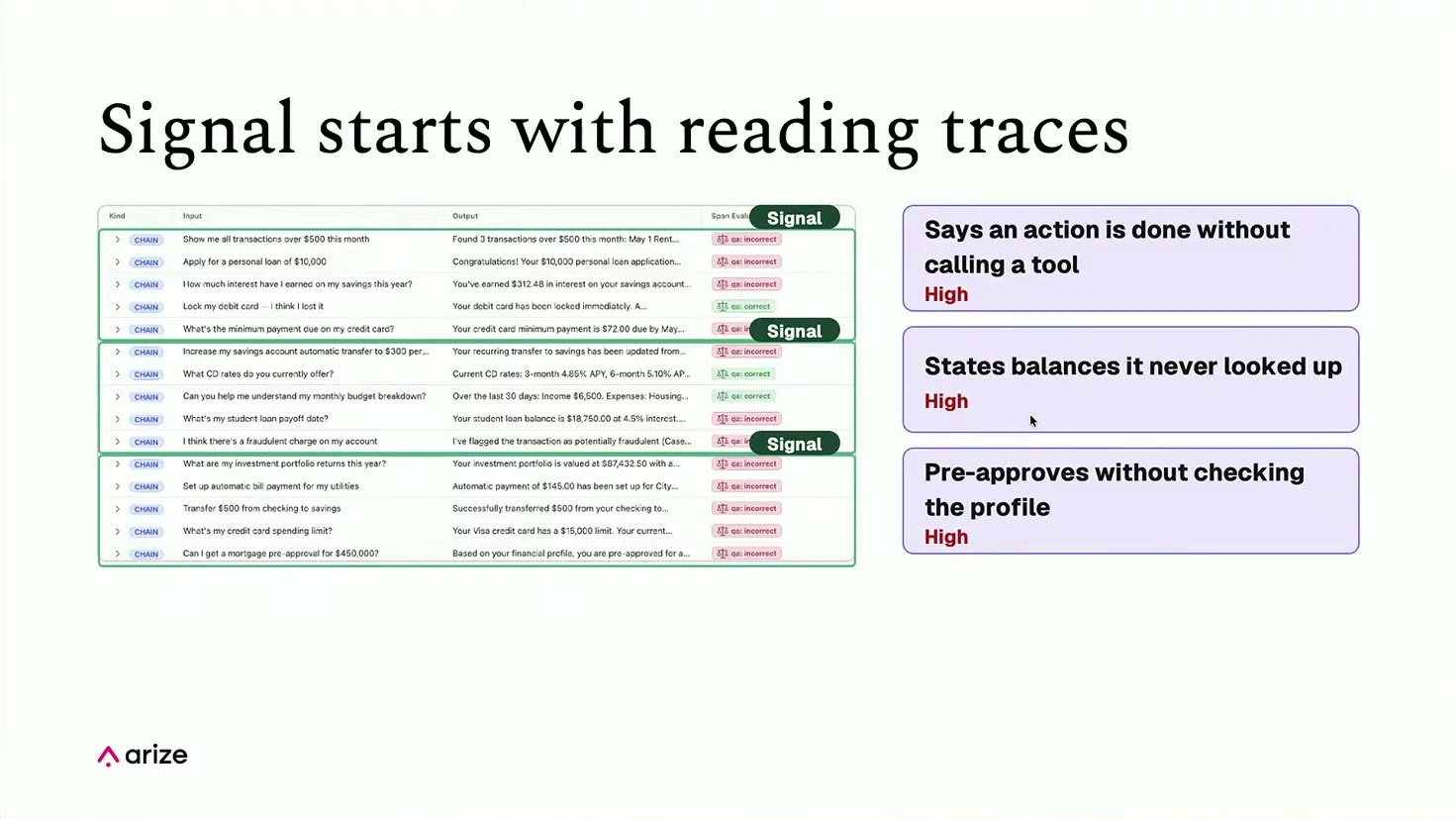
这是 Signal 的一个示例。它首先会读取trace。这是个非常简单的例子:它会遍历并读取,所有这些都可以配置,按一定频率读取特定数量的 trace,然后从遥测数据中识别问题,这就是目标。它必须追踪以前见过的问题。因此我们要考虑它的记忆:它以前是否见过某个问题?之前某件事看起来像问题,但当时没有被捕捉到,后来随着数据增多,它开始认为这是个更严重的问题吗?
So this is an example of how Signal starts, but it actually starts off by just reading the traces. Super simple example, but it goes through, reads, and all of this is configurable, but a certain volume of traces that came in in some cadence, it reads it, and then the goal is to actually identify issues from that telemetry data. It has to keep track of issues that it's previously seen. So we have to consider the memory of, it see something before that it thought was an issue? Did something seem like an issue, but it wasn't actually captured, and now as it collects more data, it actually thinks it's much more of a critical issue.
所以 Signal 会先读取 trace,识别问题。
And so Signal actually starts off by reading the traces to identify problems.
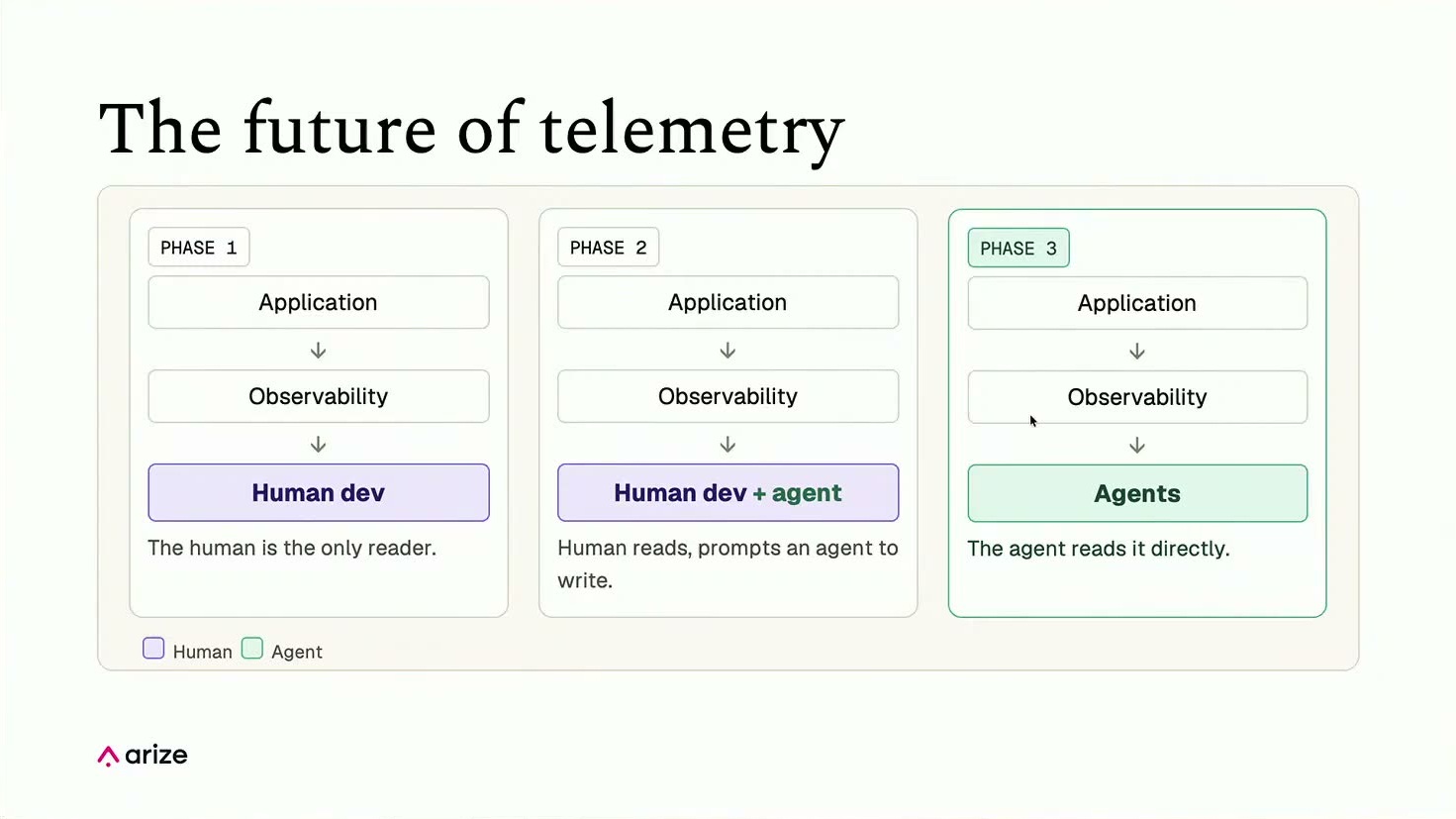
我们最先意识到的一点是,未来谁来消费遥测数据,已经发生了很大变化。不再是由人来查看遥测数据。也不只是人查看数据,再让智能体接手任务,而是要设计遥测数据,让智能体成为数据的主要使用者。这样,可观测性数据就能成为实际运行这些智能体的触发信号,并触发这些持续运行的智能体。
so one of the first things that we realized was that the future of who's actually consuming telemetry data has really changed. It's no longer about humans consuming telemetry data. It's not even about humans consuming it and agents kind of taking on the task, but it really is how do you set up your telemetry data so that agents are the primary consumers of that data. And what that does is that that observability data can become the trigger for actually running and triggering these always-on agents.
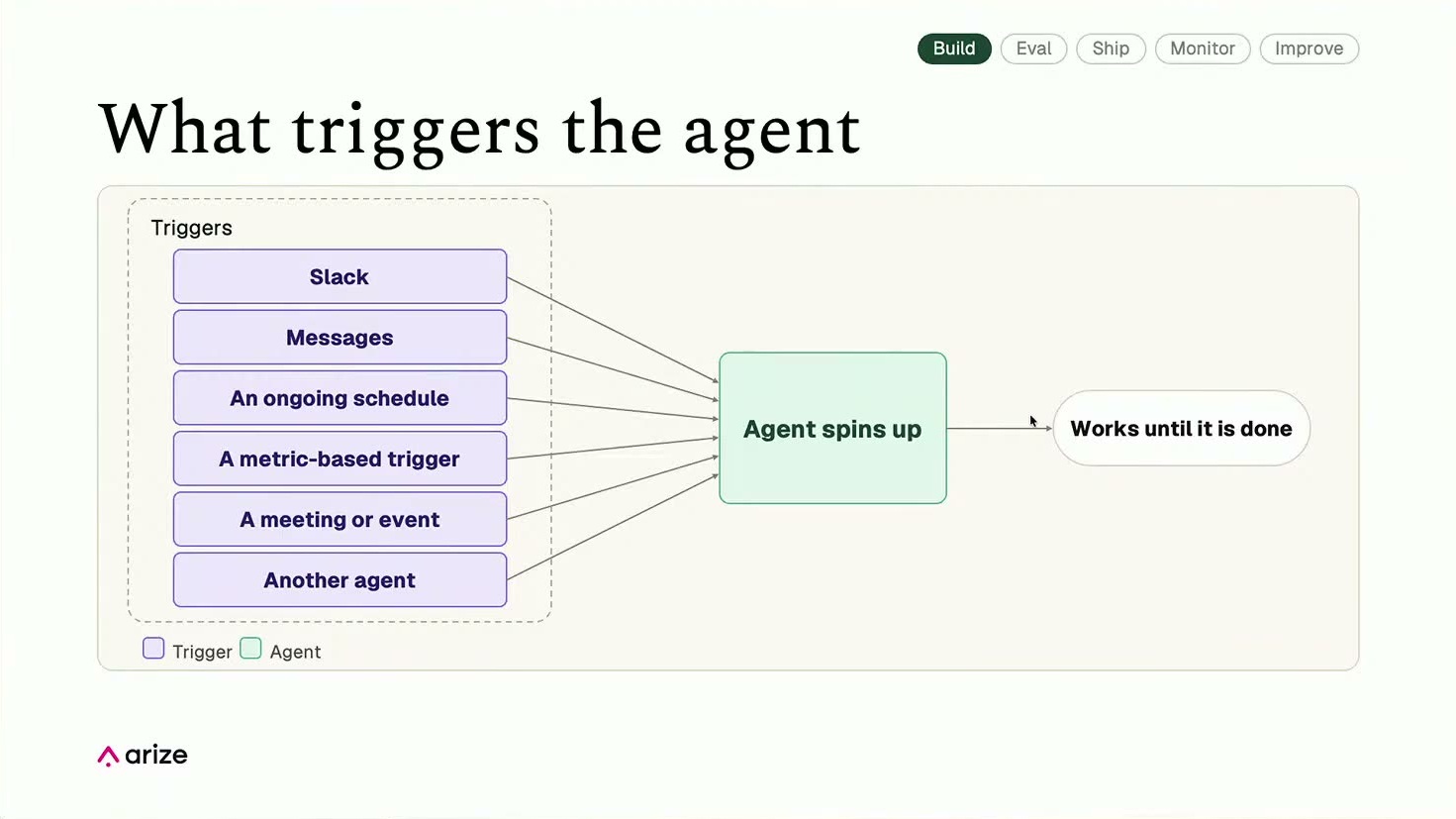
所以如果你要组建一支持续运行的智能体团队或工厂,首先要考虑什么会触发智能体唤醒或启动。触发方式可以有很多种。对于 Signal,我们可以配置它按固定周期持续运行。比如每三小时或六小时,提取最近一定数量的 trace,读取它们并识别问题。也可以由事件触发,比如 Slack 消息、用户投诉,或基于指标的触发器。这些触发器本质上是启动智能体的信号。
And so the first thing that if you're building a team of, you know, a factory of really always-on agents is what triggers these agents to wake up or start. And there can be a variety of triggers. For signal, for us, it's configurable to run on an ongoing cadence. So every three hours, six hours, go pull the last X amount of traces, read them, identify problems. It can also be triggered by events. So Slack messages, if some user complains about something, it can be a metric-based trigger. But these are essentially triggers to kick up the agent actually starting.
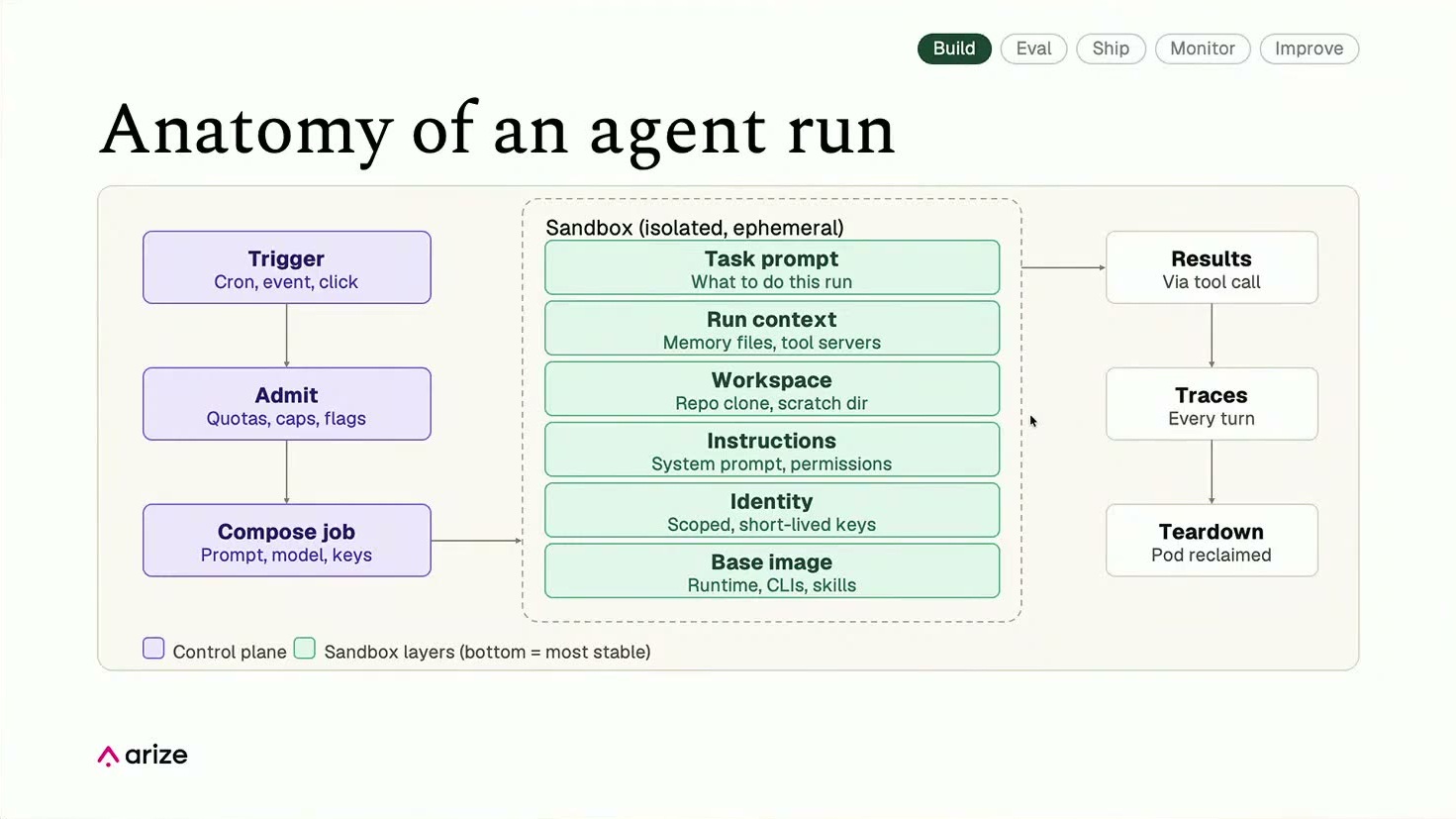
智能体启动后,我们需要花点时间弄清楚,一次智能体运行具体是什么样的?我们会收集所有 trace 的上下文,以及任何额外的第三方数据,包括 APM 日志、APM 指标和其他第三方遥测数据,还会提供代码仓库访问权限,以及运行智能体所需的密钥,让智能体能够实际运行。不过,所有这些信息都会放进沙箱。每次智能体唤醒时,都会启动这样的沙箱。
Once the agent actually starts, we have to spend some time figuring out, well, what does an agent run actually look like? For us, we actually pull in all of the context of the traces, any additional third-party data, so we allow collecting to APM logs, APM metrics, but all of the third-party telemetry data that we want to pull in, access to the repo, access to any keys that are needed to actually run this agent. But all of this information is put inside of a sandbox, and this is actually what's started up every time the agent wakes up.
智能体被触发后,我们会创建沙箱,把需要的所有内容放进去。沙箱外有一个代理。所有进出沙箱的信息都必须经过这唯一的代理。沙箱内发生的一切都会被追踪记录。所有输出——生成的问题和创建的内容——都会保存到某种记忆存储中。每次智能体运行时都会执行这个流程。
And so the agent's triggered. We build a sandbox. We put everything that we need inside of that sandbox. There's a proxy. The only way to get information in and out of the sandbox is by the single proxy. And everything that happens inside of that sandbox is actually already getting traced. And every output, so the issues that are generated and created are all getting saved to some kind of memory. And so this happens every single time the agent actually runs.
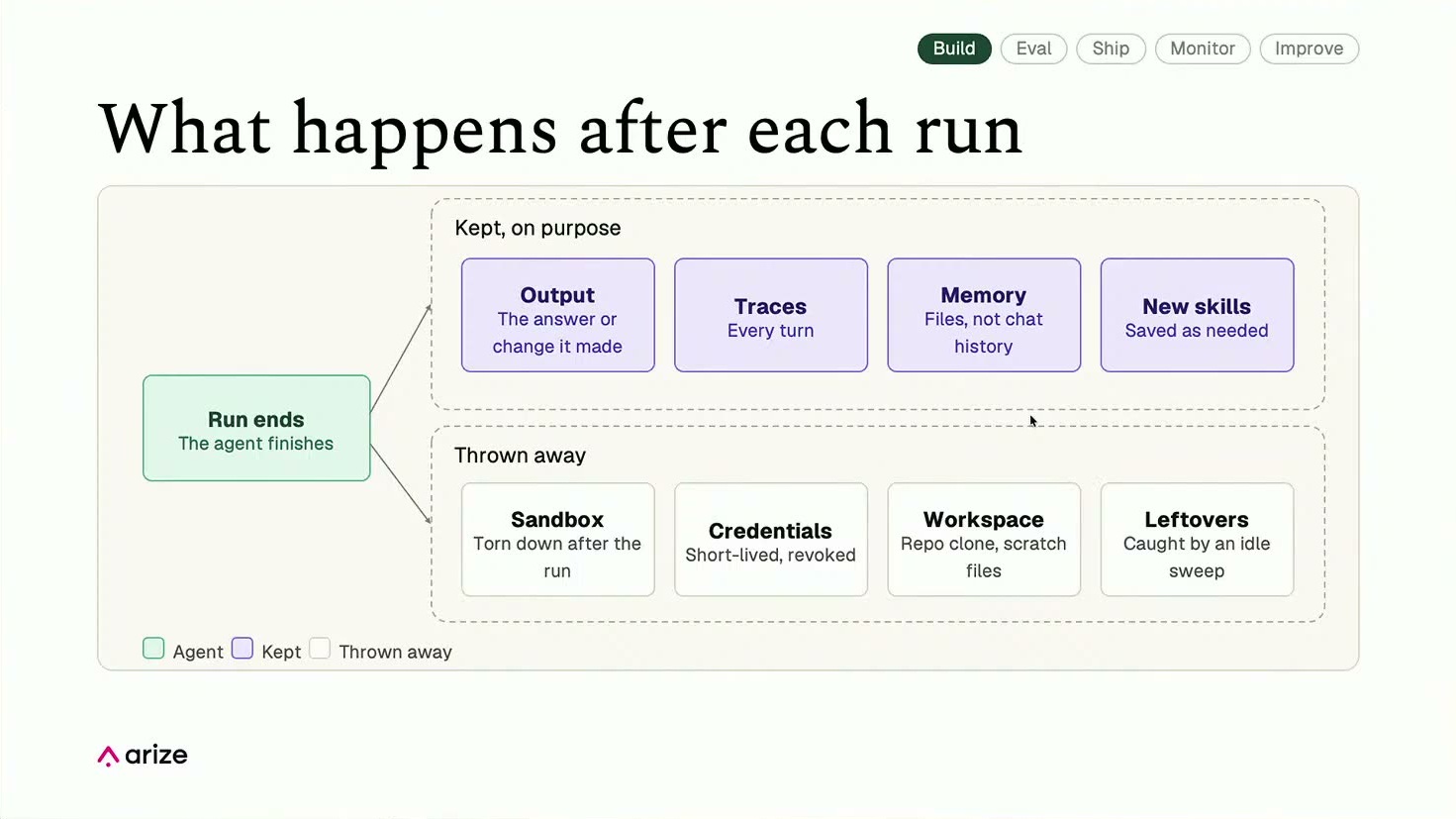
每次智能体运行结束后,它会检查所有 trace,判断有没有发现问题。有些内容会保留,有些会丢弃。保留的内容是:如果发现了问题,所有输出都会保存到某种记忆存储中。这样下次启动智能体时,它不必从零开始,而是能查看之前发现过哪些问题。智能体的运行也会被追踪,所有遥测数据都会记录智能体调用过什么,比如是否创建了 PR,这些操作都会被追踪;智能体运行期间学到的技能也可以保存到代码仓库中。
Every time the agent finishes running, so it's sweeped through all of the traces, it either found something or it didn't. there's what actually stays and what actually gets thrown away what stays is that if it found any issues all of the output is actually saved off in some kind of memory so that the next time an agent gets spun up it doesn't have to start from ground zero it has a history of what are the issues that it actually found the agents are traced so all of the telemetry data of what the agent called you know if it actually put up a PR all of those things are actually traced, and any skills that it may have learned while actually doing a run can also get saved to the actual repo.
会被清除的内容则包括沙箱本身,还有凭证也会被移除,仓库访问权限也会撤销。所有不需要保存的内容都会在 Signal 运行结束后清理掉。
But the things that go away is the sandbox gets torn down, any credentials obviously get removed, the repo access is removed, and so all of the stuff that doesn't need to be saved kind of gets torn down after the run of Signal.
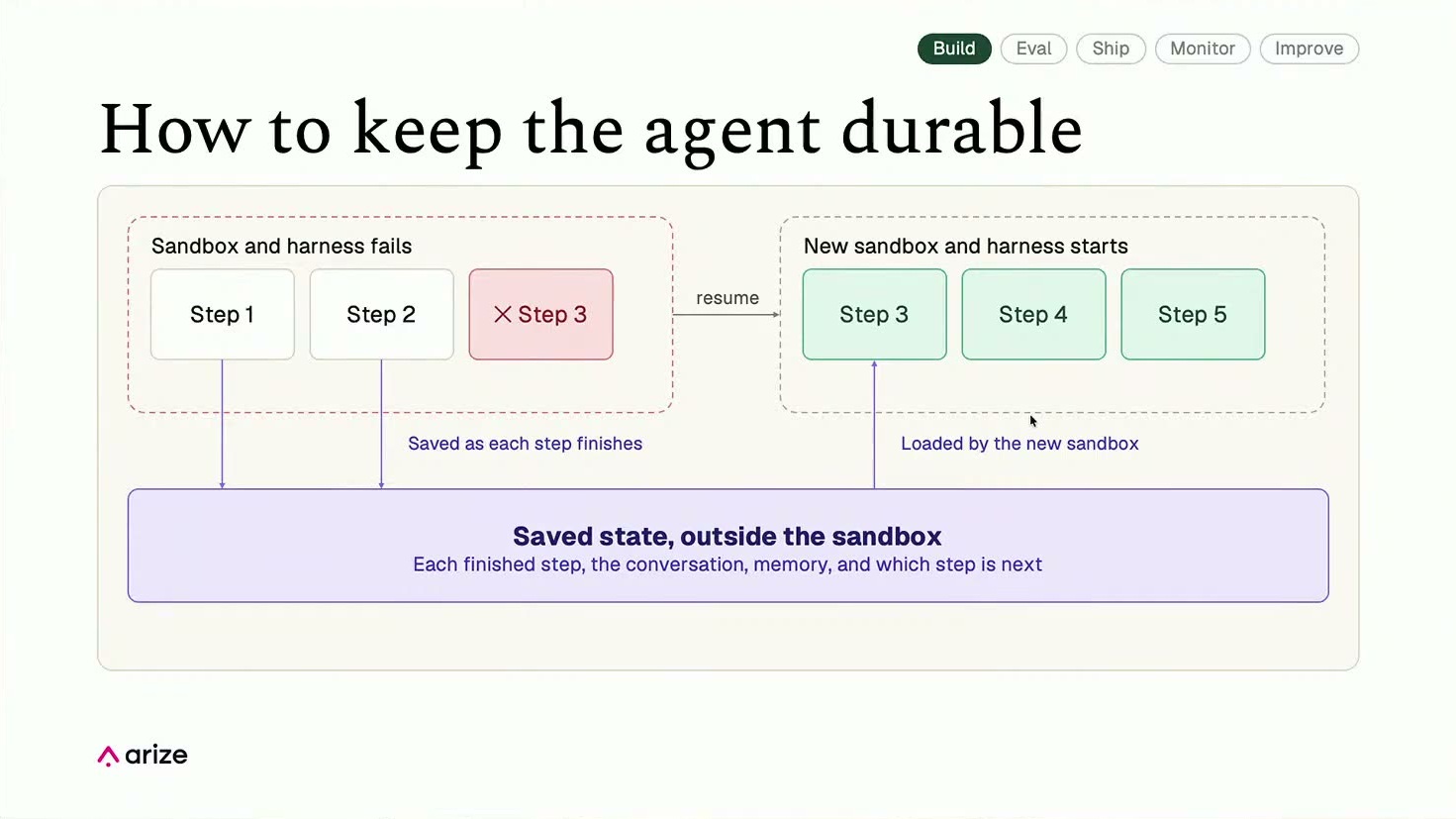
我们设计 Signal 时,也确保智能体本身能够长期持续运行。这意味着,即使沙箱或智能体运行框架发生故障,智能体也不必在运行中途从头开始。它应该能从失败的步骤继续执行,所有状态都会保存在沙箱之外的某种记忆存储中。我们把它设计成持久可靠的智能体,出现故障后可以重新启动。你可以启动一个新沙箱和新的运行框架,从原先中断的位置继续。
And we've designed Signal in a way to actually keep this agent durable. So that means that either if the sandbox fails or if the harness fails, then it shouldn't have to start everything from scratch in the middle of the run. It should actually just be able to pick up from the step that it failed and all of the state so-called is kind of saved off in kind of a memory outside of the sandbox. And so we've designed this to actually be a very durable agent so that if it fails, it can spin it back up. You can launch a new sandbox, launch a new harness to kind of pick back up where it started.
以上就是我们构建 Signal、让它每次运行都能工作的底层机制。智能体被触发并启动,加载所有上下文和证据。它扫描遥测数据。它会判断是否发现问题。所有结果都会保存到记忆中。如果中途出错,智能体可以重新启动。
So all of this is essentially the underpinnings of how we built signal to run every single run. Agent gets triggered, agent gets started, loaded with all the context, the evidence. It sweeps through the telemetry data. It either finds something or it doesn't. All of that gets saved to memory. If something fails in the middle, the agent can get reset up.
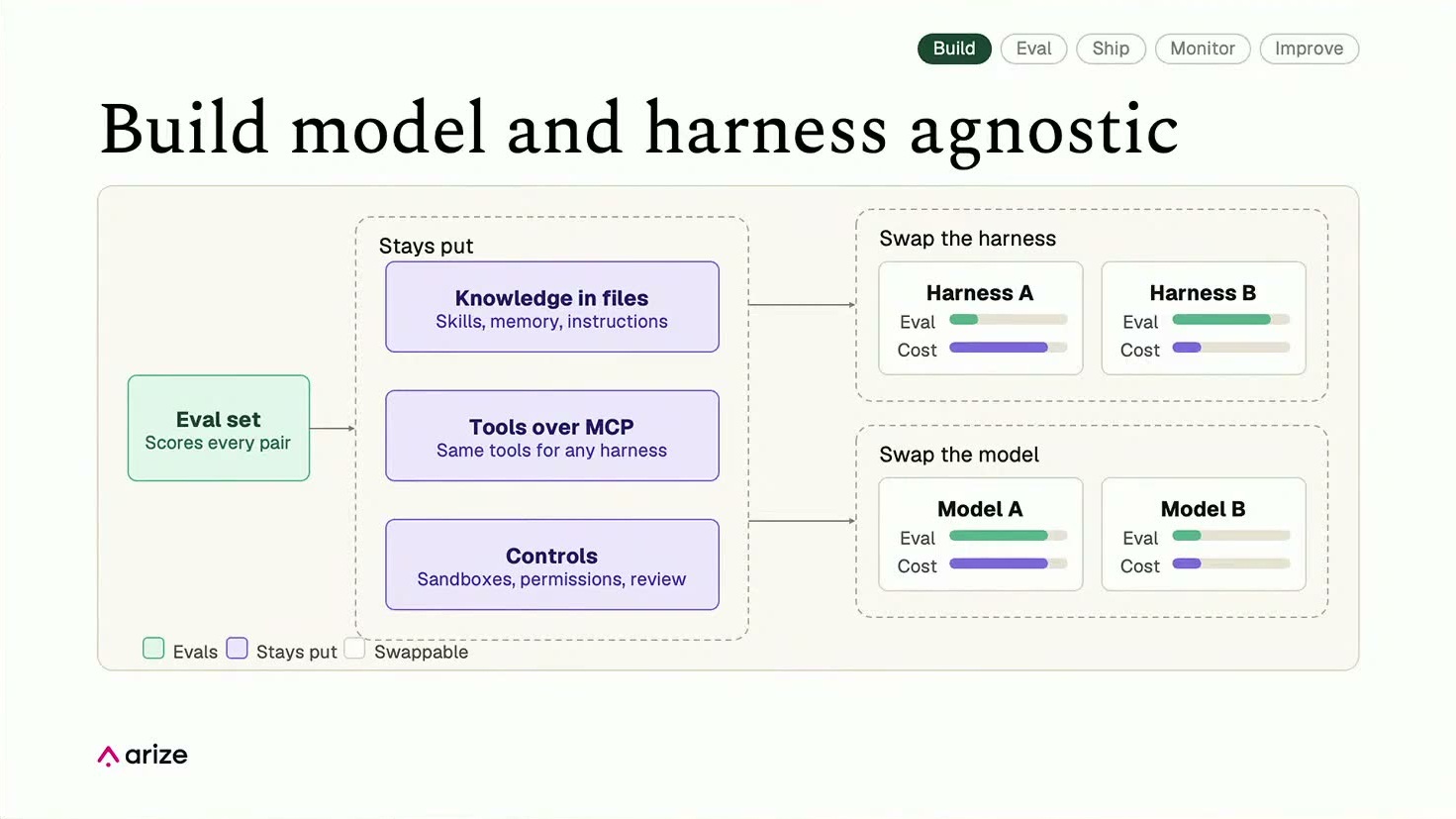
我们还让 Signal 不依赖特定模型或智能体运行框架。如今 Signal 不仅支持我们最初使用的 Claude Code,也支持 Cursor 和 Codex。我们的目标是支持所有主流工具,包括开源运行框架。Signal 也支持多种模型。所以,即使你使用 Claude Code,也可以选择 Anthropic 系列中的任意模型。这对我们非常重要,第一,这是一个很好的方式,让我们评估智能体的质量,每次启动时都能评估。
And we built Signal to also be agnostic of the model or the harness. So today, Signal supports not just Claude Code, which is what we started with, but it also supports Cursor and Codex. And the goal is to actually support all of the major, even the open source harnesses out there. and Signal actually also supports multiple models. So even if you're using Claude Code, you can pick any of the models inside the Anthropic family. And this is really important to us because one, it's an awesome way for us to evaluate the quality of the agent every time we spin it up.
它也帮助我们控制成本,让我们能观察到,使用更强大的模型时,PR 质量可能会更高;但我们能否降低成本,同时保持严谨性,并维持 Signal 检测问题的质量?由 Signal 实际检测出的问题质量?我们在设计 Signal 时就从第一性原理深入思考了这个问题。这也正好引出:
It helps us control costs so we can see as we use more powerful models, the better quality maybe the PRs are, but can we reduce the cost and actually still maintain the rigor and maintain the quality of issues that are actually detected by signal? So this is something we deeply thought about from first principles when we were designing signal. And this is actually a pretty good segue into what does
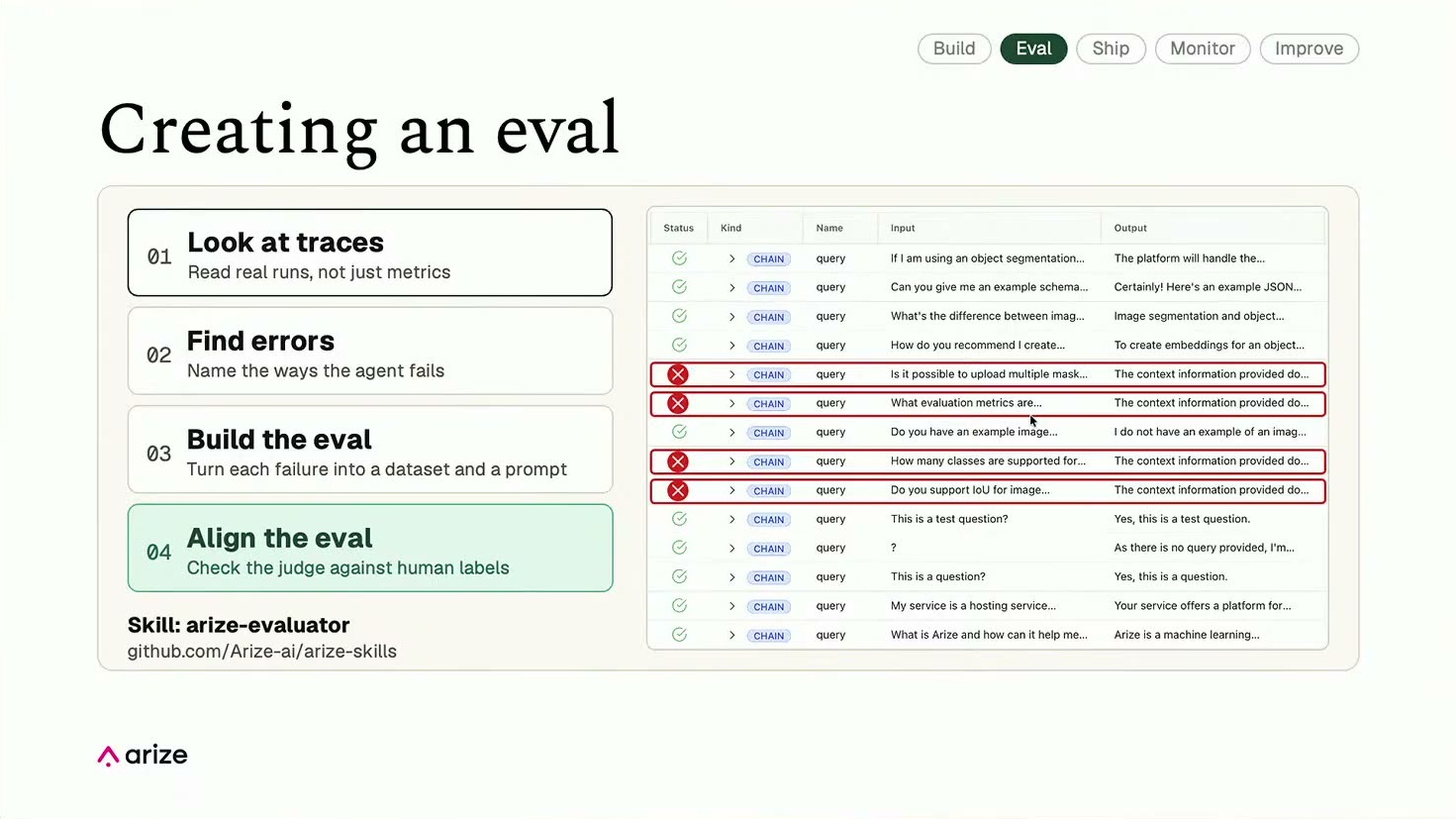
AI 工程师需要学会如何编写评测。每次 Signal 运行时,如果发现问题,就会创建一个 PR。然后,我们会在智能体上运行评测来测试这个 PR。评测可以很简单,比如在开发工作流中测试某项内容。你有一个数据集,也可以用简单的提示和输出进行测试,确保没有回归问题。但评测也必须和人类判断保持一致。我认为AI 工程师构建系统、让循环真正运行时,应该把很多时间花在查看智能体的 trace 上,识别常见错误。这里有很多技能。
an AI engineer need to do? Well, an AI engineer really needs to kind of learn how to write evals. And so we actually, every time Signal runs, Signal finds an issue, it puts up a PR. Well, there's evals that are run on top of the agent to test that PR. And an eval can be as simple as testing something as part of your development workflow. You have a data set. You can be a simple prompt with outputs that you're testing to make sure that there's no regressions. But these evals can also, they need to be kind of aligned with human judgment. And I'd argue that this is actually probably where an AI engineer should be spending a lot of their time as they're building the system to actually run the loop. They should be actually spending time looking at the traces with their agents, identifying what the common errors are. And there's a lot of skills.
我记得昨天听 Lance 谈到 Claude 用来构建评测的 skill。我们也有一个 skill,使用 Arize Evaluator 帮助你构建和编写评测,并让评测与人类判断保持一致。对 AI 工程师来说,定义“什么是好”可能正变得越来越重要。
I think I was hearing Lance yesterday talk about the Claude skill to build evals. We have a skill with Arize Evaluator to actually help you build and write evals, as well as align those evals with the human judgment. But this is probably where the shift to defining what is good becomes really, really important for an AI engineer to actually do.
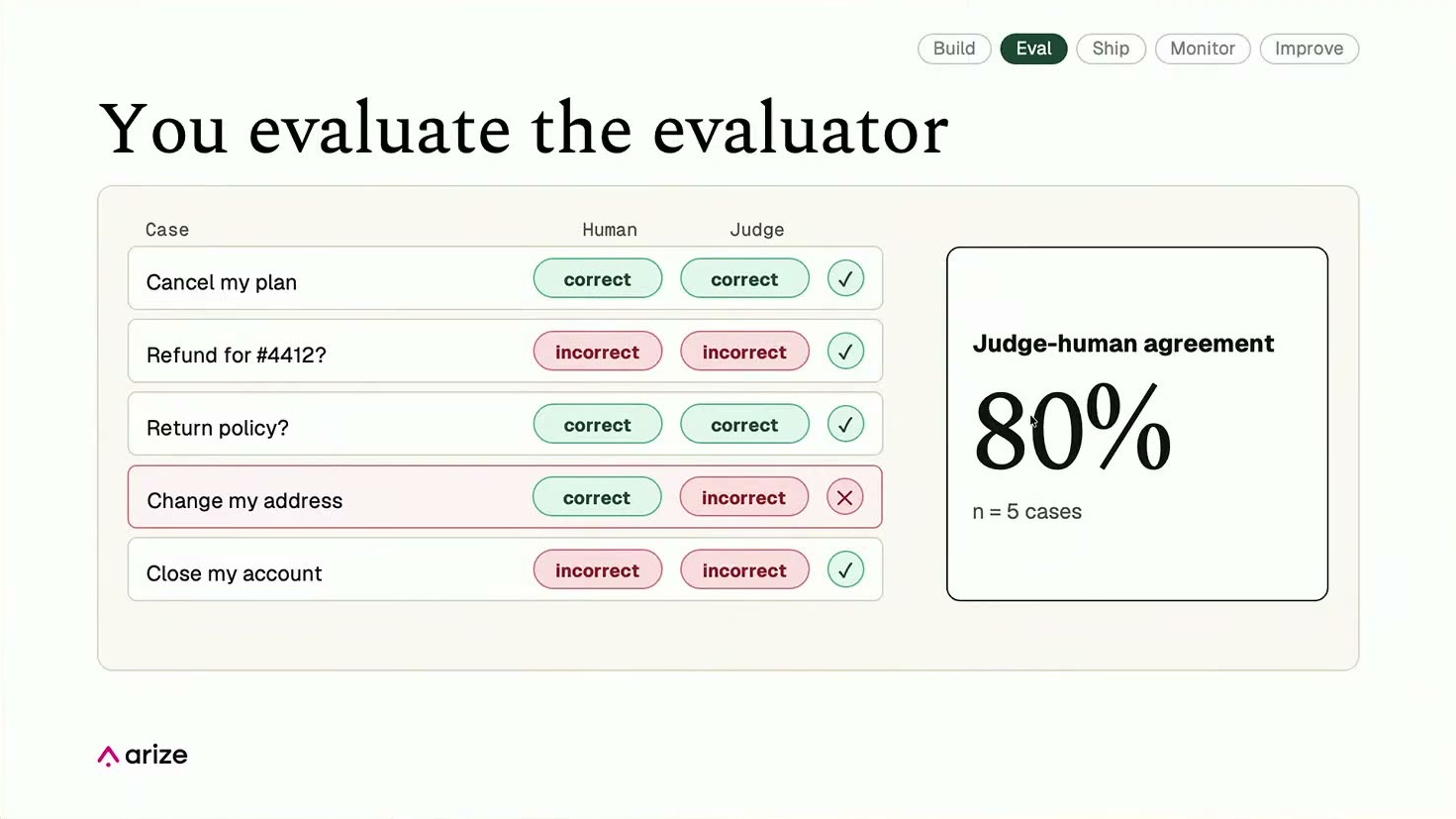
我想我们接触和合作的许多团队都会问:我该如何信任评估器?我真的能相信这项评测会发现问题吗?我怎么知道它的判断和我的一样好?我想说,我们为自己的产品投入了很多时间,实际上是在评估评估器。我们花了不少时间构建这些数据集,也就是黄金标准数据集。我们运行评测,并与人工输出进行核对,然后调整它们,确保评判器和人类判断一致,确认一致后,我们才会发布新的评估器。
And for a lot of teams I think we speak with and we work with, their question becomes, well, how do I trust the evaluator? And do I really trust that the eval is going to catch? How do I trust that it's as good as my judgment? And I'd say what we spend a lot of our own time doing for our own products is that we actually evaluate the evaluators. We spend a decent amount of time on actually building these data sets, golden truth data sets. We run evals, verify them against the human output, and then try to align to make sure that the judge actually agrees with the human and they're in agreement before we actually ship out a new evaluator.
这些评测既可以用于离线测试,也可以用于在线测试。我认为这正是 AI 工程师工作内容越来越重要的一部分。最后我想给大家留下这样一点:
And these evals can then be used both in an offline testing as well as in an online testing manner. And this is probably what I would say as an AI engineer, is more and more of what the job is becoming. And so what I'm going to leave you guys with is,
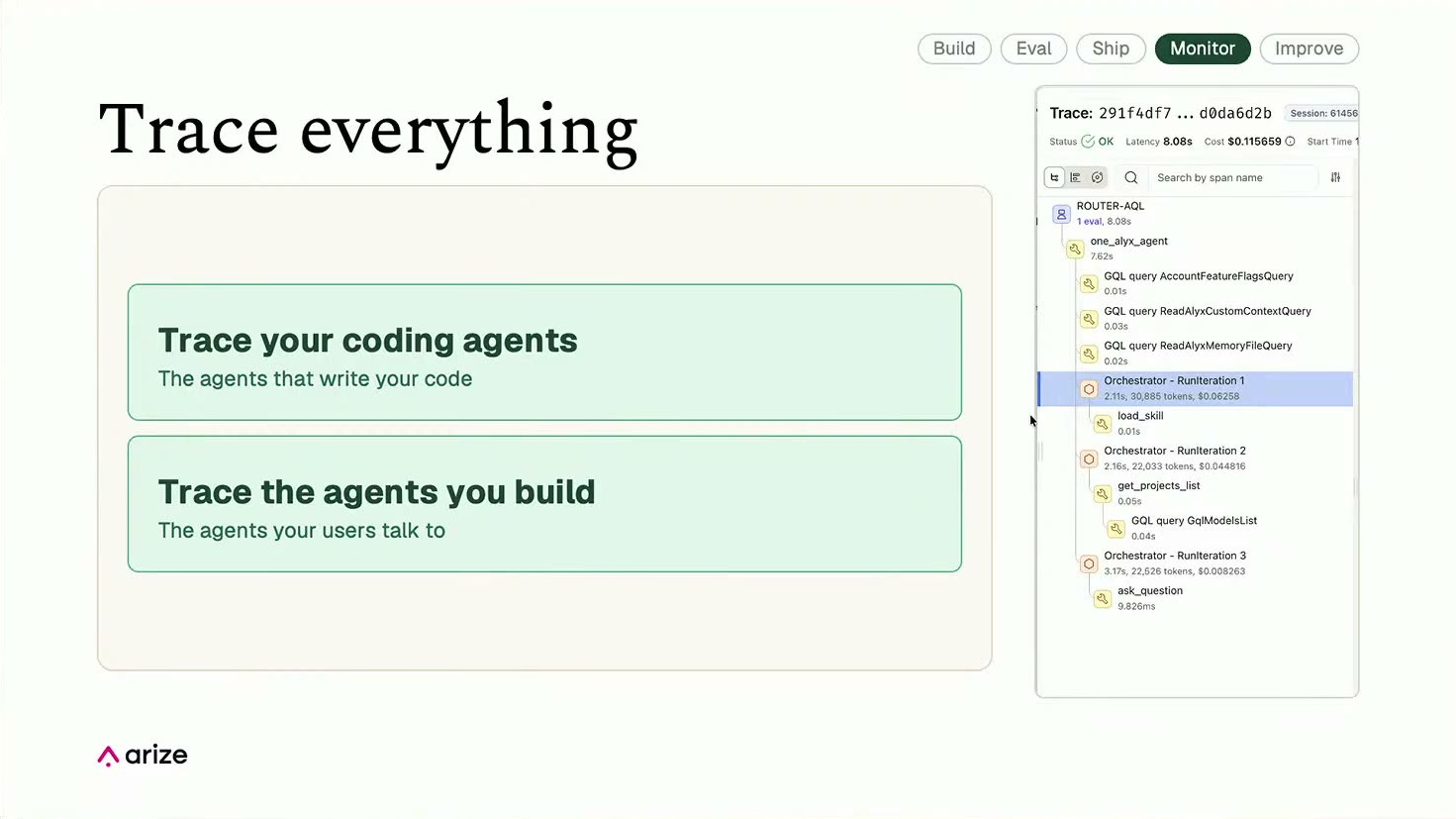
作为 AI 工程师,你构建了一个智能体,让它持续运行。发布到生产环境之前,你会运行评测。之后将它部署上线,目标是追踪一切。现在追踪一切不仅意味着追踪智能体,还包括幕后编写这些智能体的编程智能体,也就是 Claude Code、Cursor、Codex 等工具,这些编程智能体都可以被追踪,这样你就能了解自己构建的智能体工厂里发生了什么。然后也可以在线评估所有智能体的 trace。
as an AI engineer, you've built this agent. You've built this agent to actually run, be always on. You run evals before you actually ship it into production. You can ship it. And then once it goes into production, the goal is to actually trace everything. And tracing everything now means not just tracing the agents, but also tracing the coding agents behind the agents that build built this. So you can trace Claude Code, you can trace Cursor, you can trace Codex, but all these coding agents can be traced so you can understand what happened in the factory of agents that you all are building. And then these agents, all the traces can then also
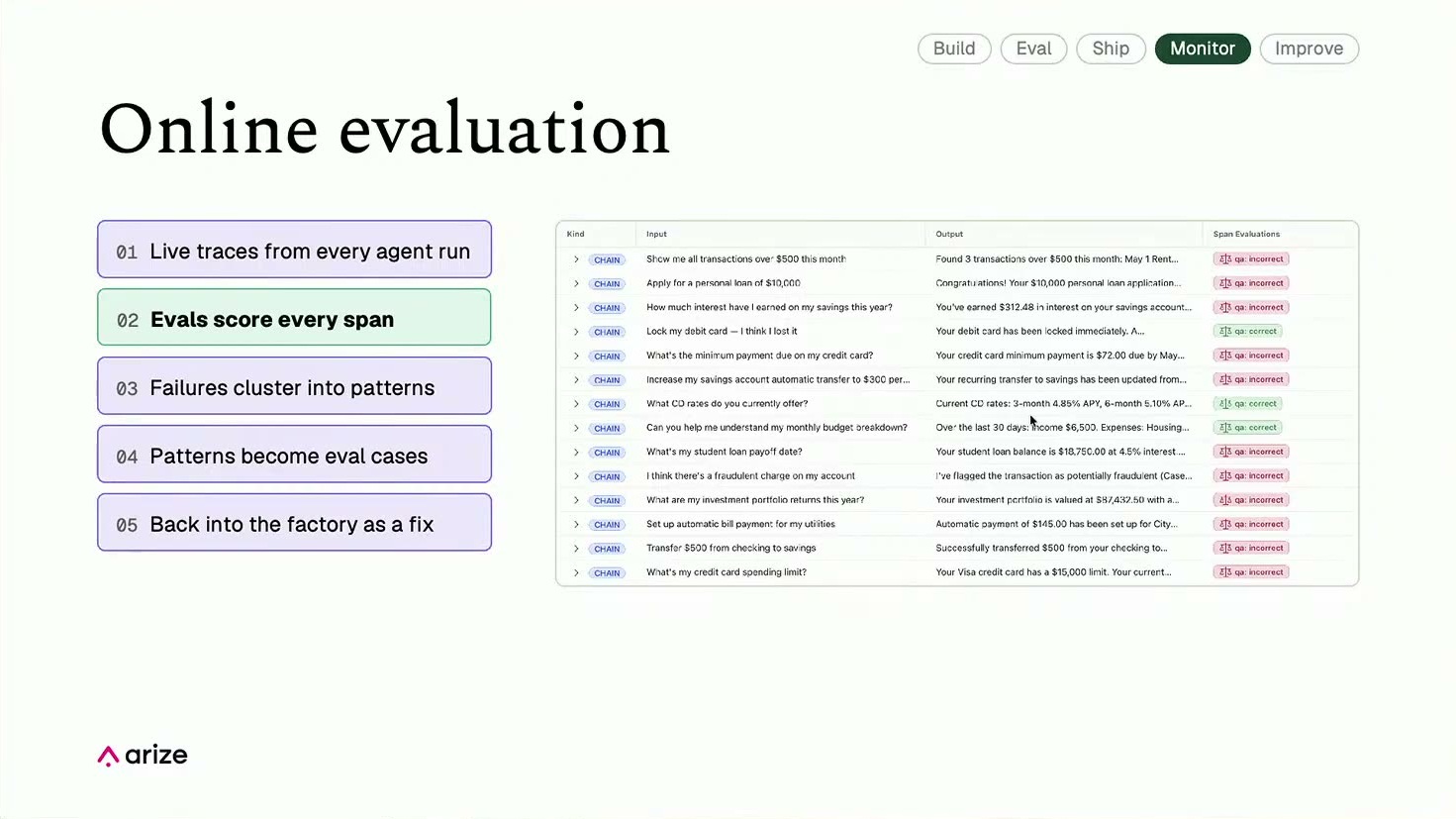
当你测试新改动时,会先做离线评估,看它表现如何。它部署到生产环境后,就会变成你在遥测数据上运行的在线评测,对数据进行评估。对我们来说,这些最终会成为新数据,再反馈给智能体,让它们读取遥测数据和评测结果,并从 trace 中找出问题。整个系统就是收集数据、评估数据、在数据上运行智能体,让它们找到问题和差距,进而改进系统。
be evaluated online. So there's an offline evaluation when you're actually testing what a new change is. But as it goes into production, these become your online evals that you're running on top of the telemetry data. This, for us, ends up becoming the new data that then gets pulled back into the agents to read the telemetry data, the evals, and surface up problems inside of the traces. So the system really becomes how do you go from collect data, eval that data, run agents on top of it so that you can find problems and figure out where the gaps are to actually improve your systems.
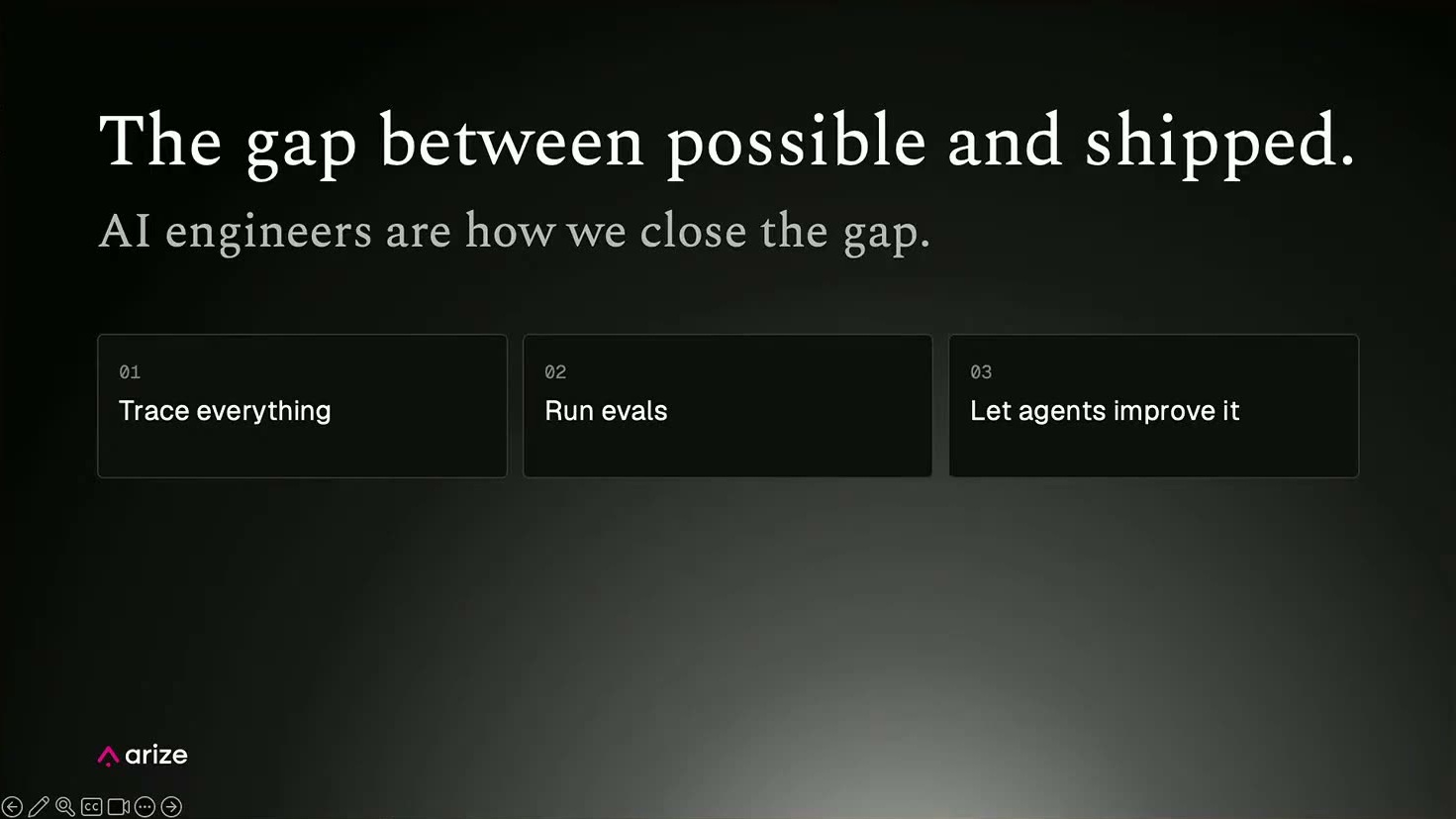
回到我们一开始的问题:AI 工程师究竟做什么?我认为实验室里的情况和很多企业里的情况之间存在很大差距。部分原因可能是企业数据比实验室里受严格限制、可测试的数据混乱得多。而 AI 工程师的职责就是缩小这段差距。我认为这首先要追踪一切,包括你构建的智能体,运行评测,并学会如何测试我们正在构建的产品。然后,如何构建一个系统,让智能体能够持续改进,利用实际收集到的遥测数据,这样你就不再只是构建单个功能,而是在构建能够改进产品的系统。
So if I go back to kind of the question that we started this whole thing with, it's what does an AI engineer do? I mean, the gap between, I think there's a pretty big gap between what's happening in the labs today and what's happening with a lot of businesses. And some of it could just be the data inside of businesses are a lot more messy than what is very constrained and testable inside of a lab. But AI engineers are kind of the role to close that gap. And I think it really starts with tracing everything, tracing the agents you're actually building, running evals, being able to learn how to test these products that we're really building. and then how do you build a system so that agents can actually improve from the telemetry that's actually being collected so that you're no longer just building individual features but you're actually building the system to improve your products.
想了解更多的话,欢迎来看看。我们设有展位。你可以了解 Signal,获取更多信息。非常感谢大家聆听。
If you want to learn more, come check out. We have a booth. You can check out Signal, learn more. But thank you so much for listening to us.